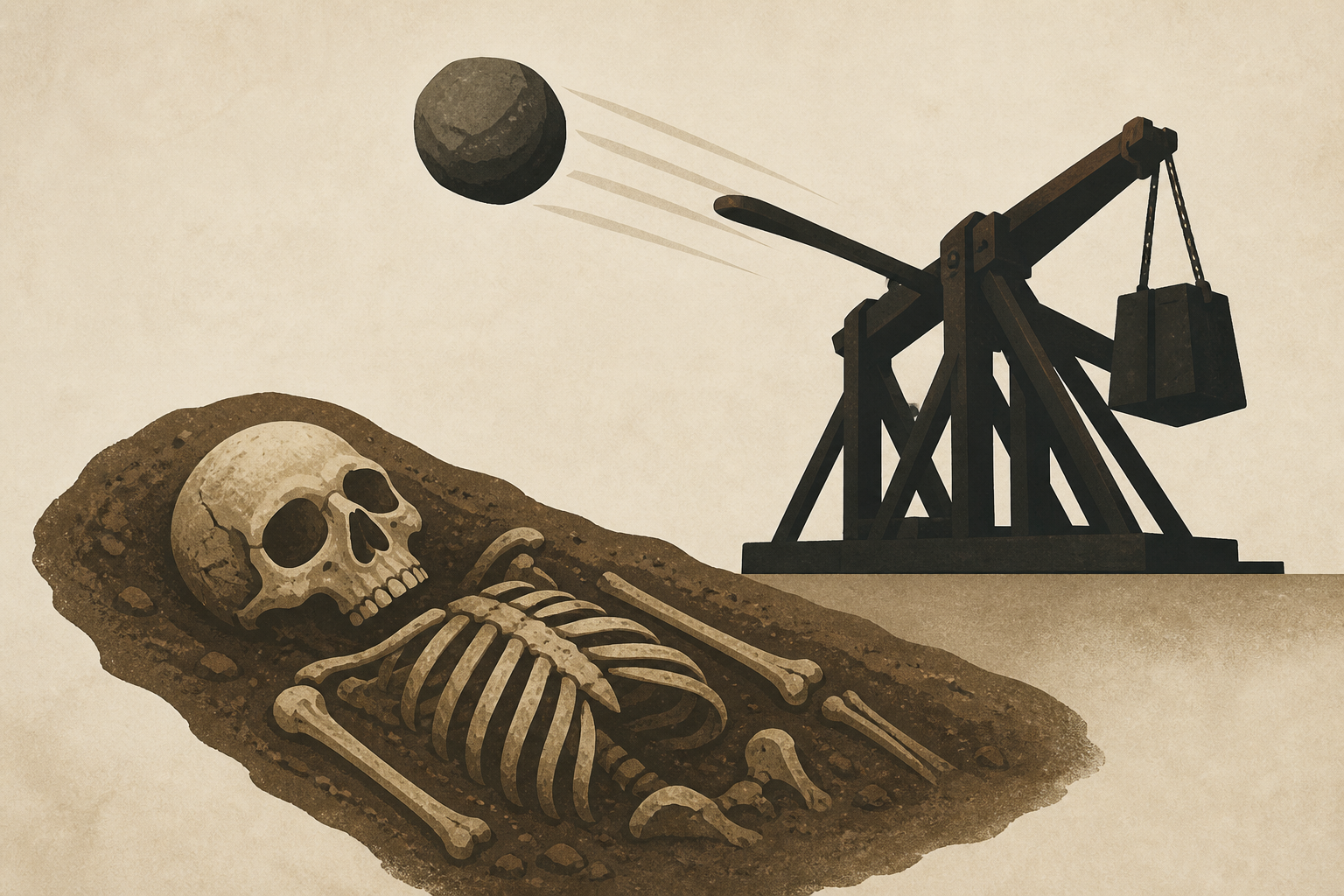
AI Generated Image
700-year-old skeleton likely killed by mother of all catapults: Study
New York Post • • world
Key Points:
- A 14th-century skeleton discovered at Stirling Castle in 1997, known as Skeleton 150, shows 167 fractures and is believed to be the first recorded casualty of a medieval trebuchet attack.
- Bioarchaeologist Jo Buckberry and anthropologist Patrick Randolph-Quinney analyzed the injuries, concluding the victim was struck from behind by a high-velocity projectile, likely from a siege engine.
- The skeleton dates back to the early 1300s during King Edward I's siege of Stirling Castle, when the massive trebuchet "War Wolf" was used to hurl heavy boulders at enemy fortifications.
- The victim, a man in his 20s, suffered severe skull and rib fractures consistent with being hit by a large, fast-moving object and then pinned to the ground, ruling out other causes like falls or trampling.
- Researchers believe the soldier was unintentionally struck during the siege, highlighting the deadly power and imprecision of trebuchets in medieval warfare.


