AI Image
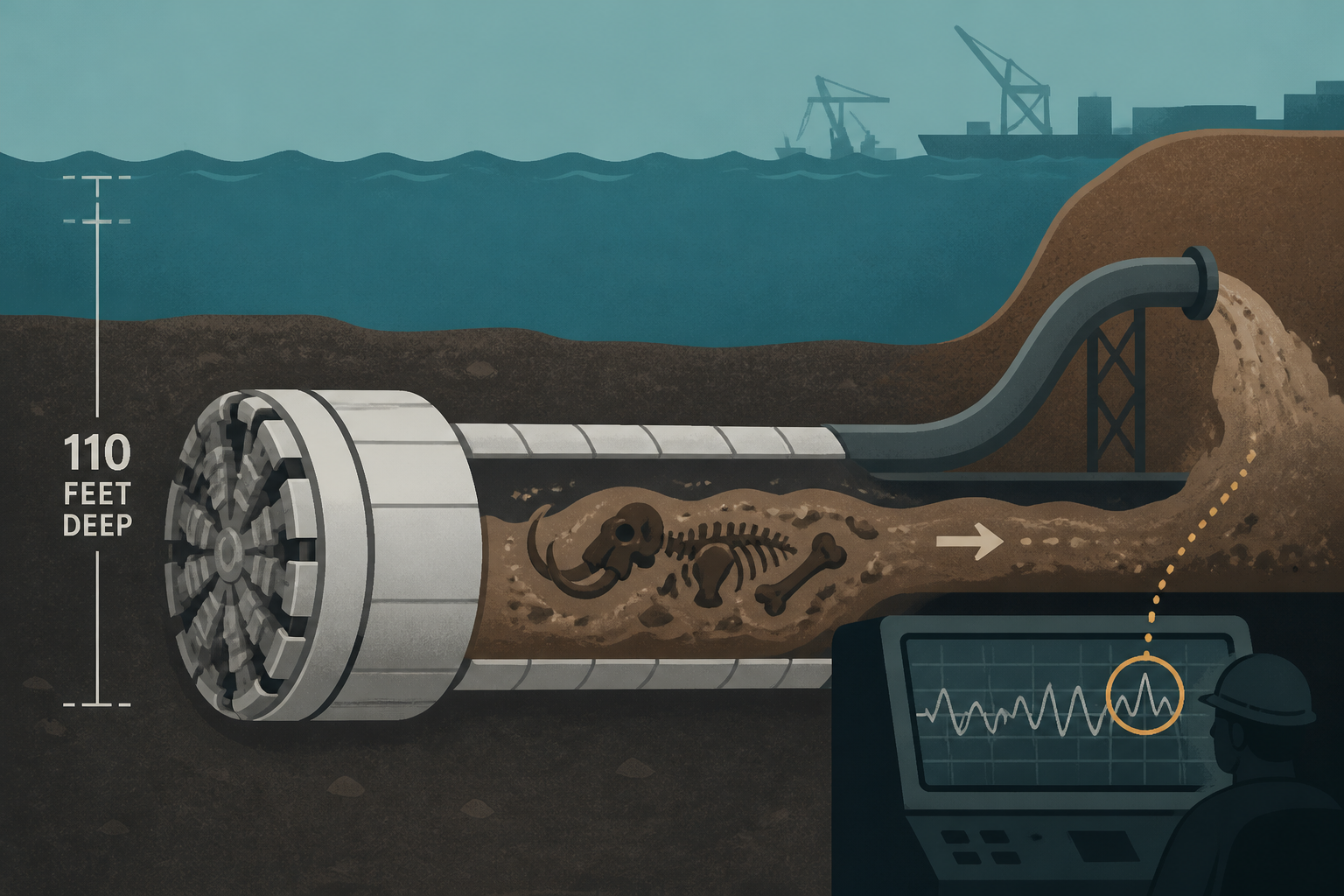
A 46-foot tunnel boring machine grinding 110 feet under a Virginia harbor chewed a mastodon loose from the seabed and pumped it toward land as slurry, and an operator watching the mud for metal spotte
Autonocion.com • • business
Key Points:
- During the Hampton Roads Bridge-Tunnel expansion in Virginia, a tunnel boring machine named Mary uncovered a mastodon tooth and other bones buried about 110 feet under the harbor, dating back 12,000 to 50,000 years.
- The discovery was made when operators at the slurry treatment plant noticed unusual shapes in the muck being pumped from the cutterhead, which is typically designed to detect machine-damaging metal rather than fossils.
- Experts concluded the mastodon likely died in a freshwater river environment that existed under what is now the harbor, highlighting significant geological changes in the coastline over thousands of years.
- Approximately a dozen fossil pieces, including vertebrae, ribs, and limb bones, were recovered and are now on display at the project’s Welcome Center in Norfolk, with plans for them to remain on loan until the project’s completion in 2027.
- The tunnel boring machine and slurry plant are named after pioneering NASA women Mary Jackson and Katherine Johnson, symbolizing a connection between technological progress and historical discovery in the region.


