AI Generated Image
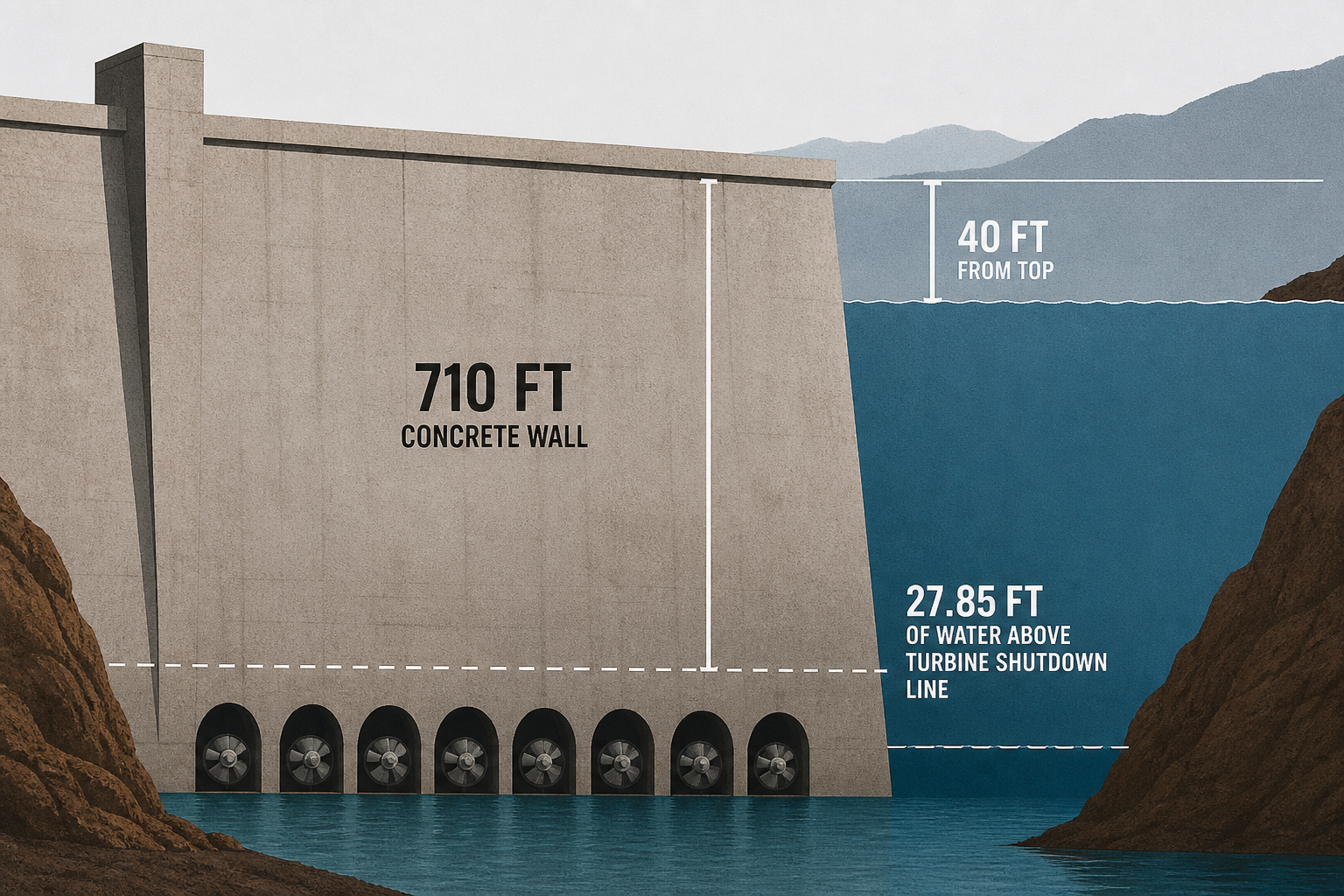
A 710-foot concrete wall on the Colorado River has 27.85 feet of water left above the line where its eight turbines shut down before vapor bubbles pit the steel. The lake behind it sits 40 feet from t
Autonocion.com • • business
Key Points:
- Lake Powell's water level on September 2 was 3,517.85 feet, leaving only 27.85 feet of usable water above the minimum power pool at 3,490 feet, where turbines must shut down to avoid damage from cavitation.
- Glen Canyon Dam releases water through three main outlets: spillways near the crest, eight penstocks with turbine intakes at 3,470 feet, and four river outlet valves at 3,374 feet; the outlet valves are not designed for continuous river flow and have shown cavitation damage.
- Lake Powell broke its record low in August 2023, with inflows at just 9 percent of average in July and a forecasted 37 percent of average for the water year due to poor snowpack, causing continued declines despite reduced releases downstream.
- To sustain Lake Powell’s water levels above the shutdown line, the Bureau of Reclamation reduced releases to Lake Mead and increased inflows by releasing water from Flaming Gorge Dam upstream, which is itself being drawn down significantly.
- Projections indicate Lake Powell will continue to fall below critical elevations in the coming years, challenging dam operations and hydropower generation, with new operating rules focused on protecting infrastructure at low water levels.


