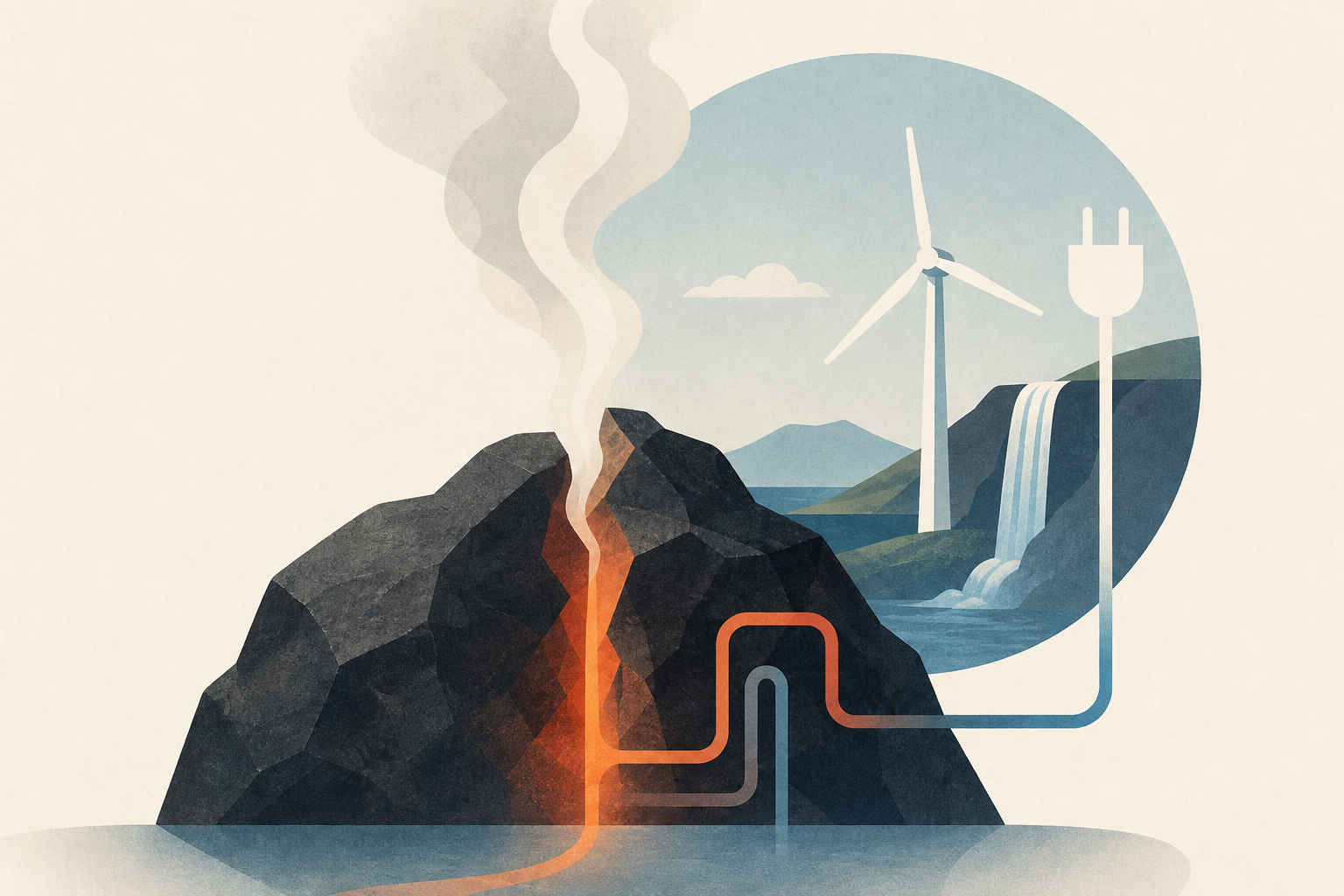
AI Generated Image
A century ago Iceland was among the poorest countries in Europe, huddled on bare volcanic rock, yet it turned that very rock to its advantage: nearly all its power is now renewable, and geothermal hea
Space Daily • • science
Key Points:
- Iceland has developed one of the cleanest and most extensive geothermal heating systems globally, warming most homes with hot water drawn from beneath the island rather than fossil fuels.
- Despite its volcanic geology providing abundant geothermal resources, Iceland's transition to geothermal heating took nearly a century, requiring drilling technology, public financing, municipal utilities, and political support.
- The shift accelerated after the 1973 oil crisis, leading to the near elimination of fossil fuels in heating by 1980 and resulting in nine out of ten Icelandic homes using geothermal energy today.
- Iceland generates almost all its electricity from renewable sources, mainly hydropower and geothermal energy, significantly reducing carbon emissions from space heating and providing economic benefits worth up to 7% of GDP.
- While Iceland's unique geology cannot be replicated everywhere, its experience highlights the importance of long-term public investment, political commitment, and infrastructure development in transitioning to sustainable energy systems.


