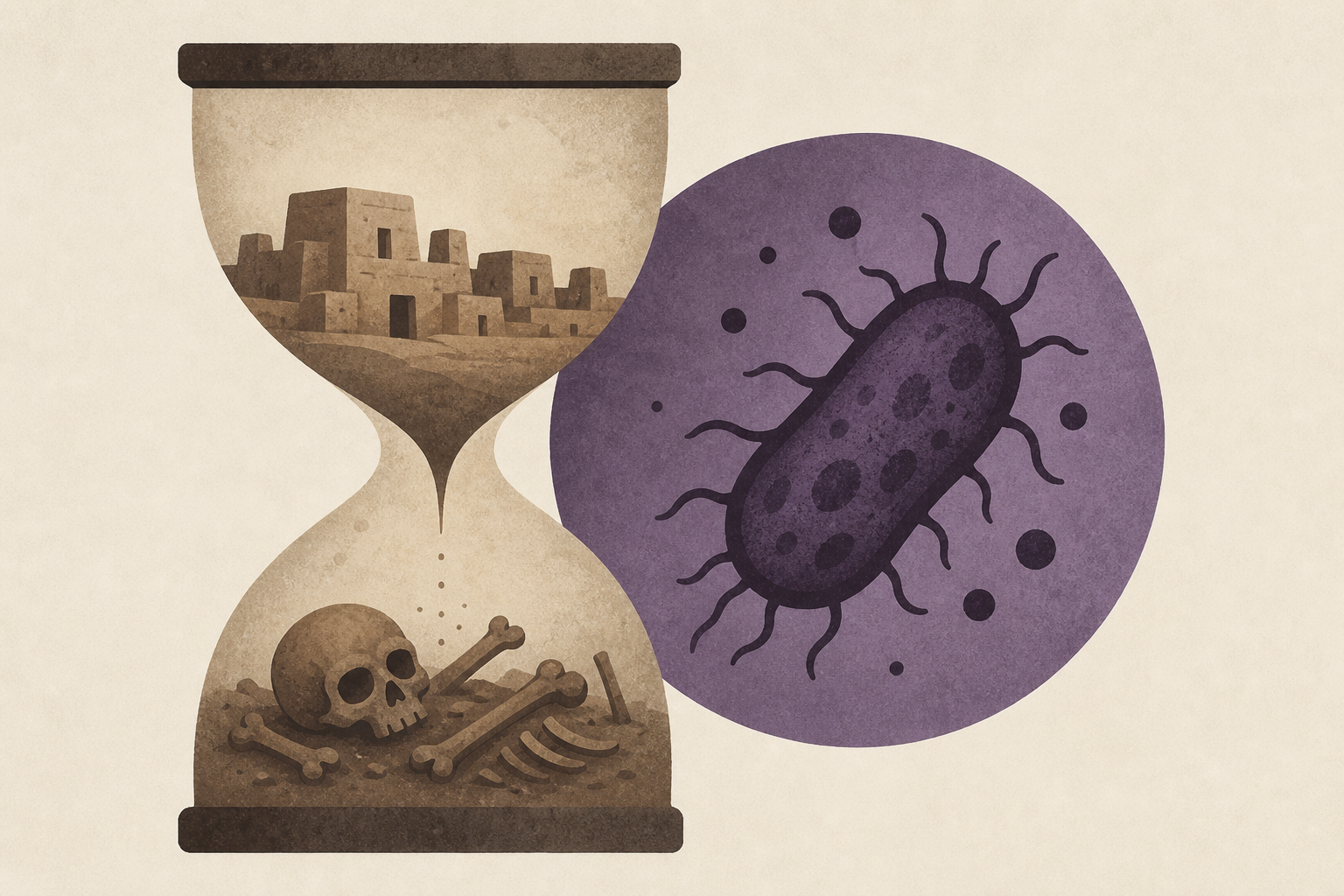
AI Generated Image
A Deadly Outbreak of Plague, Nearly 5,000 Years Before the Black Death
The New York Times • • health
Key Points:
- Scientists have discovered DNA from the plague-causing bacteria, Yersinia pestis, in 5,500-year-old Siberian hunter-gatherer skeletons, marking the oldest known traces of the disease.
- This finding challenges the previous belief that the plague bacteria were initially mild and only became deadly in later outbreaks such as the Black Death.
- Yersinia pestis primarily lives in rodents and is transmitted to humans through flea bites, causing bubonic plague with a high fatality rate if untreated.
- Historically, plague epidemics have been linked to the rise of farming and urbanization, as rats attracted to stored grain brought the disease closer to human populations.
- Despite its deadly history, plague infections are now rare, with only a few hundred cases worldwide each year.


