AI Generated Image
A foundation model for sleep-based risk stratification and clinical outcomes
nature.com • • health
Key Points:
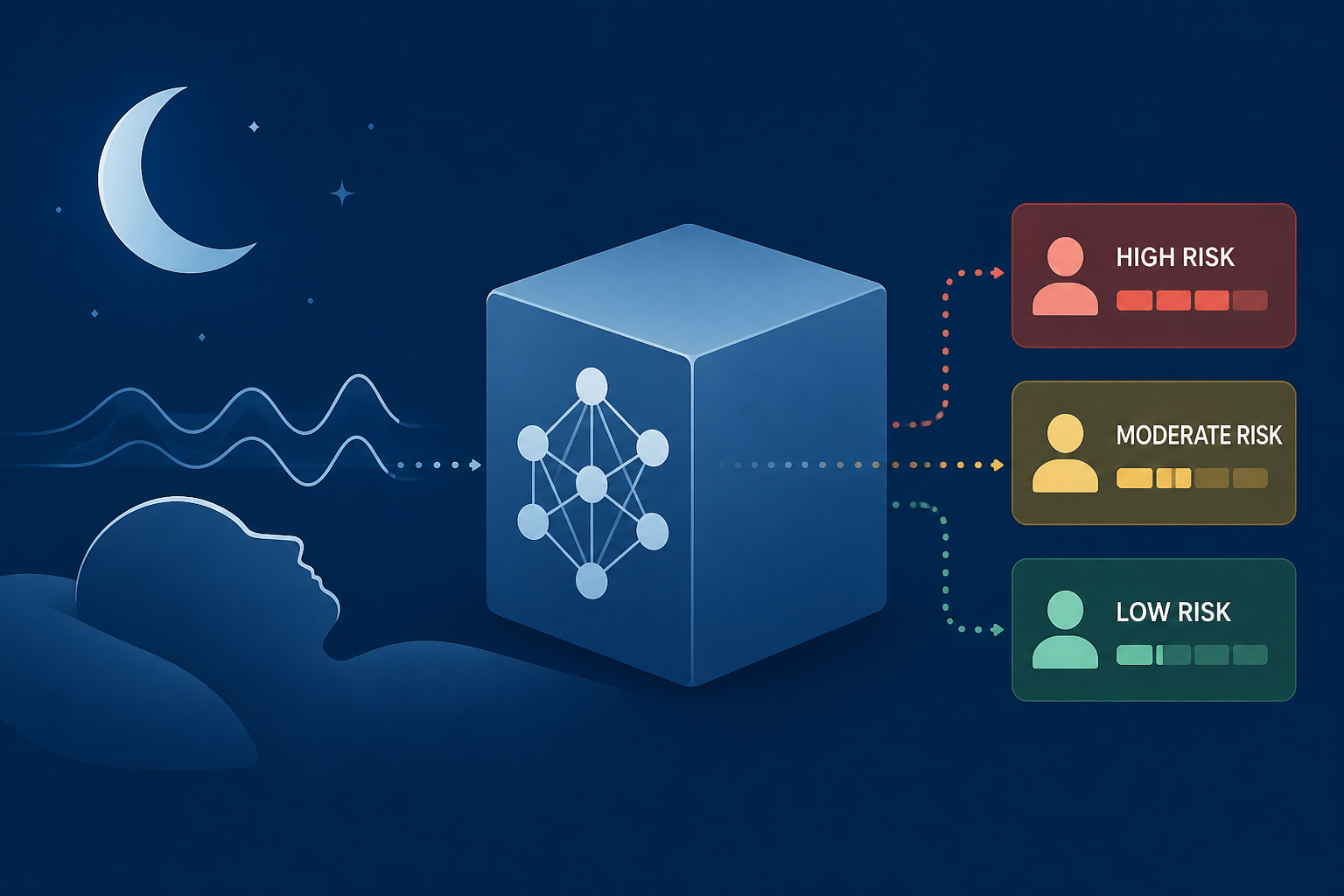
- Researchers developed a transformer-based foundation model for polysomnography (PSG) that generates physiologic embeddings, enabling stratification of patients into five distinct risk groups with strong, graded associations to cardiovascular, neurologic, psychiatric outcomes, and mortality, outperforming traditional apnea-hypopnea index (AHI) severity categories.
- The model integrates multimodal PSG signals—including EEG, EOG, EMG, ECG, respiratory and oxygen saturation data—and was trained on sleep staging, respiratory event detection, and oxygen desaturation tasks, producing embeddings that capture complex physiologic patterns beyond respiratory events alone.
- Clustering analyses identified five stable risk groups (RG1–RG5) with progressively increasing disease incidence and mortality risk, independent of AHI severity; the highest-risk group (RG5) showed markedly elevated hazards for major adverse cardiovascular events, atrial fibrillation, cognitive impairment, epilepsy, and all-cause mortality.
- External validation in the independent Sleep Heart Health Study (SHHS) cohort confirmed the model’s prognostic value across diverse populations and PSG protocols, demonstrating consistent associations between embedding-derived risk groups and clinical outcomes, including mortality and heart failure, unlike AHI-based assessments.
- This approach addresses limitations of current sleep disorder metrics by providing scalable, physiologically grounded biomarkers that enhance risk stratification and could guide personalized clinical interventions, resource allocation, and future research, although prospective validation and integration with patient-reported outcomes remain needed.


