AI Image
A Gene Inherited From Neanderthals Is Still Shaping Human Brains - And May Affect Schizophrenia Risk
Yahoo • • health
Key Points:
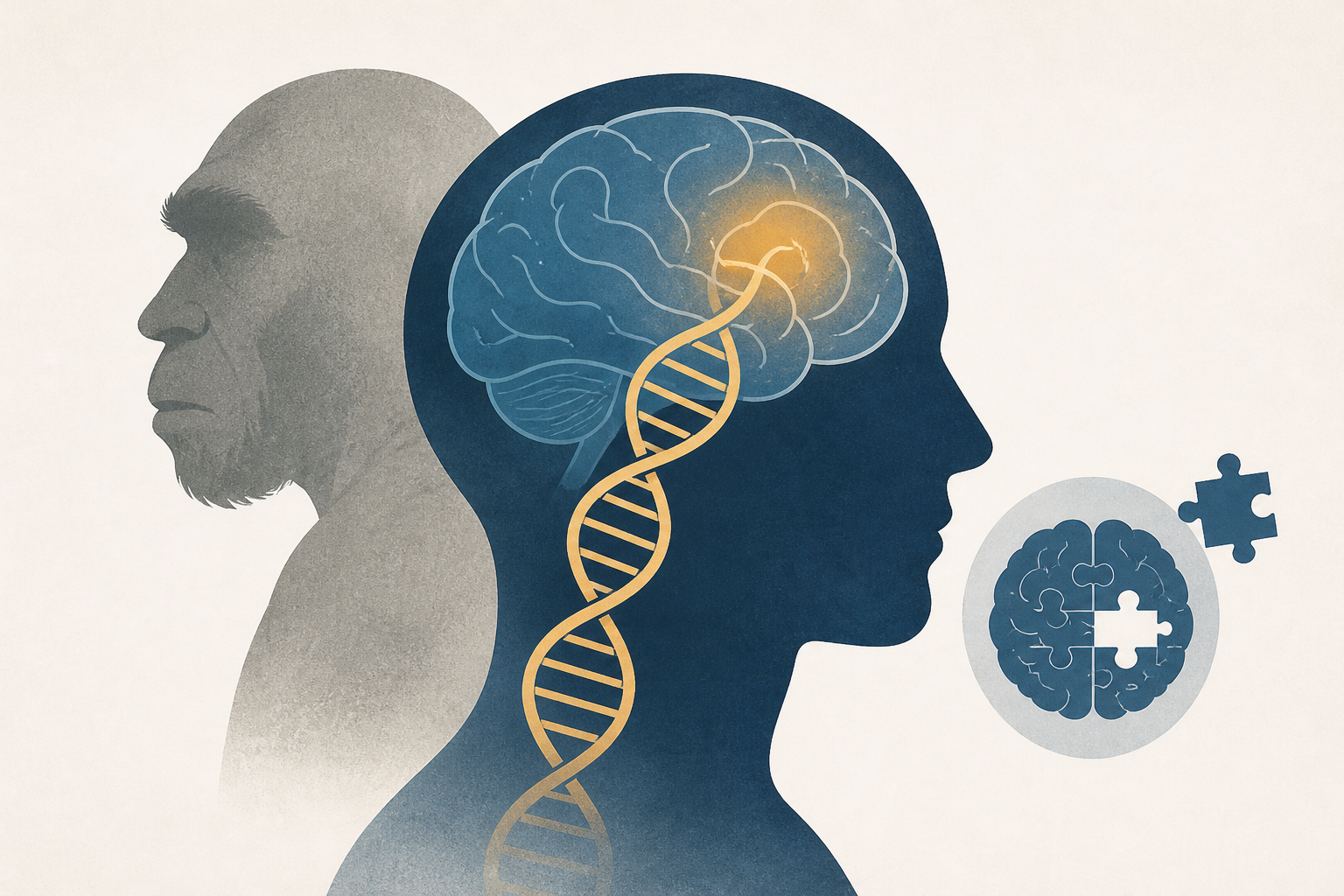
- A recent study identified a small Neanderthal-derived genetic variant on chromosome 14 linked to differences in the size of the occipital lobes, the brain region responsible for visual processing, in modern humans.
- This genetic variant, a four-letter DNA deletion near the DAAM1 gene involved in brain development, is found outside sub-Saharan Africa and was confirmed in Neanderthal genomes but not in Denisovans.
- The presence of a long DNA segment around the deletion suggests it entered the modern human gene pool through interbreeding with Neanderthals rather than inheritance from a distant common ancestor.
- Interestingly, while Neanderthals likely had larger occipital lobes, the variant is associated with slightly smaller occipital lobe volumes in carriers, and it correlates with a modestly reduced risk of schizophrenia but shows no link to general cognitive ability.
- These findings highlight the complex influence of Neanderthal DNA on human brain anatomy and psychiatric traits, cautioning against assuming brain region size directly equates to cognitive function.


