AI Image
The Most Common COVID Symptoms Doctors Are Seeing This Fall
HuffPost • • health
Key Points:
- The holiday season is expected to increase the spread of respiratory illnesses, including COVID-19, influenza, and RSV, due to indoor gatherings, colder weather, and travel, with COVID hospitalizations historically peaking in January.
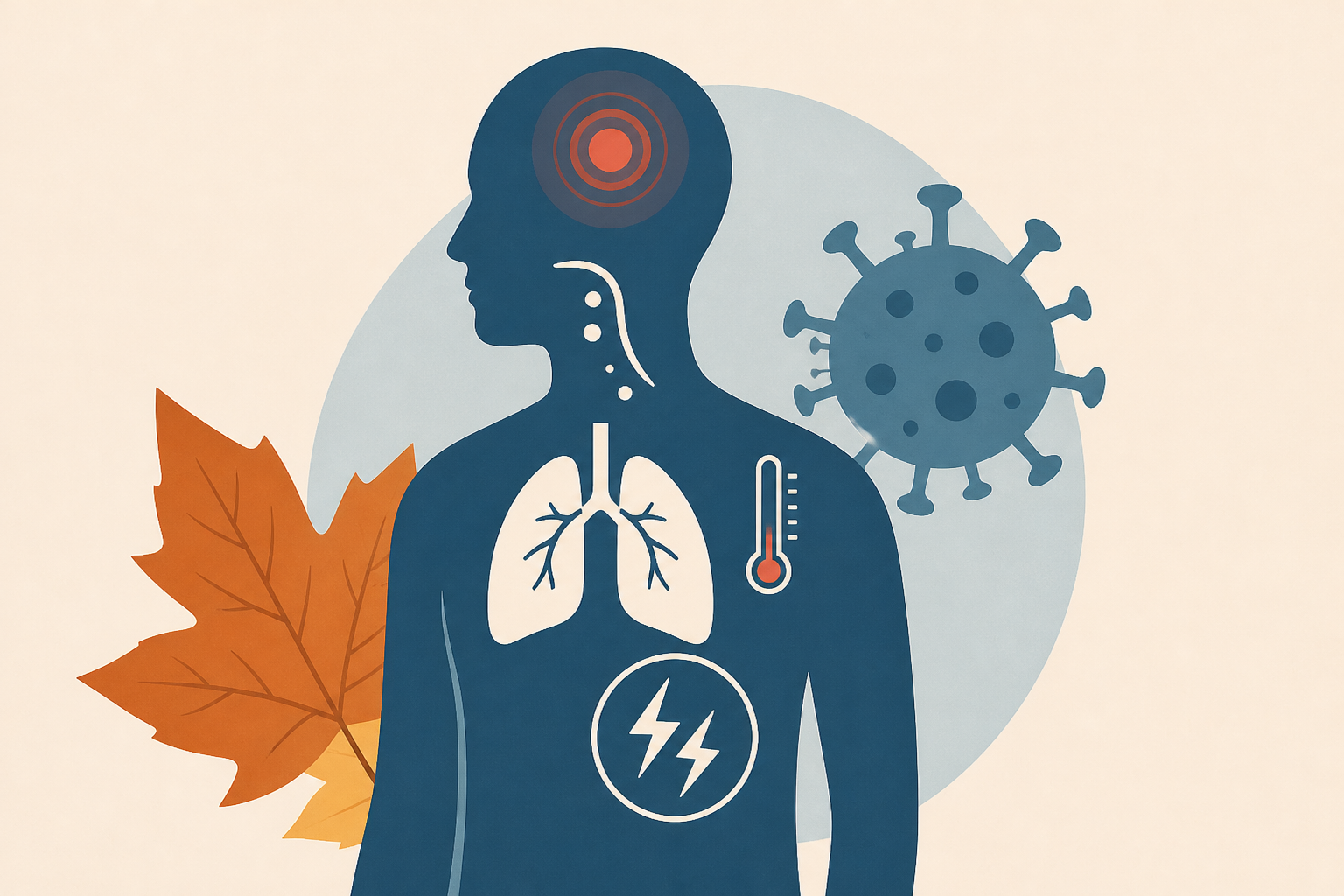
- Current COVID cases are low but rising slightly, with the dominant variant being the XFG strain derived from Omicron; symptoms remain similar to past seasons, often resembling a cold but with possible fever and varying severity.
- Experts recommend testing for COVID, flu, and RSV if symptoms like congestion, cough, or sore throat appear, and advise staying home and postponing gatherings to prevent spreading illness, especially to vulnerable populations.
- Vaccination remains the most effective protection against severe COVID-19 illness, with updated vaccines recommended for all adults 18 and older, and additional precautions like hand-washing, masking, and outdoor gatherings also advised.
- Those at higher risk, including people over 50, immunocompromised individuals, and those with chronic conditions, should prioritize vaccination, and close contacts of vulnerable individuals are encouraged to get vaccinated to reduce transmission.


