AI Image
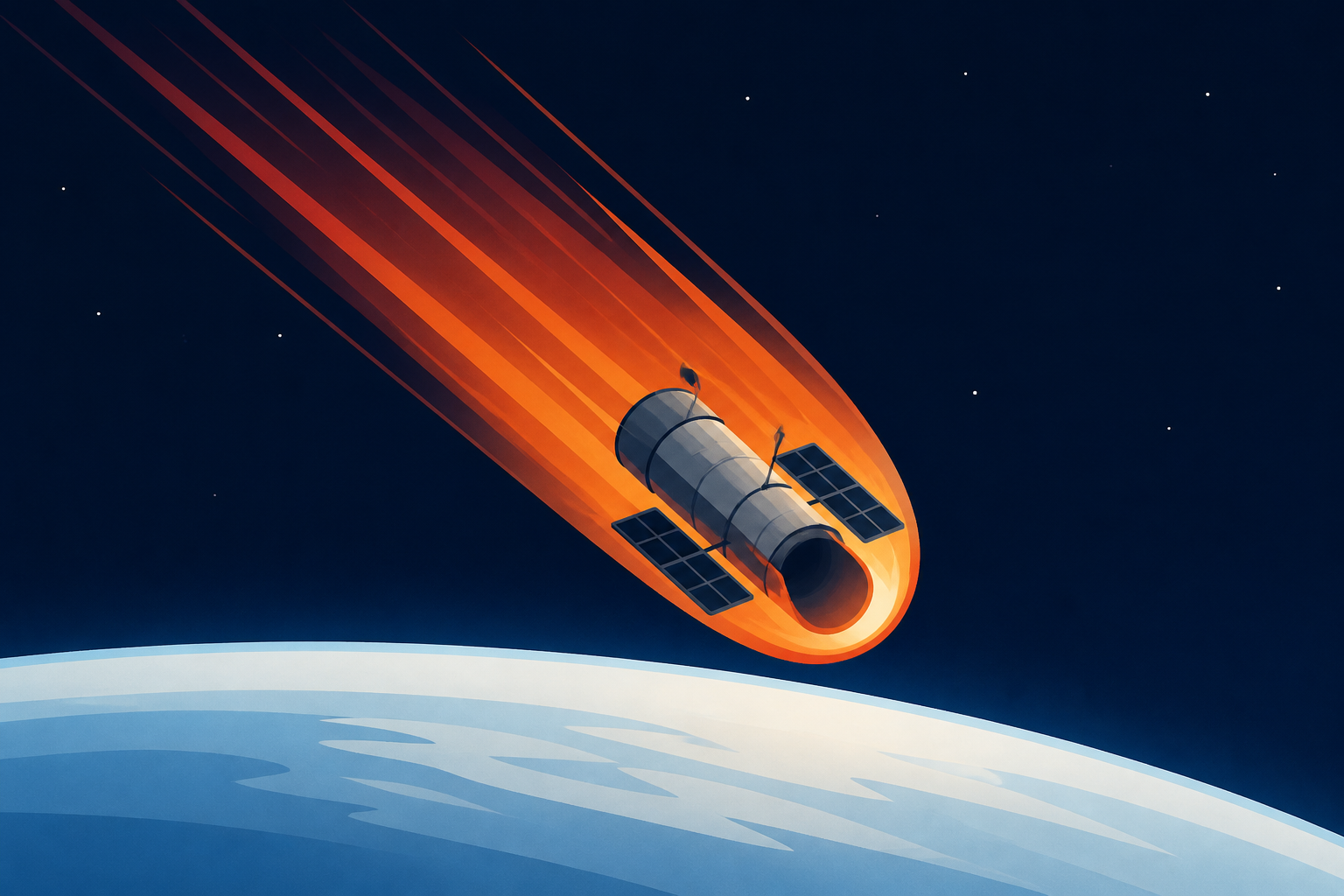
A NASA space telescope plunged back to Earth after a mission that lasted 11 times longer than planned
PBS • • general
Key Points:
- The Swift Observatory reentered Earth's atmosphere near Indonesia and was destroyed due to orbital decay caused by intense solar activity, confirmed by the U.S. Space Force.
- A private rescue mission by Katalyst Space, launched in July to boost Swift's orbit, failed when its robotic craft malfunctioned and crashed in September.
- Swift, launched in 2004 for a two-year gamma ray burst study, exceeded expectations by operating for 11 times longer and aiding other telescopes as a first responder.
- NASA is exploring private sector interest in a potential rescue mission for the Hubble Space Telescope, whose orbit is also deteriorating and is expected to reenter by the mid-2030s.
- Unlike the urgent Swift effort, NASA has until 2032 to plan options for Hubble, including orbit boosting, system upgrades, or controlled reentry, aiming to extend its scientific contributions.


