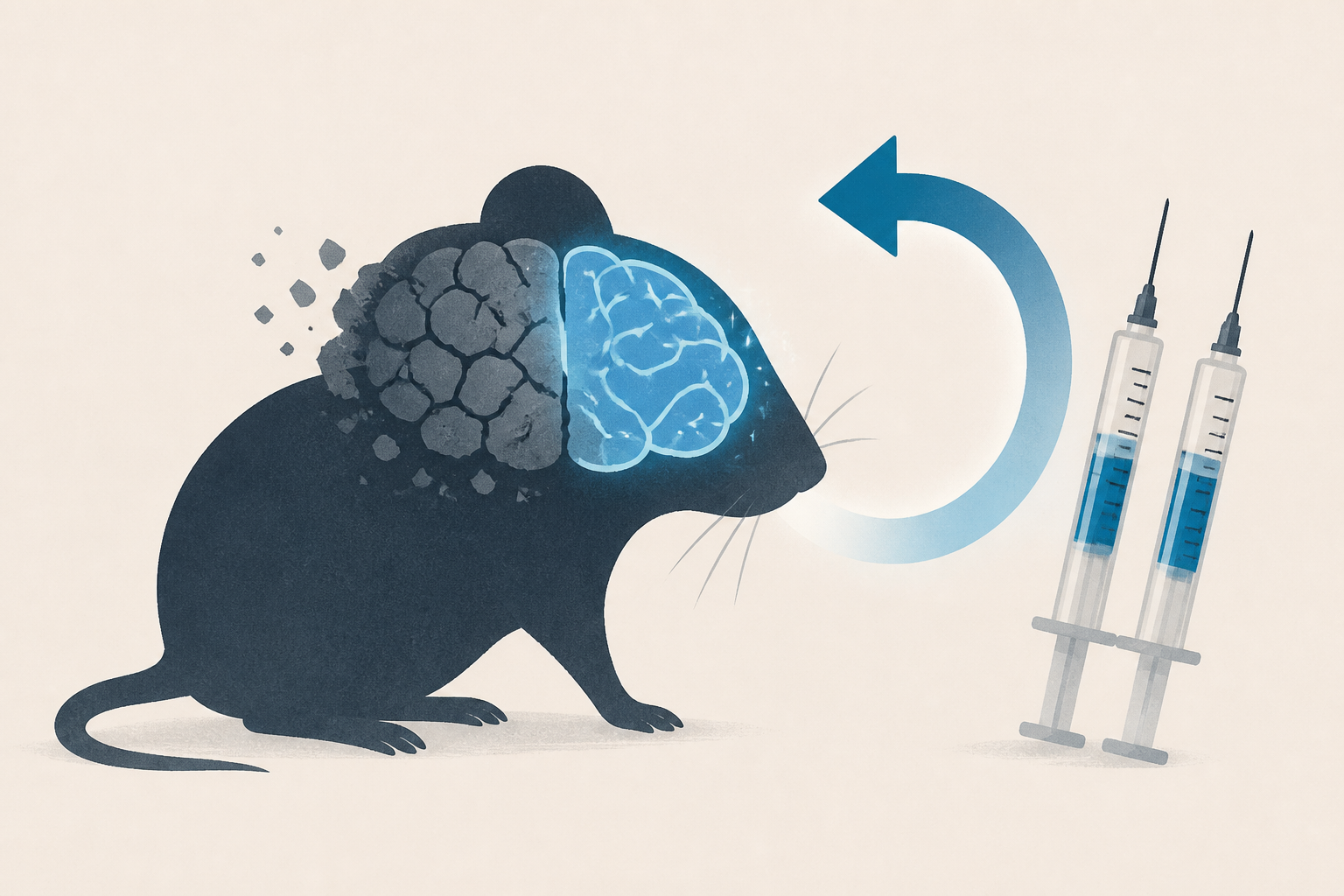
AI Generated Image
Alzheimer's Damage in Mice Reversed With Just Two Injections
Yahoo • • health
Key Points:
- Researchers at the University of South Carolina have developed a new method, Nano-ERASER, that uses injectable polymer nanogels to deliver antibodies targeting PTBP1 protein, inducing astrocytes to convert into neurons in brain organoids and mouse models of Alzheimer's disease.
- In treated Alzheimer's mice, the method improved cognitive functions, such as nest-building and maze navigation, while also reducing inflammation and protein build-up associated with the disease, indicating potential reversal of symptoms.
- The converted neurons were confirmed to be functional and formed connected networks, with treated mice showing higher neuron density and survival of new mature neurons.
- Although promising, these findings are preliminary and require further testing over longer periods and in primates before potential clinical application in humans.
- This approach aligns with previous studies linking PTBP1 reduction to neuron regeneration in neurodegenerative diseases, offering a novel strategy to restore brain function by replenishing neurons and repairing neural circuits.


