AI Image
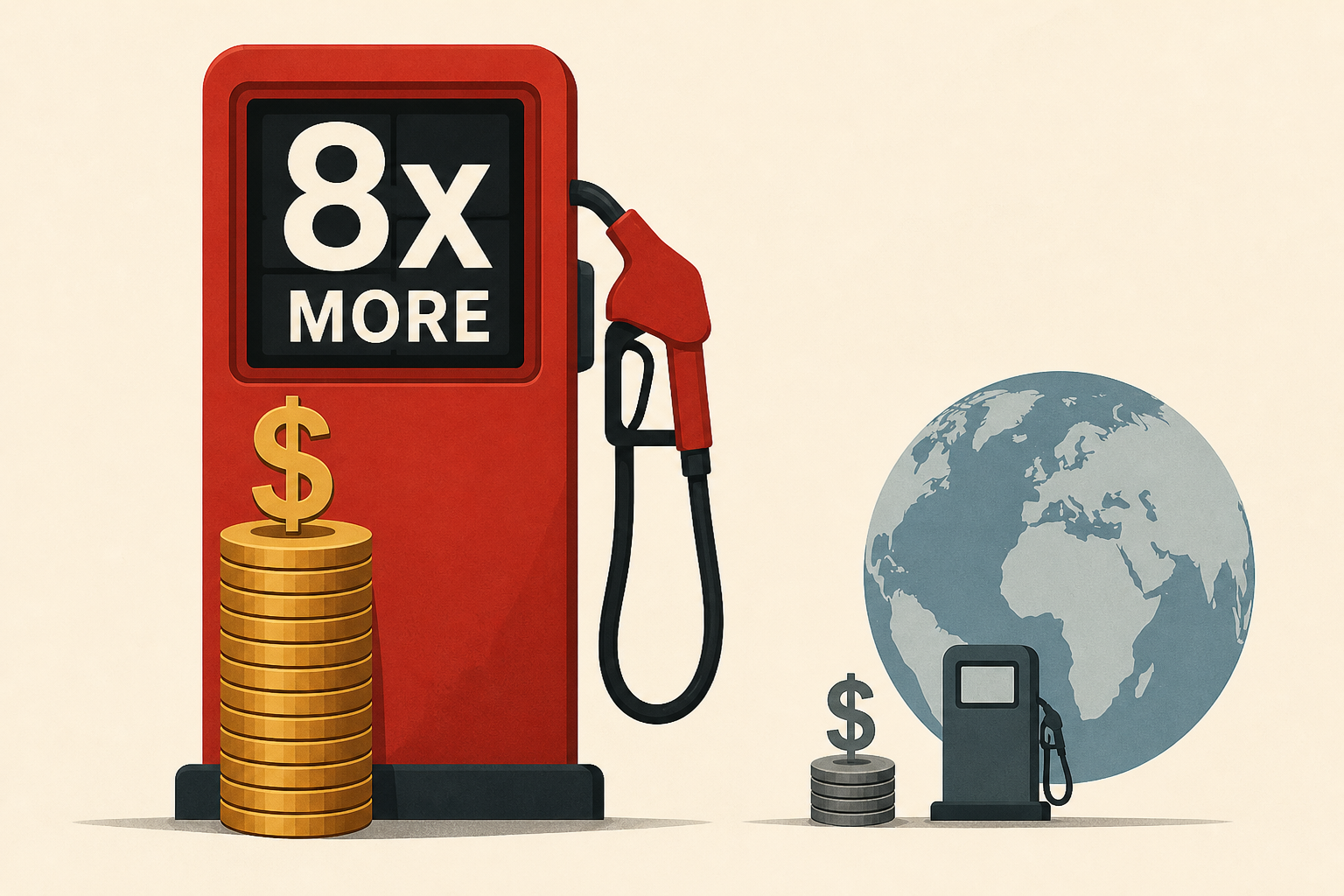
American consumers are paying 8x more in fuel costs than the rest of the world, report finds
Fortune • • business
Key Points:
- Since the Iran war began in February, U.S. consumers have paid an average of $471 more in fuel costs, nearly eight times the global average increase, totaling $160 billion in extra fuel expenses for the country.
- The higher fuel costs in the U.S. are largely due to the country’s heavy reliance on oil, less adoption of electric vehicles (EVs), and longer driving distances compared to other nations with more sustainable transportation infrastructures.
- Despite rising fuel prices, EV adoption in the U.S. remains low at 7.3% of new vehicle sales, contrasting sharply with countries like Norway and China where EV sales dominate, helping those countries mitigate fuel cost impacts.
- Policy changes under the Trump administration, including ending EV tax credits and loosening fuel economy standards, have discouraged EV adoption and fuel efficiency improvements, potentially contributing to continued high fuel costs for Americans.
- Experts warn that even if the Iran conflict ends, the U.S. will face ongoing fuel price volatility due to its dependence on oil, with future energy shocks likely to repeat the cycle of rising costs and inflationary pressures.


