AI Image
Archimedes' Inventions Changed Engineering as We Know It
HowStuffWorks • • science
Key Points:
- Archimedes, a third-century B.C.E. Greek mathematician and inventor from Syracuse, made significant contributions combining geometry, physics, and engineering, influencing modern science and technology.
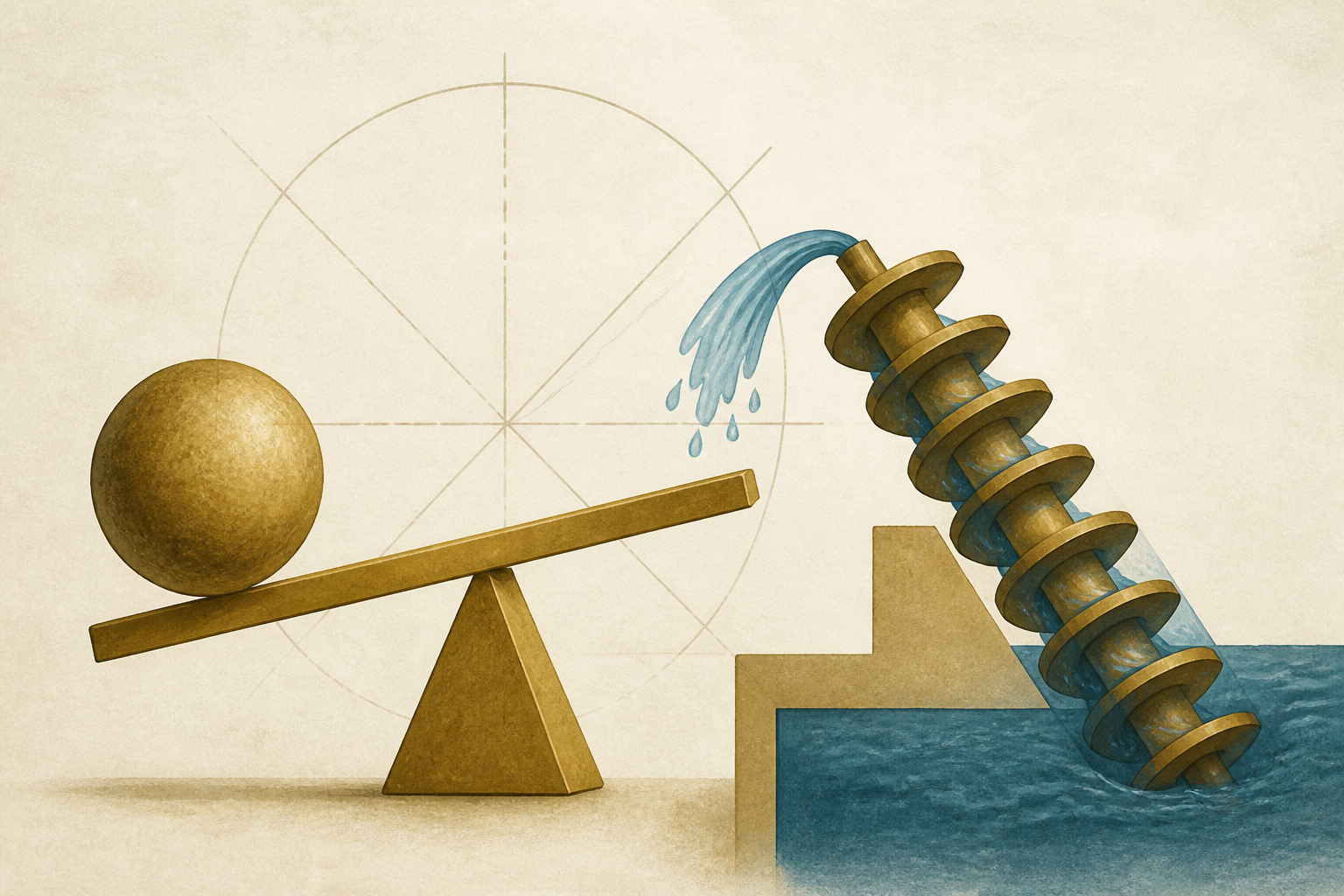
- He is credited with inventing or improving practical devices like the Archimedes screw for lifting water and developing foundational principles in hydrostatics, including Archimedes' principle explaining buoyancy.
- Archimedes designed war machines during the Roman siege of Syracuse, such as the Archimedes claw and advanced catapults, though claims about some inventions like the death ray lack strong historical evidence.
- His mathematical achievements include early methods anticipating integral calculus, precise calculations of pi, and large-number notation in "The Sand Reckoner," as well as contributions to understanding levers and pulleys.
- Despite legendary stories surrounding his death and inventions, Archimedes remains a model mathematician-engineer whose documented work provides a solid foundation amid historical uncertainties.


