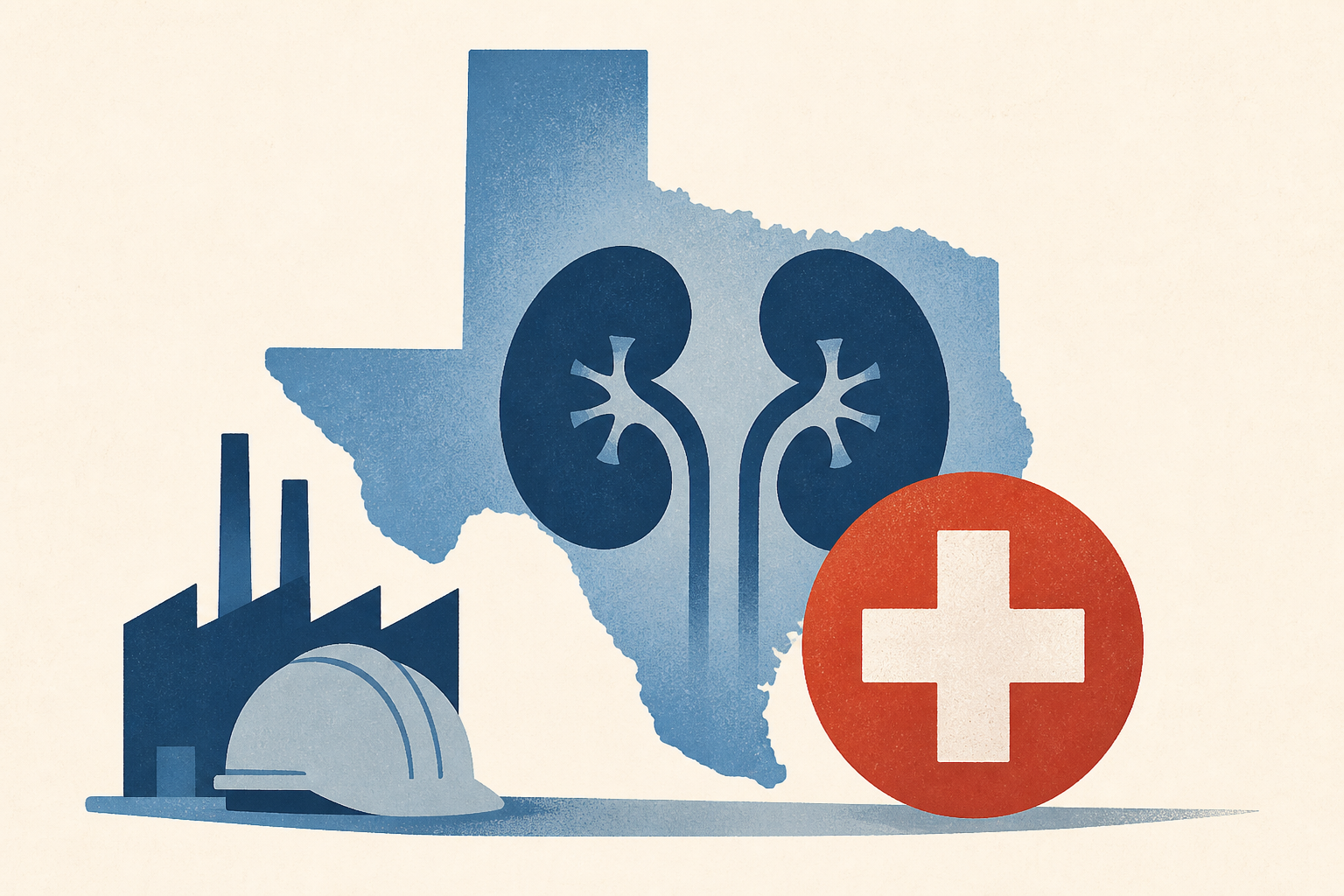
AI Generated Image
Baffling disease sending healthy, young Texas workers into kidney failure
New York Post • • health
Key Points:
- A mysterious kidney disease known as chronic kidney disease of unknown etiology (CKDu), previously seen in Central America and South Asia, has now been identified in Texas, primarily affecting young, otherwise healthy agricultural and manual labor workers exposed to extreme heat.
- CKDu differs from typical kidney disease as it develops without common risk factors like diabetes or hypertension, and symptoms often appear late, leading to severe kidney failure and high mortality due to limited treatment options such as dialysis or transplantation.
- The disease is suspected to be caused by a combination of heat stress, repeated dehydration, exposure to pesticides, unsafe drinking water, and use of NSAIDs, with prevention strategies focusing on improving hydration, providing shade, and modifying work conditions for outdoor laborers.
- Diagnosis of CKDu is challenging due to the lack of specific tests; it is primarily made by excluding other causes and considering occupational history, with kidney biopsy being the closest diagnostic tool but impractical for mass screening.
- Experts recommend regular kidney function screening for at-risk populations, especially those working in hot climates, through simple blood and urine tests to detect early kidney damage before symptoms develop.


![Google just shared these fun Pixel 11 blueprint wallpapers [Gallery]](https://media-cdn.cashwalklabs.io/https%3A%2F%2Fs3.us-west-2.amazonaws.com%2Fimages.cashwalklabs.io%2F0_admin%2Fnews-ai-images%2F01a0a676-aa5b-745f-afa9-a51d34f7207e.webp?format=webp&w=120&h=80)


