AI Image
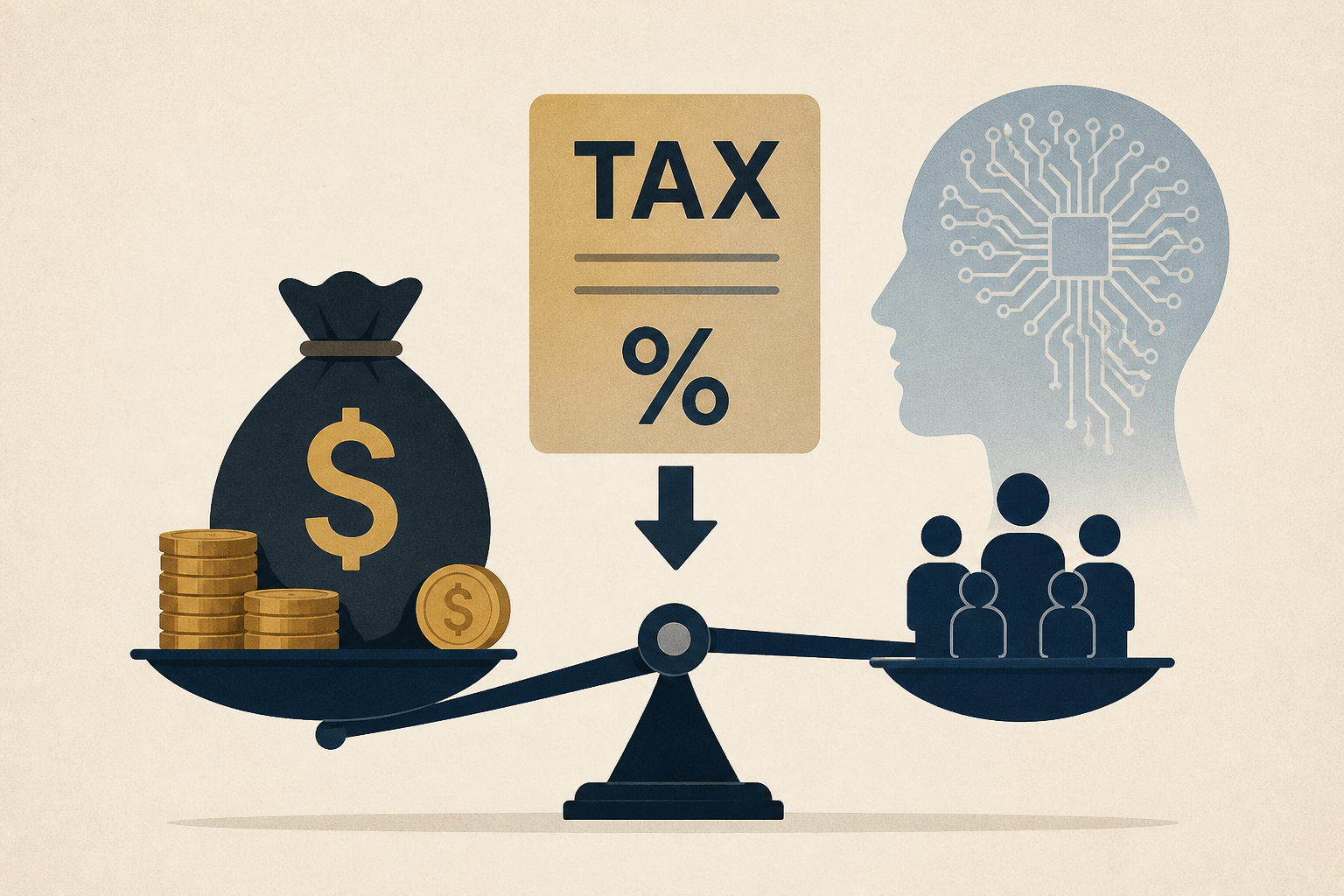
Bill Gates suggests billionaire tax will be necessary to address inequality in AI era
Fortune • • business
Key Points:
- Bill Gates emphasizes that addressing economic inequality, especially with AI-driven wealth gains, is primarily the responsibility of governments through progressive taxation rather than relying on voluntary philanthropy.
- Gates advocates for taxing the super-rich and suggests implementing taxes on AI-related technologies like robots, arguing that the current tax system incentivizes replacing human workers with machines.
- While Gates’s call for taxing billionaires faces resistance from some tech leaders, such as Sergey Brin and Eric Schmidt, others like Nvidia founder Jensen Huang support higher taxes but disagree with taxing robots.
- Huang acknowledges the need for productive individuals to contribute via taxes but believes there are multiple approaches to addressing inequality, differing from Gates’s specific proposals.
- Despite Gates pledging nearly all his wealth to philanthropy, he acknowledges that even large donations cannot fully counteract the growing economic divide fueled by AI advancements.


