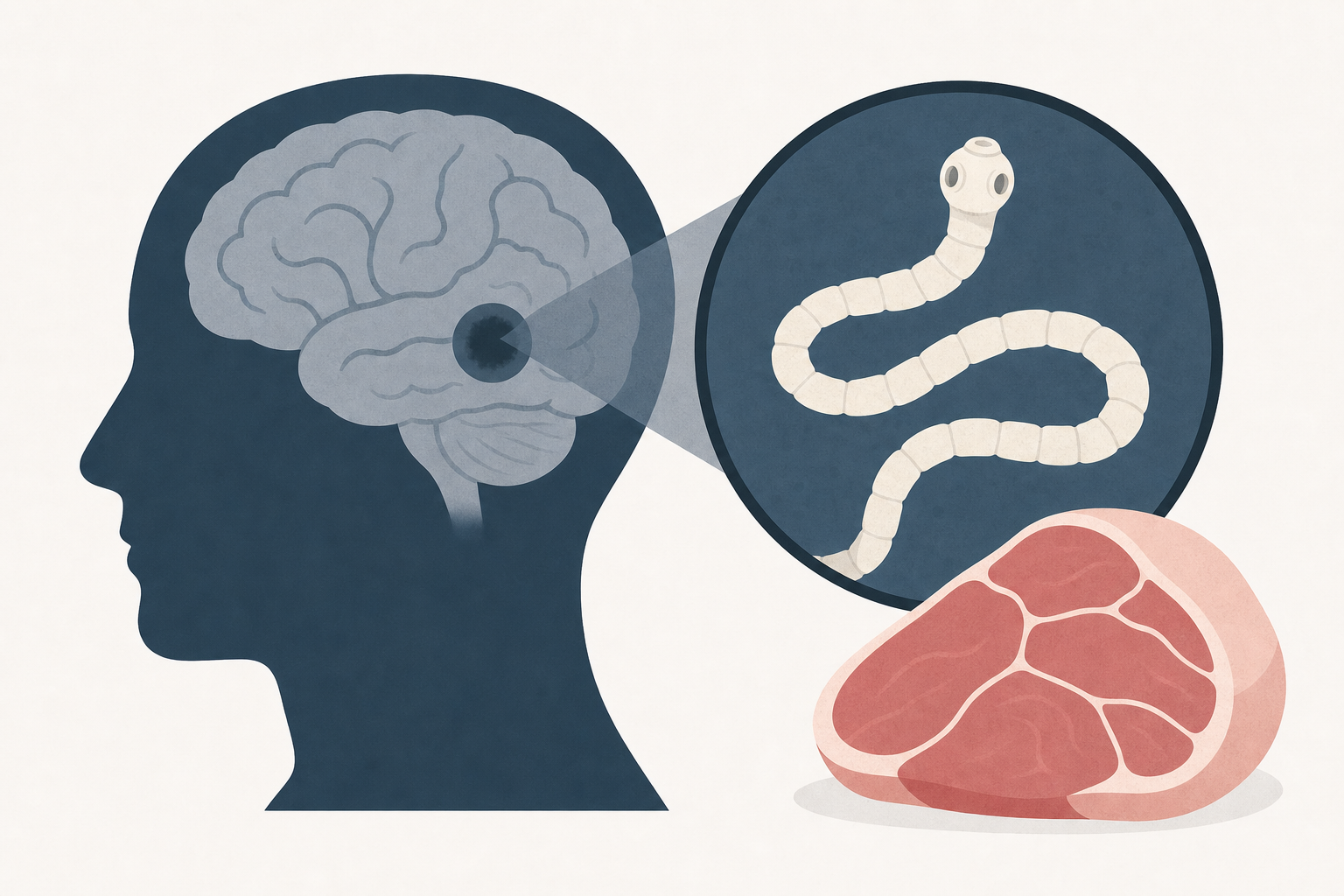
AI Generated Image
Brain cancer misdiagnosis turns out to be pork tapeworm infection
Fox News • • general
Key Points:
- A 60-year-old man in Spain was initially suspected to have metastatic brain cancer after scans showed multiple tumors, but further testing revealed a parasitic tapeworm larvae causing neurocysticercosis.
- The patient, who had not traveled to endemic regions, likely contracted the infection through accidental ingestion of tapeworm eggs, possibly from contact with migrant coworkers from endemic areas.
- Neurocysticercosis is caused by pork tapeworm eggs entering the bloodstream, forming cysts in the brain, and can lead to serious neurological symptoms such as seizures and cognitive decline.
- Treatment with antiparasitic medications albendazole and praziquantel, alongside corticosteroids, led to the patient's full recovery without complications.
- The case highlights the need to consider neurocysticercosis in differential diagnoses of brain lesions even in non-endemic regions to avoid unnecessary cancer treatments and enable timely, targeted therapy.


