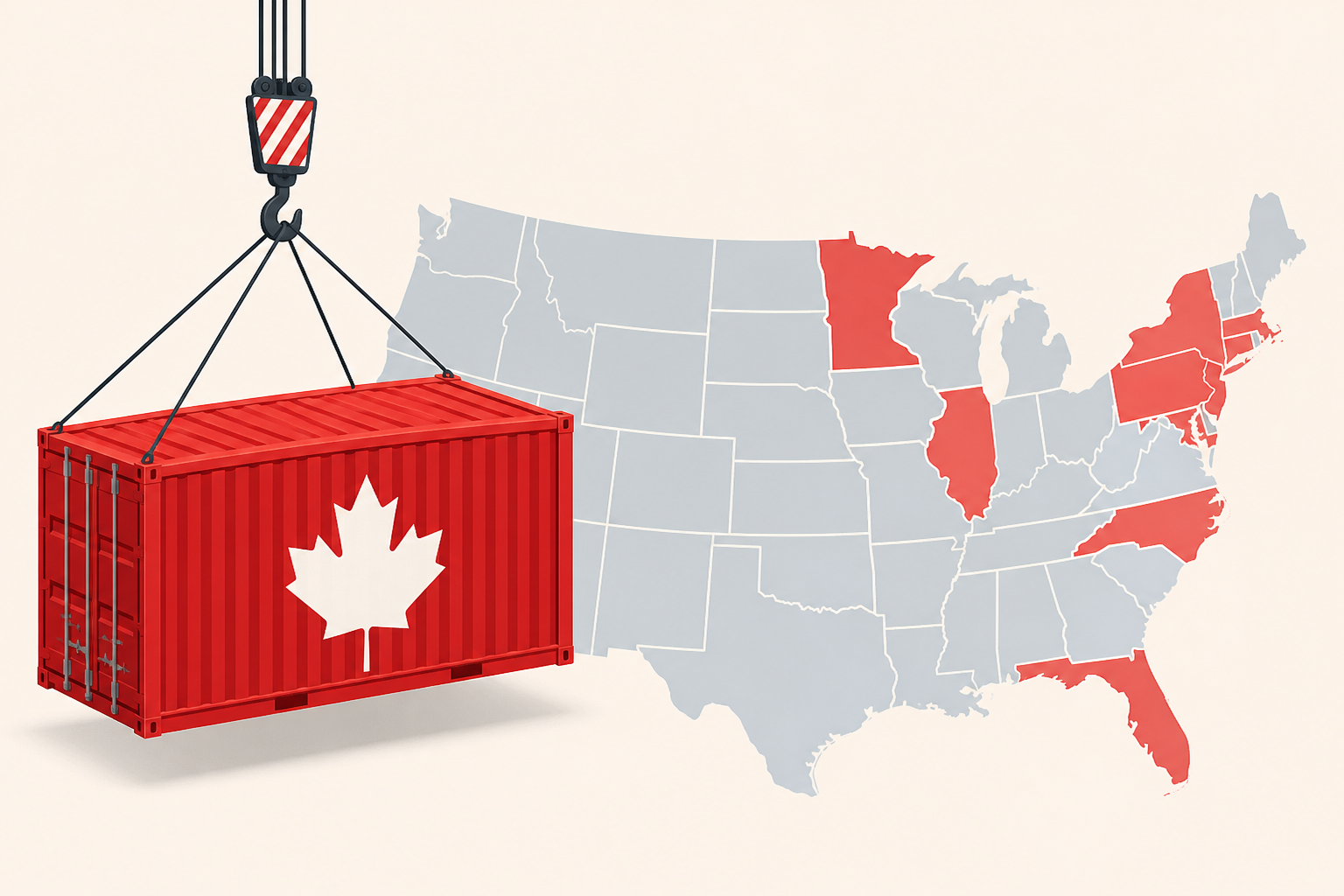
AI Generated Image
Canada's tariffs target certain U.S. states. See which regions are most vulnerable.
CBS News • • nation
Key Points:
- Canada has imposed retaliatory tariffs of up to 50% on $20 billion worth of American goods, targeting key U.S. states to exert political pressure on the Trump administration ahead of the U.S. general election.
- The tariffs affect over 800 U.S. products, including steel, aluminum, dairy, seafood, and automotive goods, with particular impact expected in Midwestern and Northeastern states such as Michigan, Indiana, Wisconsin, Vermont, and Maine.
- Canadian officials aim to protect domestic industries and encourage Canadian consumers to buy locally made products, while acknowledging potential economic hardship and announcing support measures like business loans and unemployment aid.
- Economists warn the tariffs could raise Canadian inflation and slow economic growth, though not trigger a recession, amid ongoing trade tensions following failed U.S.-Canada negotiations and previous U.S. tariffs on Canadian goods.
- The timing and targeting of the tariffs suggest Canada is strategically pressuring politically competitive U.S. states, hoping to negotiate a trade deal before the tariffs take effect on September 8, 2024.


