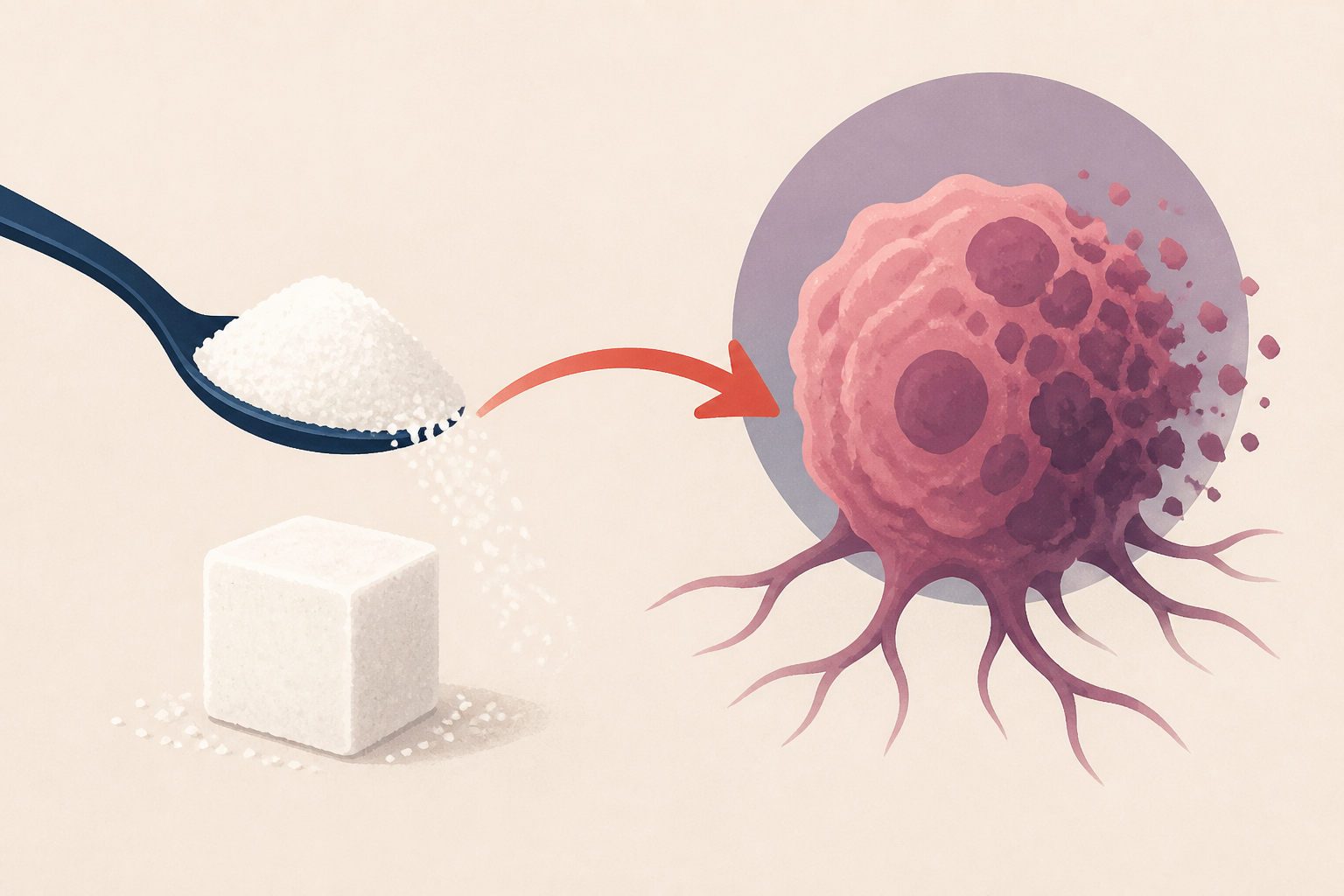
AI Generated Image
Common sugar identified as surprise cancer driver
The Independent • • health
Key Points:
- A new study from the Wistar Institute reveals that fructose acts as a signaling molecule released by chemotherapy-surviving tumor cells, promoting the spread of ovarian cancer after treatment.
- Researchers found that fructose suppresses cholesterol in neighboring cells, reducing cell adhesion and enabling cancer cells to escape and metastasize more easily.
- High dietary fructose intake, such as from sugary drinks, may similarly encourage cancer spread, suggesting that dietary changes could influence cancer progression.
- The study raises concerns about potential interactions between cholesterol-lowering statins and chemotherapy, especially since many ovarian cancer patients are postmenopausal women who often take statins.
- Scientists plan further research to determine if these findings apply to other cancer types and to explore the clinical implications of fructose reduction and statin use during cancer treatment.


