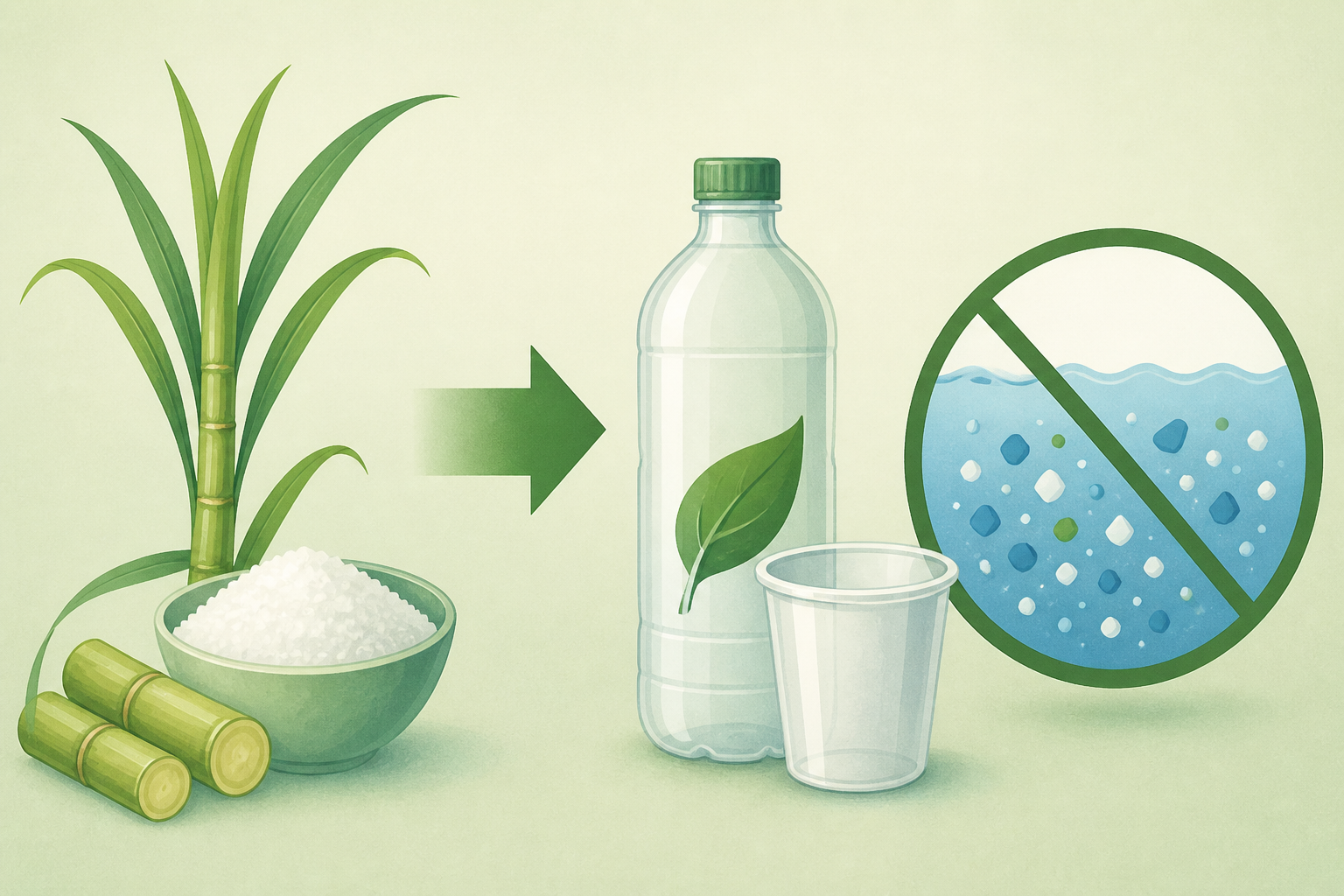
AI Generated Image
Company creates plastic from sugar to help solve microplastics problem
AP News • • business
Key Points:
- CJ Biomaterials in Massachusetts produces bioplastic pellets from plant-based polymers that microbes can consume, aiming to replace conventional plastics with compostable alternatives that break down in months rather than centuries.
- Their products include compostable cutlery, straws, food packaging films, and containers designed to decompose in industrial composting facilities, addressing plastic pollution and reducing methane emissions from food waste in landfills.
- Bioplastics currently make up about 0.5% of global plastic production but are expected to double by 2030, driven by demand from companies and municipalities seeking sustainable alternatives to fossil fuel-based plastics.
- While bioplastics offer environmental benefits, challenges remain including higher costs, limited composting infrastructure, and concerns from some environmental groups about land use and single-use culture.
- Research shows biodegradable bioplastics degrade significantly faster than traditional plastics in natural environments, potentially reducing the accumulation of harmful microplastics in ecosystems.


