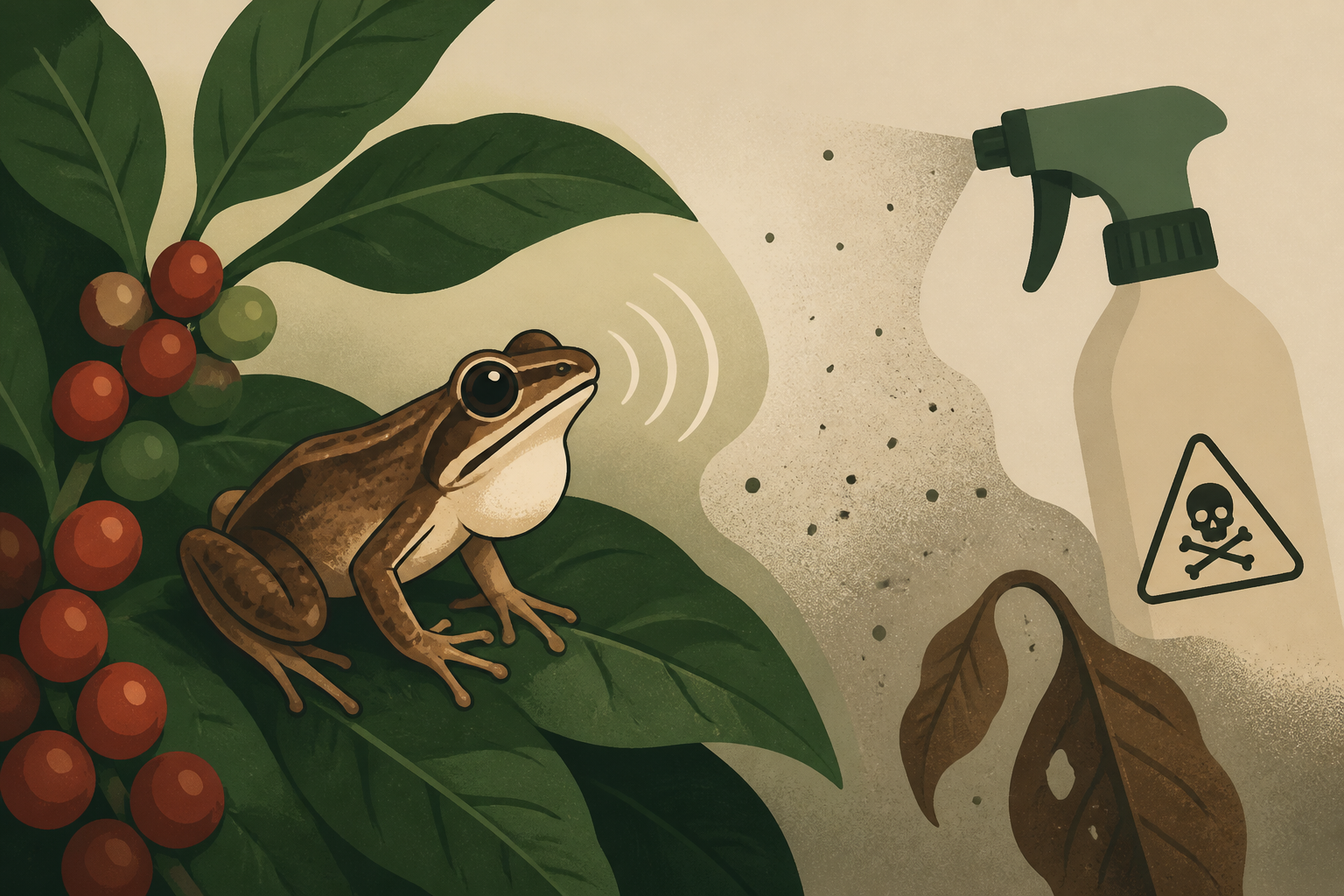
AI Generated Image
Costa Rica's recently discovered "coffee frogs" sing in plantations, but pesticides threaten them
CBS News • • world
Key Points:
- A new species of tiny greenish nocturnal tree frog, measuring less than 4 centimeters and nicknamed the "spring frog" or "coffee frog," was discovered in Costa Rica's central Pacific region, particularly thriving in coffee plantations.
- The frog, endemic to Costa Rica, was first misidentified in the 1960s but was correctly rediscovered and confirmed in 2021 through genetic and morphological studies by researchers from the University of Costa Rica and Argentina's National Council for Scientific and Technical Research.
- Males of the species have a distinctive translucent throat that inflates when they emit a short, high-pitched call at night, and the frogs feed on small insects found in coffee crops rather than the coffee berries themselves.
- Researchers warn that pesticide use on coffee plantations poses a significant threat to the frogs, as agrochemicals can contaminate the soil and aquatic systems where tadpoles develop.
- Additional threats include waste dumping, increased tourism, and vegetation loss due to invasive species encroaching on protected areas, putting the frog's habitat at risk.


