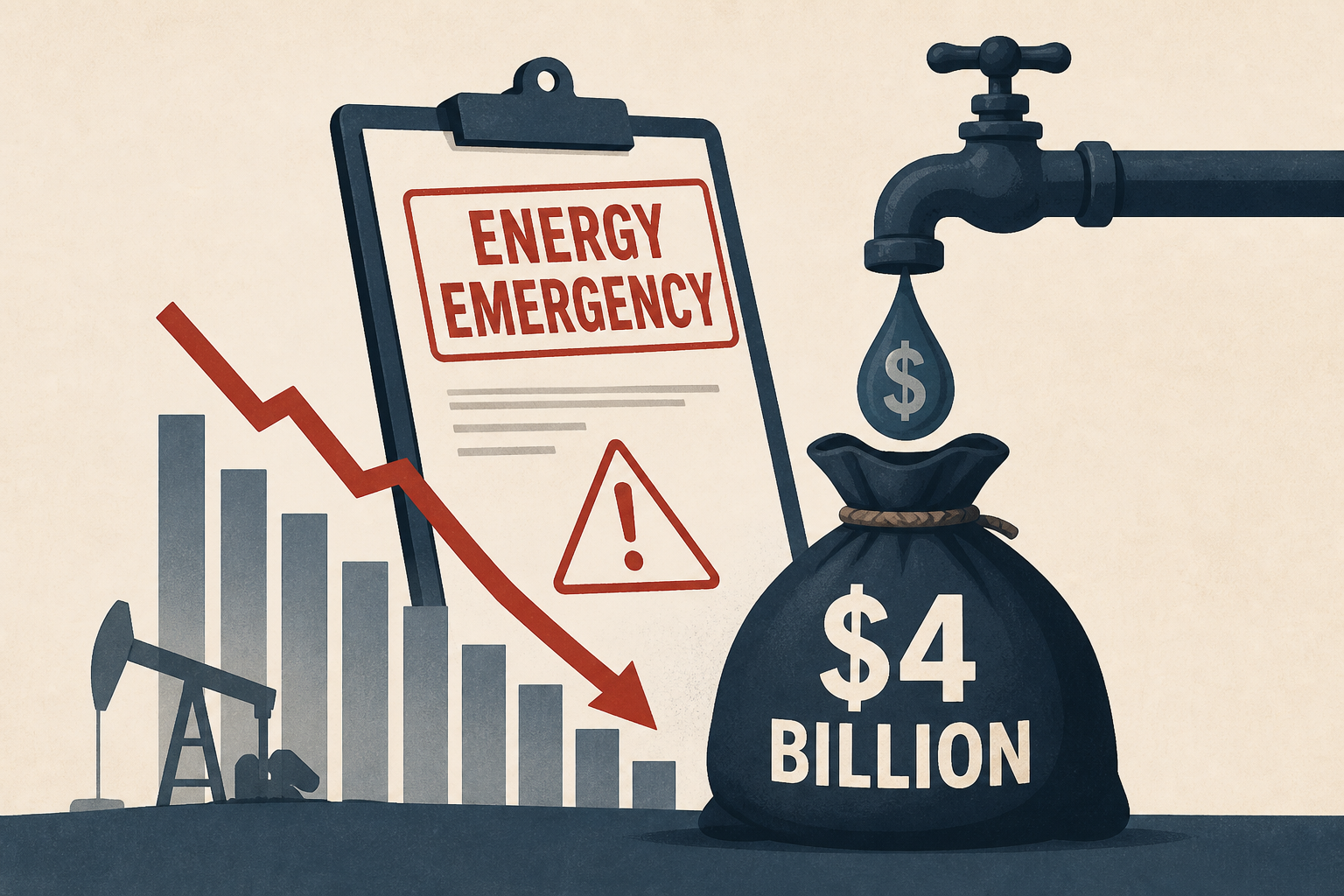
AI Generated Image
US Declared An Energy Emergency, Then Paid $4 Billion For Less Energy
Forbes • • business
Key Points:
- The Trump administration has allocated nearly $4 billion to energy companies to cancel planned offshore wind power projects, contradicting its declared national energy emergency and need for increased energy supply.
- These settlements involve canceling several gigawatts of potential future renewable energy capacity while redirecting much of the investment into fossil fuel projects, including LNG export terminals and gas turbines.
- The administration defends the payments citing reliability concerns with wind power, higher costs compared to other renewables, environmental impacts on marine life, and legal cost avoidance, but these arguments face significant criticism and factual challenges.
- This approach delays clean energy development, increases reliance on fossil fuels, and contradicts climate goals, although the $4 billion cost is small compared to the overall global clean energy investment of $2.2 trillion annually.
- The deals highlight a broader pattern of policy reversals undermining climate progress, emphasizing the need for public accountability on why funds were spent to reduce, rather than increase, energy capacity during an energy emergency.


