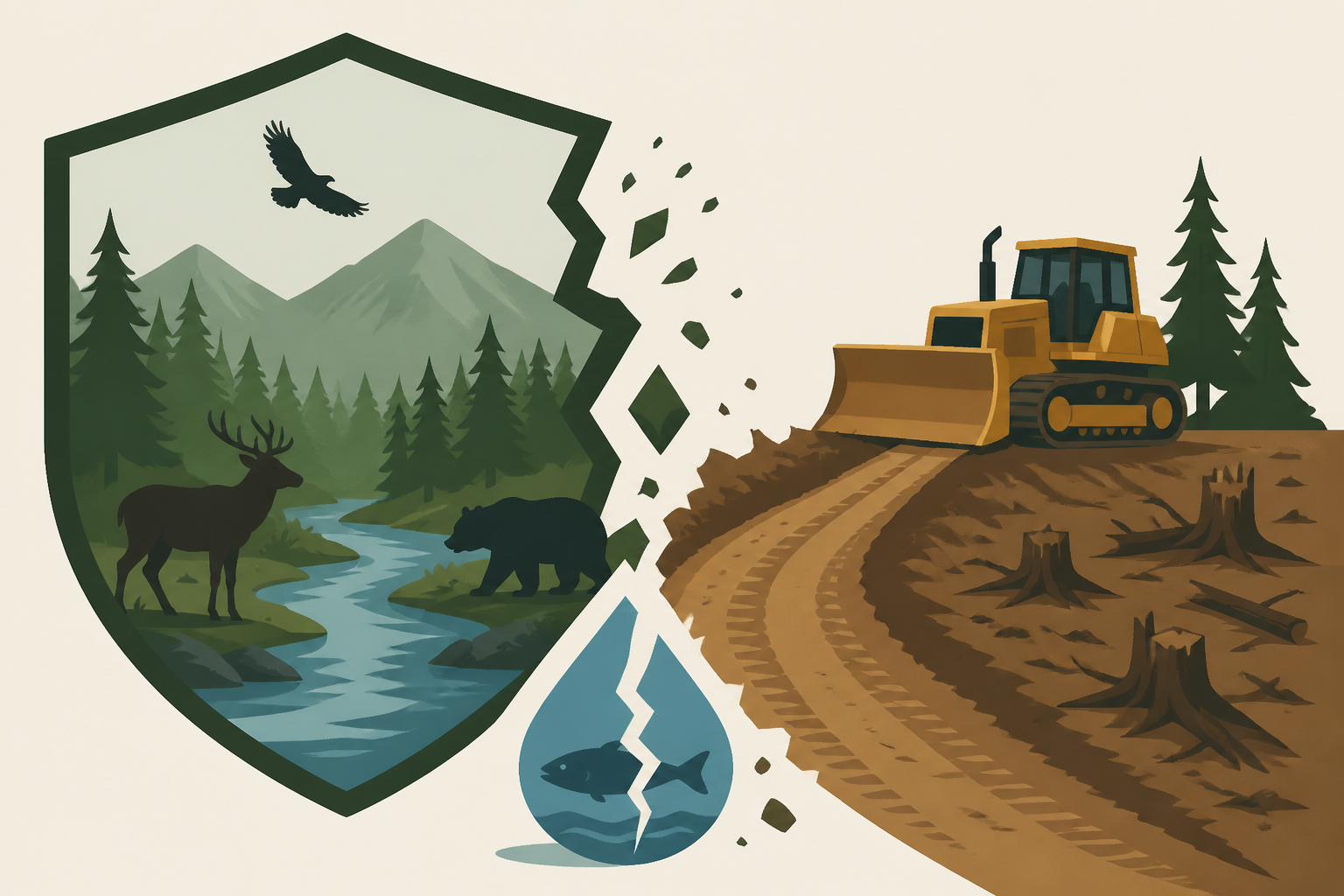
AI Generated Image
Dismantling the Roadless Rule threatens to disrupt wildlife and water in US
Ars Technica • • nation
Key Points:
- The Trump administration plans to roll back the 2001 Roadless Rule, which currently prohibits road construction and logging on nearly 59 million acres of national forest, including Alaska’s Tongass National Forest, to promote economic development.
- The Roadless Rule, established under President Clinton, protects ecologically intact areas by preventing new roads and commercial logging, thereby preserving wildlife habitat, clean water, and recreational opportunities.
- Roads in national forests contribute to ecological harm by spreading invasive species, fragmenting wildlife habitat, increasing fire risk, and disrupting aquatic ecosystems due to poorly designed culverts.
- Roadless areas serve as critical habitats for numerous imperiled species and protect watersheds supplying drinking water to 47 million Americans, with road density directly linked to watershed health degradation.
- Public opposition to rescinding the Roadless Rule remains strong, reflecting widespread support for preserving these wild areas to maintain ecosystem health and provide outdoor recreational benefits for future generations.


