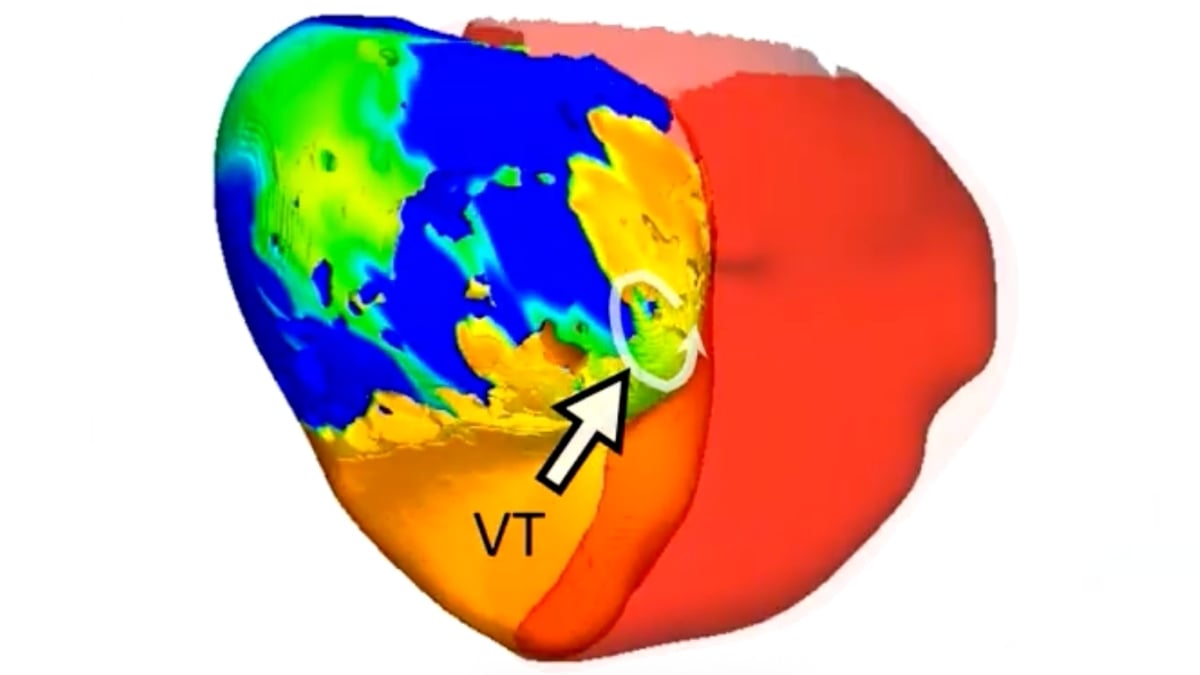
Doctors Treated a Deadly Heart Rhythm With Help From a Digital Twin
ScienceAlert • • health
Key Points:
- Researchers at Johns Hopkins University developed precise virtual replicas, or digital twins, of patients' hearts to better guide treatment for ventricular tachycardia, a dangerous arrhythmia causing about 300,000 U.S. deaths annually.
- In a small FDA-approved trial involving 10 patients, the digital twin technology helped doctors target ablation more accurately, resulting in eight patients having no arrhythmias over a year and two experiencing only brief episodes during healing.
- The digital twins simulate the heart's electrical activity, allowing doctors to virtually test ablation sites before performing the procedure, potentially reducing trial-and-error, procedure time, and tissue damage.
- This approach may improve the success rate of ventricular tachycardia treatment beyond the typical 60%, and most patients were able to discontinue anti-arrhythmia medications after the procedure.
- The study marks an early but promising step in applying advanced modeling technology from aerospace and other fields to personalized cardiac care, with larger studies needed to confirm effectiveness.


