AI Image
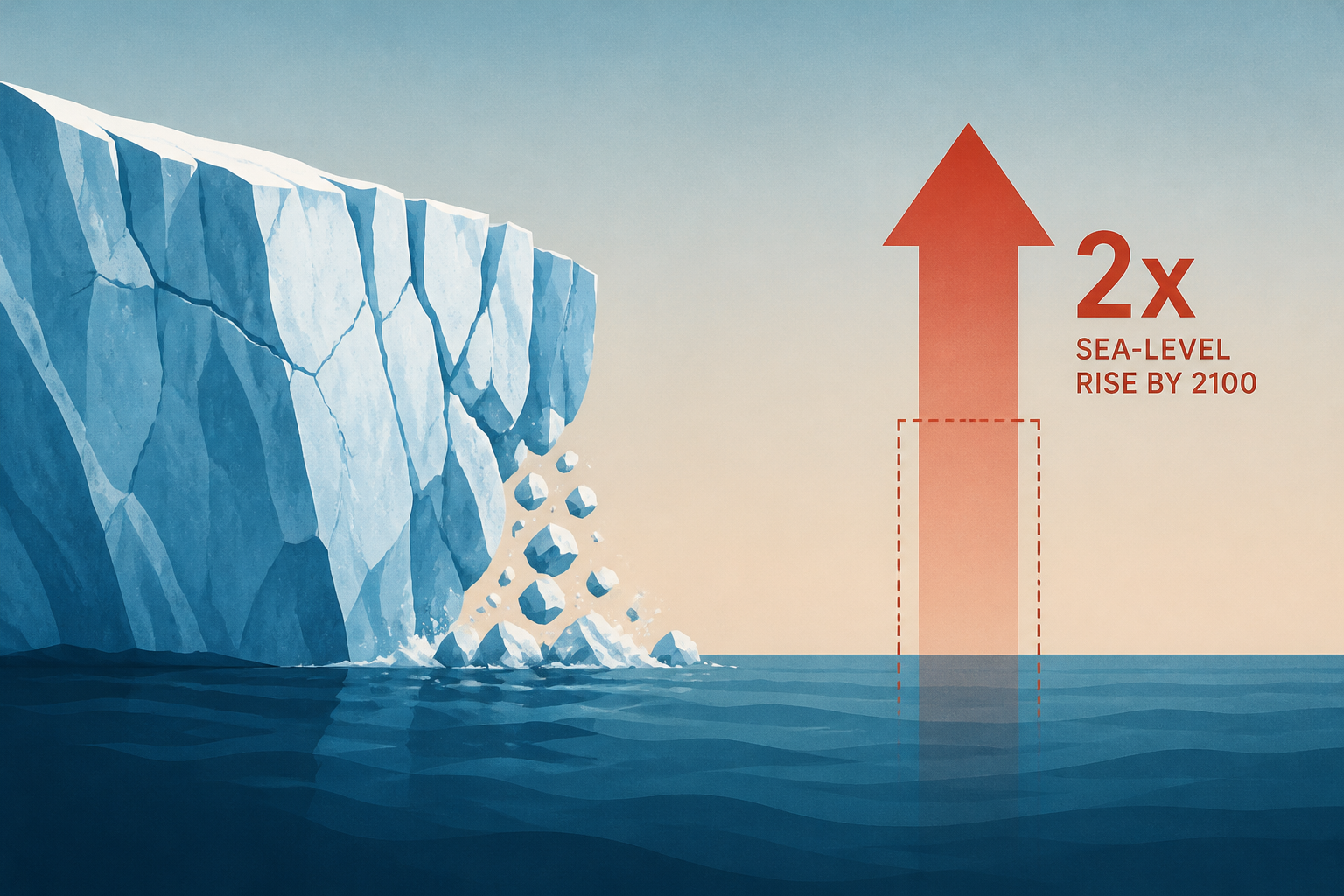
'Doomsday Glacier' Could Contribute Twice as Much to Sea-Level Rise by 2100, Scientists Warn
Ground News • • science
Key Points:
- The Thwaites Glacier in West Antarctica, the world's largest glacier and roughly the size of Florida, is melting more rapidly than previously predicted, posing a significant threat to global sea level rise.
- New research suggests its melting could contribute up to three centimeters to the global average sea level, potentially doubling earlier estimates of its impact.
- The glacier's accelerated retreat is driven by warm ocean waters undermining its base, increasing the risk of a major collapse by 2100 with catastrophic consequences for coastal communities worldwide.
- Scientists warn that the glacier's collapse, often referred to as the "Doomsday Glacier," could cause severe and widespread flooding from cities like Miami to Manila, emphasizing the urgent need for refined forecasts and climate action.


