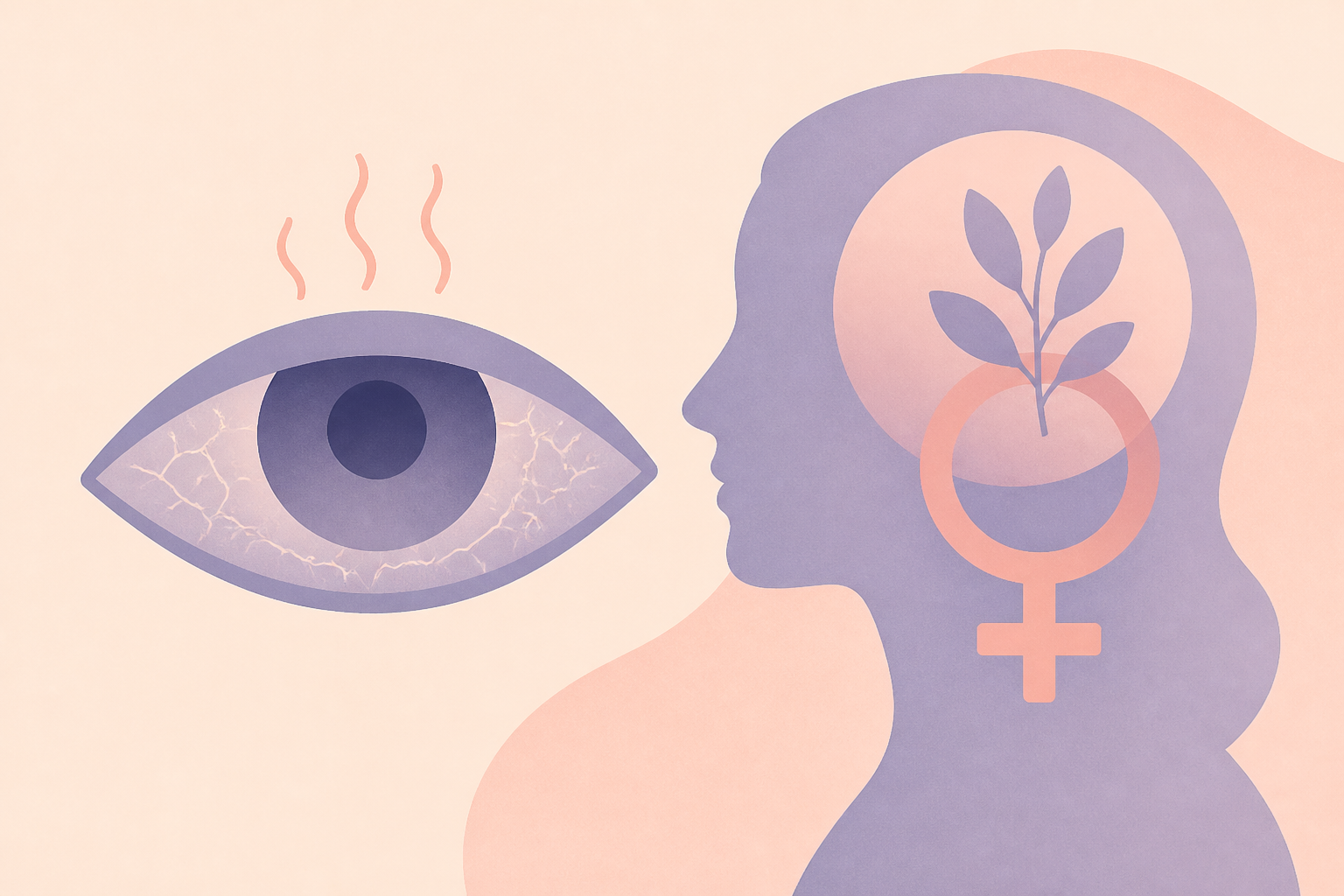
AI Generated Image
Dry eyes happens during menopause in many women : NPR
NPR • • health
Key Points:
- Dry eye syndrome is highly prevalent among women in perimenopause and menopause, with about half experiencing symptoms such as irritation, redness, and difficulty tolerating contact lenses.
- The condition is linked to hormonal changes, particularly the decline in androgens and estrogen, which affect the oil-producing meibomian glands and tear production, leading to faster tear evaporation and ocular inflammation.
- Other contributing factors include prolonged screen time, contact lens use, certain medications, allergies, and skin conditions like rosacea and eczema.
- Dry eyes can significantly impact daily activities such as reading, driving, and work productivity, and if untreated, may cause corneal damage, blurred vision, and increased infection risk.
- While there is no cure, treatment options range from lifestyle changes and home remedies to prescription medications and in-office procedures, often requiring personalized approaches to manage symptoms effectively.


