AI Image
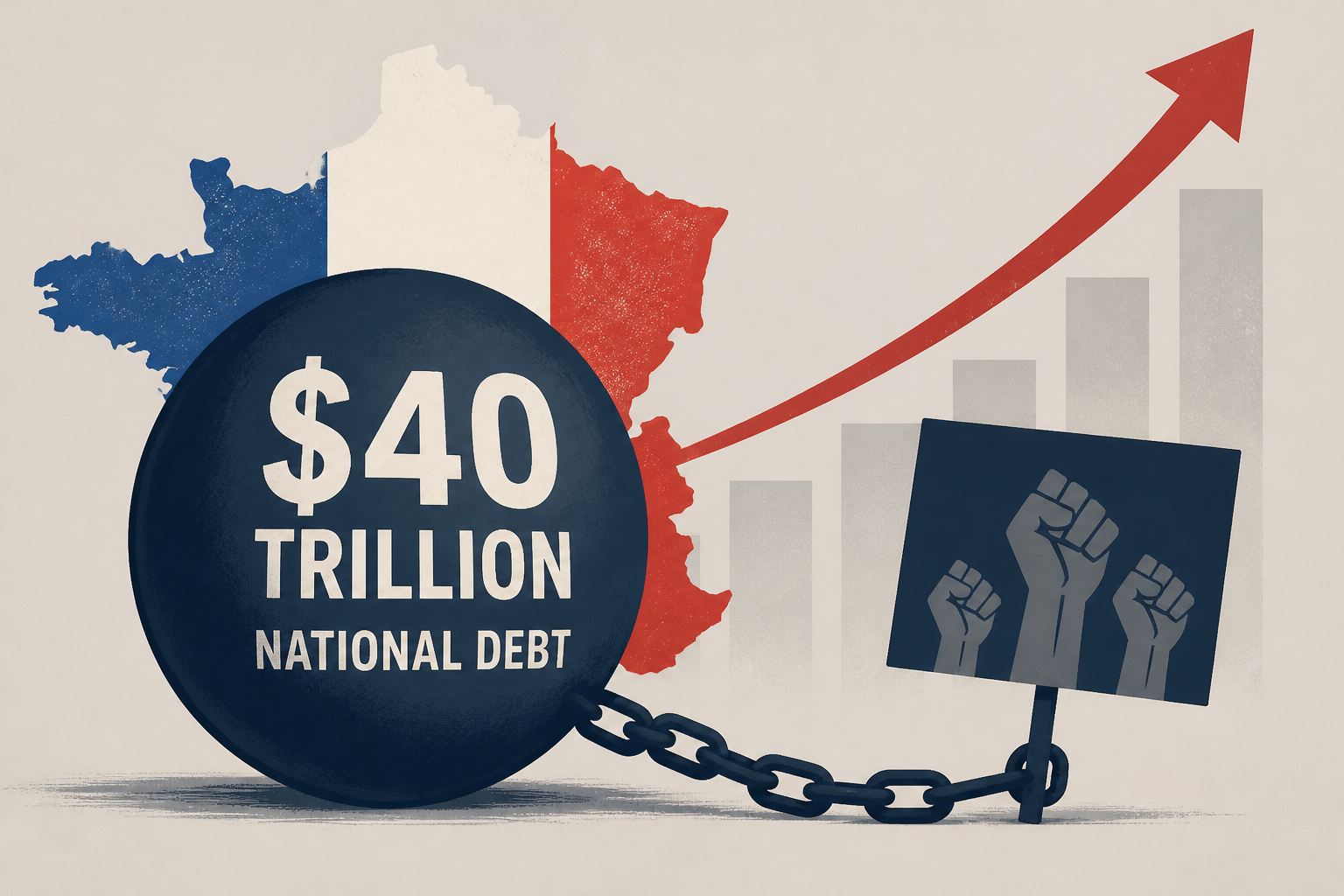
Economists see 'pretty big foreshadowing' in France protests as national debt hits $40 trillion
Fortune • • business
Key Points:
- Protests in Paris began over failures in the public school system but expanded to broader grievances about the cost of living and job prospects amid France's weak macroeconomic conditions.
- France faces high public debt at 116% of GDP, low GDP growth of 0.4%, and elevated unemployment of 8.3%, contrasting with the U.S., which has lower debt-to-GDP (around 100%) and stronger growth (over 2%).
- Economists note France's limited capacity to raise taxes due to a high tax wedge of 47.2%, while the U.S. has more fiscal flexibility with a 30% tax wedge, allowing for more policy experimentation to address debt issues.
- The generational impact of debt is a major concern, with young people in France leading protests over economic disparities, highlighting potential future social and economic challenges as debt reaches critical levels.
- Budget experts emphasize the importance of timely policy decisions on taxation and spending to equitably distribute the debt burden across generations and income levels, warning that delayed action shifts the burden unevenly.


