Engineered immunosuppressive dendritic cells protect against cardiac remodelling
Nature • • health
Key Points:
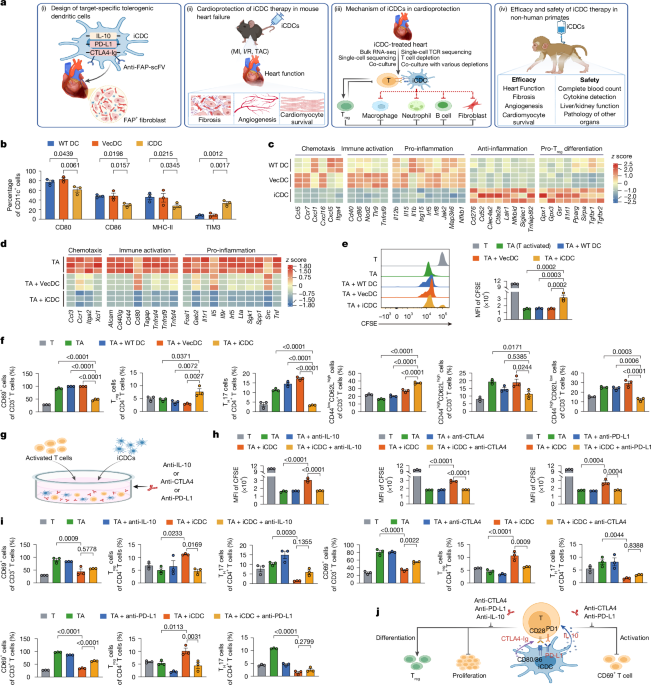
- Researchers engineered dendritic cells (iCDCs) expressing a fibroblast activation protein (FAP)-specific chimeric antigen receptor (CAR) with immunomodulatory payloads (CTLA4-Ig, PD-L1, IL-10), resulting in elevated secretion of anti-inflammatory factors and altered expression of co-stimulatory and inhibitory molecules, promoting an immunosuppressive phenotype.
- In mouse models of myocardial infarction (MI) and ischemia/reperfusion (I/R) injury, iCDC treatment improved cardiac function, reduced fibrosis, enhanced angiogenesis, and increased survival, with dose-dependent benefits observed and effective targeting of FAP-expressing fibroblasts in injured hearts.
- Single-cell transcriptomic and flow cytometry analyses revealed that iCDCs modulate multiple immune cell populations in the heart, including suppression of pro-inflammatory T cells, macrophages, neutrophils, and B cells, while promoting regulatory T cell expansion and anti-inflammatory gene expression, contributing to cardiac repair.
- iCDC therapy also downregulated profibrotic gene expression and extracellular matrix remodeling in cardiac fibroblasts, reducing fibroblast activation and MHC-II expression, thereby attenuating fibrosis and supporting tissue remodeling after cardiac injury.
- Safety assessments in mice and non-human primates showed that iCDC treatment did not induce systemic toxicity or adverse histopathological effects in major organs, and was associated with reduced pro-inflammatory cytokines and arrhythmia episodes, supporting its translational potential for heart failure therapy.


