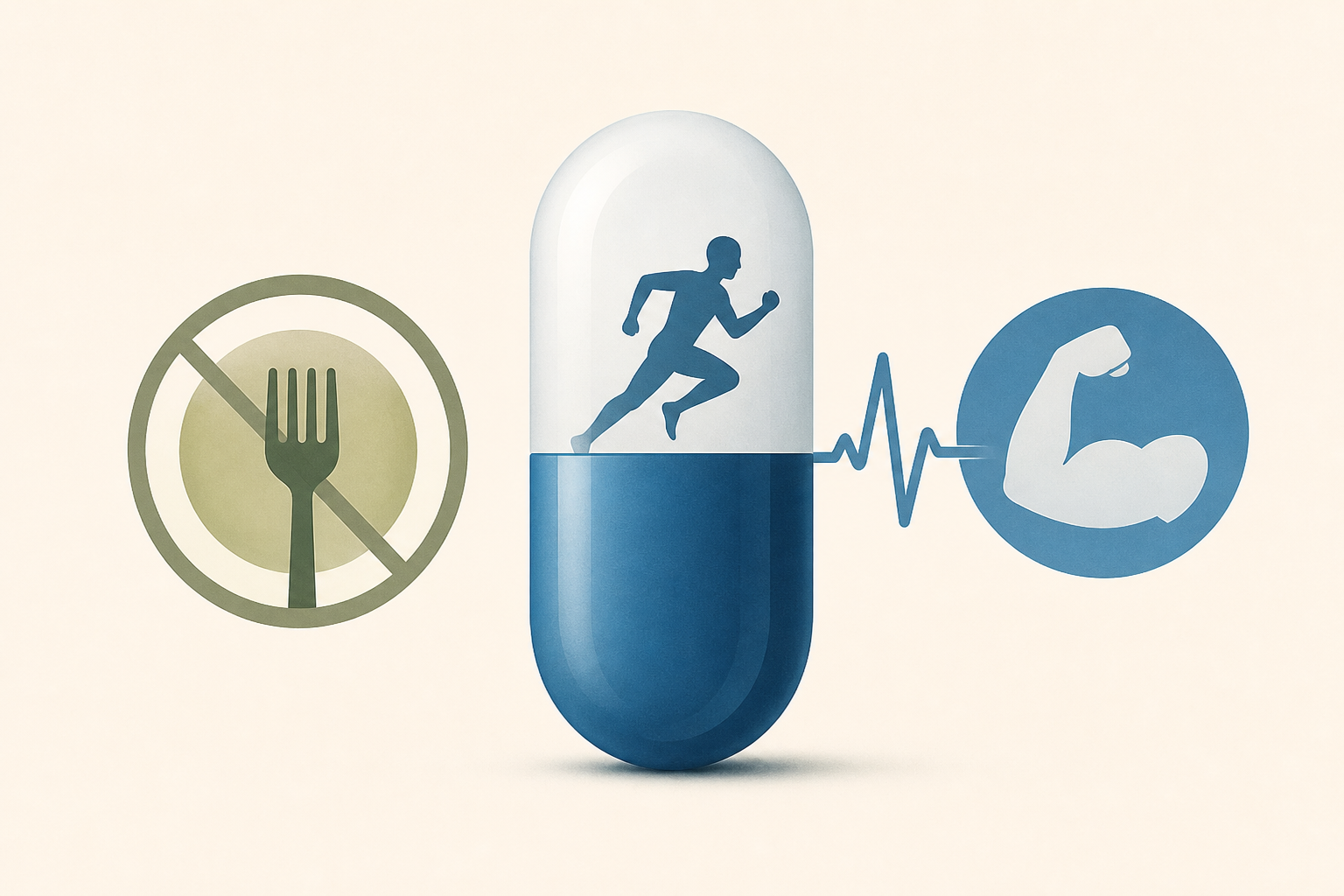
AI Generated Image
Experimental 'exercise pill' may reduce appetite and mimic physical activity
New York Post • • health
Key Points:
- Biotech company Enveda announced promising Phase 1 clinical trial results for ENV-308, an experimental drug designed to mimic exercise's effects by curbing appetite and potentially aiding weight loss without common side effects of existing treatments.
- ENV-308 works by mimicking lactate phenylalanine (Lac-Phe), a molecule naturally produced during vigorous exercise that signals the brain to reduce hunger, but with longer-lasting effects than natural Lac-Phe, which breaks down quickly.
- The trial showed ENV-308 was well tolerated with an exceptional gastrointestinal safety profile, addressing a major drawback of GLP-1 weight loss drugs like nausea and muscle loss, and animal studies suggest it may preserve lean muscle mass during weight loss.
- Future trials will assess ENV-308's impact on body weight, metabolic health, and its interaction with GLP-1 medications, with potential uses also being explored for other exercise-benefiting conditions such as migraines and inflammatory diseases.
- Despite early excitement, ENV-308 remains in early development and will require extensive further testing and FDA approval before it could become available, and experts caution it is not a substitute for the broad health benefits of actual exercise.


