AI Image
Face of earliest human seen for first time in 300,000 years
AOL.com • • science
Key Points:
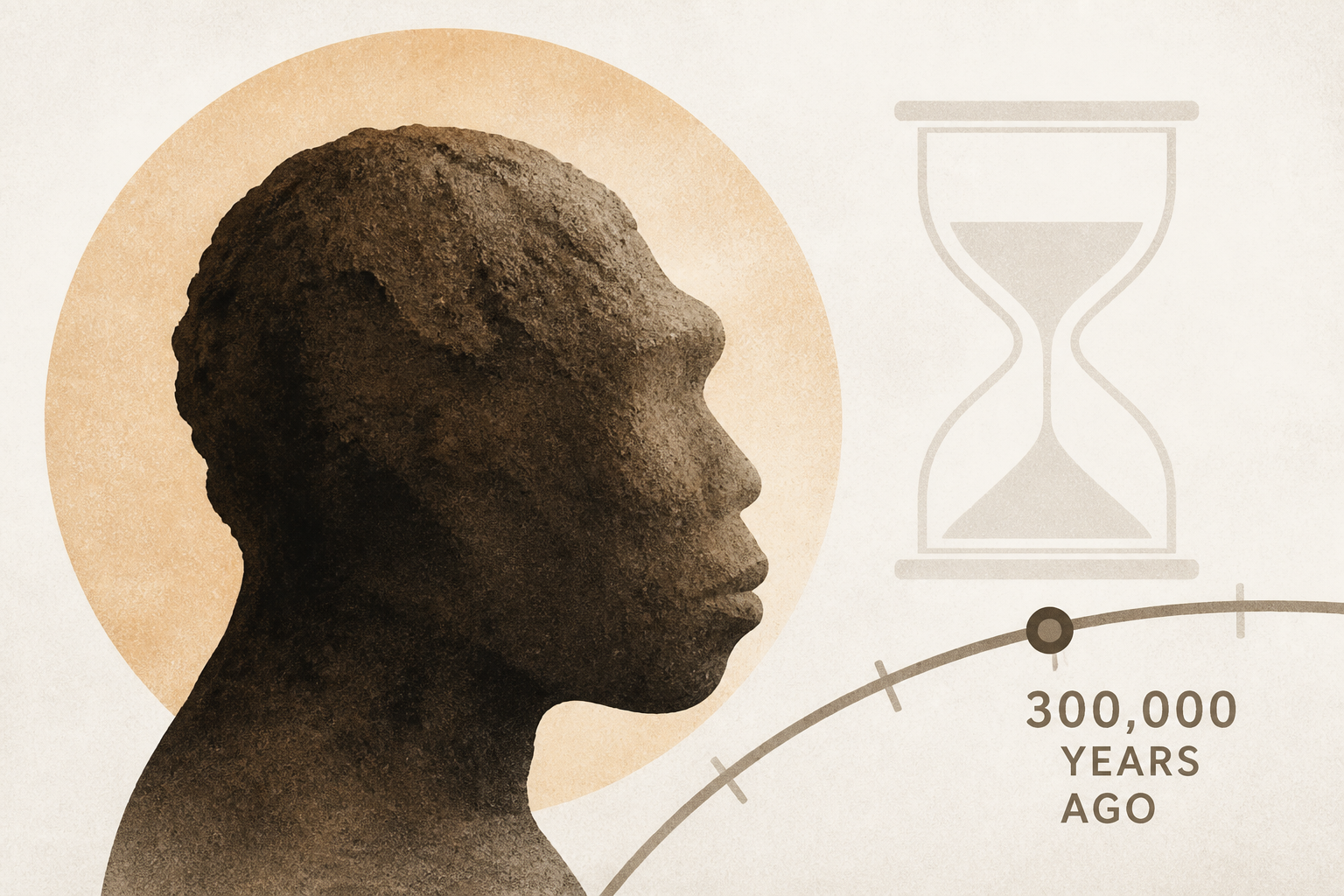
- The face of the oldest known Homo sapiens, dating back over 300,000 years, has been digitally reconstructed from a fossilized skull found in Jebel Irhoud, Morocco, initially mistaken for a Neanderthal until reclassified in 2017.
- The reconstruction reveals a man with features very similar to modern humans, including brain volume comparable to today's average adult males, although with subtle differences like a more robust brow and wider nose.
- Experts used 3D digital modeling and anatomical data from African populations to add soft tissue and plausible traits such as dark skin, hair, and a beard, based on regional and historical evidence.
- Excavations at Jebel Irhoud have uncovered multiple Homo sapiens fossils, stone tools, evidence of fire use, and butchered animal bones, indicating complex behavior and diet among early humans.
- The research, highlighting the close resemblance yet subtle differences between ancient and modern humans, was published in the journal Heritage and provides insight into early human life and evolution.


