AI Image
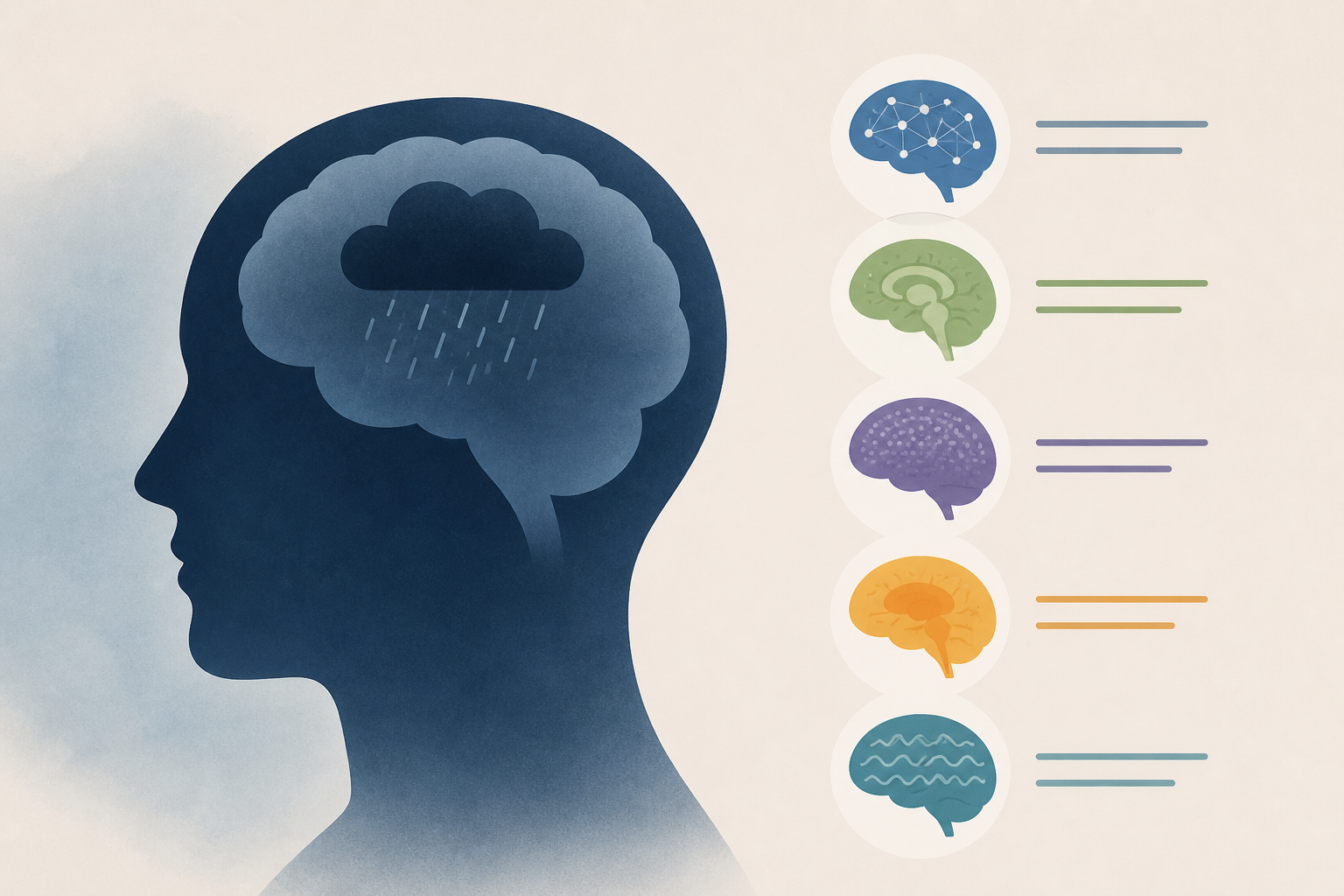
Five Brain Profiles of Depression Identified
Neuroscience News • • health
Key Points:
- Researchers at the University of Helsinki identified five distinct neurophysiological subtypes of major depressive disorder (MDD) using magnetoencephalography (MEG) to measure whole-brain functional connectivity with millisecond precision.
- These subtypes exhibit contrasting brain connectivity patterns, ranging from hyper-connected networks linked to severe substance abuse to hypoconnectivity associated with pronounced PTSD symptoms, explaining previous conflicting research findings.
- The study involved 263 depressed patients and 75 healthy controls, revealing that MDD is not a uniform biological condition but comprises diverse neurophysiological profiles aligned with distinct symptom constellations.
- MEG's high temporal resolution allowed detection of fast electrical brain dynamics missed by slower imaging methods, offering a foundation for developing biomarker-guided and personalized psychiatric treatments.
- Although clinical application is not immediate, this research paves the way for precision psychiatry by potentially enabling targeted therapeutic interventions based on objective brain connectivity profiles.


