AI Image
Fruit fly beats Claude Opus 5 at chess
New York Post • • technology
Key Points:
- Scientists at HHMI Janelia Research and Google Research fully mapped the neural pathways of an adult male fruit fly, cataloguing 166,000 neurons and 25.6 million connections, and made the data publicly available on September 3.
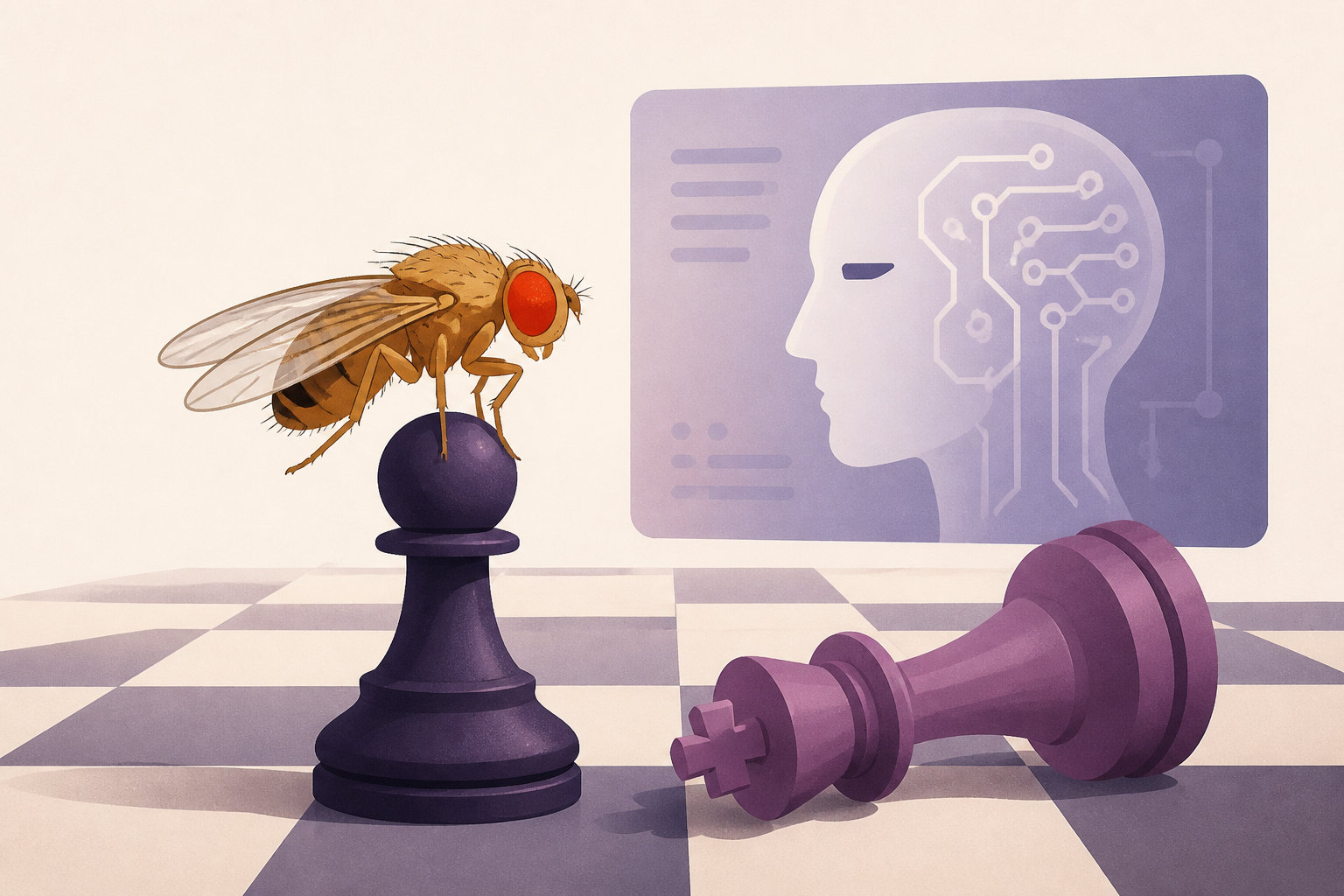
- Innovators used the digitized fruit fly brain to power various applications, including a chess engine that defeated one of the most advanced AI models, Claude Opus 5, by delivering checkmate in just 11 moves.
- Other experiments involved the fruit fly brain managing a $100 cryptocurrency portfolio with simulated dopamine rewards, competing in a fighting game, and playing blackjack, demonstrating varied success across different tasks.
- The fruit fly neural network has also been integrated into homemade robots such as animatronic cats, crab-like walkers, and small drones, showcasing its versatility in controlling diverse mechanical systems.
- These experiments highlight both the potential and limitations of biologically inspired AI, suggesting that even a simple brain like that of a fruit fly can outperform sophisticated AI models in certain scenarios.


