AI Image
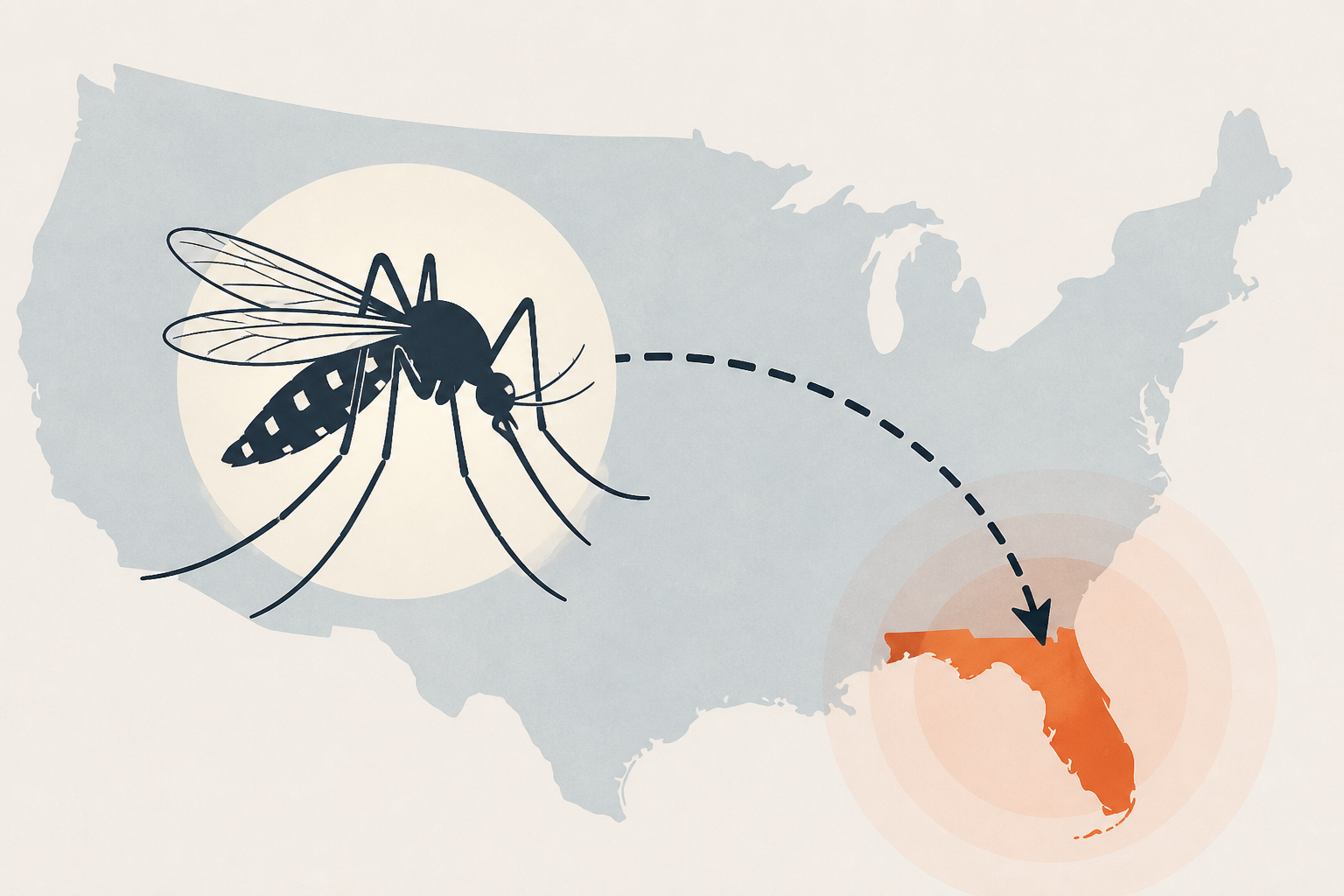
Dengue‑carrying mosquitoes expand their reach into new territories - including Florida
CNN • • health
Key Points:
- The Florida Department of Health confirmed the first dengue fever death in Hillsborough County on Sept. 4, 2026, amid an outbreak with 134 cases reported that summer, highlighting local transmission of a disease typically associated with tropical regions.
- Dengue is spread by Aedes mosquitoes, which thrive in warm urban areas and breed in small amounts of standing water; the virus is often mistaken for flu or COVID-19, delaying diagnosis and treatment.
- While most dengue cases resolve with rest and fluids, about 5% progress to severe dengue, which can cause life-threatening complications such as bleeding and organ damage, especially in vulnerable groups like the elderly and those with chronic conditions.
- There is no antiviral treatment for dengue; management focuses on symptom relief and careful monitoring of severe cases in hospitals, while prevention relies on mosquito control and personal protection measures since vaccines are limited to select populations.
- Dengue is increasing globally due to climate change and urbanization, with the U.S., particularly Florida, seeing more local cases; travelers can introduce the virus, making awareness and early medical attention critical to preventing severe outcomes.


