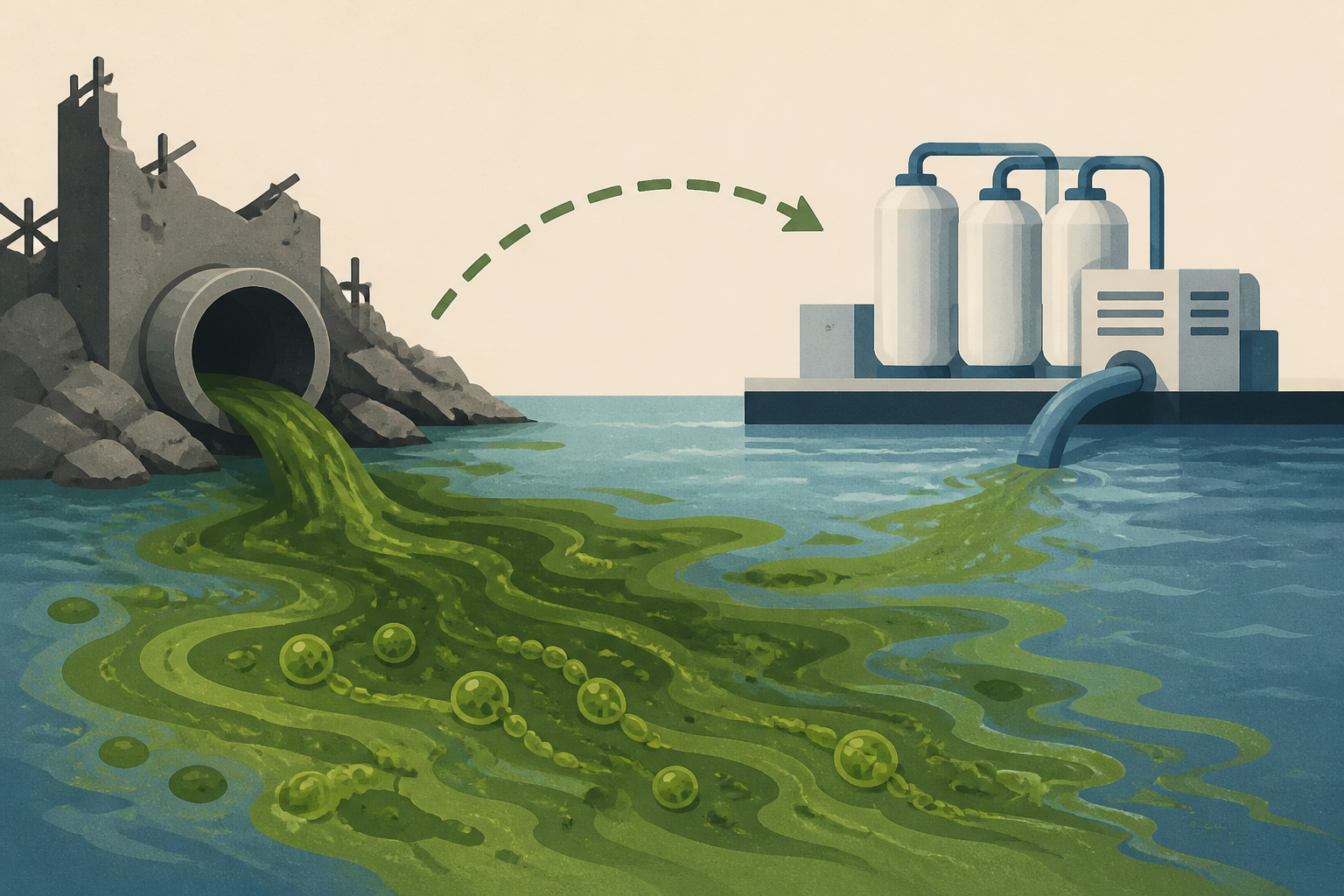
AI Generated Image
Gaza’s destroyed sewage system linked to ‘rare’ algae bloom shutting Israeli desalination plants
Middle East Eye • • world
Key Points:
- A massive algae bloom along Israel's Mediterranean coast has forced the shutdown of five out of six major desalination plants, which supply at least 65% of the country's drinking water, marking an unprecedented environmental disruption.
- Scientists suggest the bloom was triggered by a combination of factors including warm seawater, strong sunlight, ocean currents, and nutrient pollution, with untreated sewage from Gaza's damaged wastewater infrastructure being a significant contributing source.
- The algae bloom, identified as caused by cyanobacteria of the genus Synechococcus, began near Egypt’s Nile Delta and spread northwards, highlighting regional environmental interconnections and the impact of climate change on marine ecosystems.
- Israeli authorities have managed the water supply by increasing alternative sources and restricting irrigation, but the crisis has exposed vulnerabilities in Israel's heavy reliance on coastal desalination plants.
- Experts warn that such harmful algal blooms may become more frequent due to ongoing Mediterranean warming and environmental stressors, emphasizing the need for improved wastewater management and regional cooperation.


