AI Image
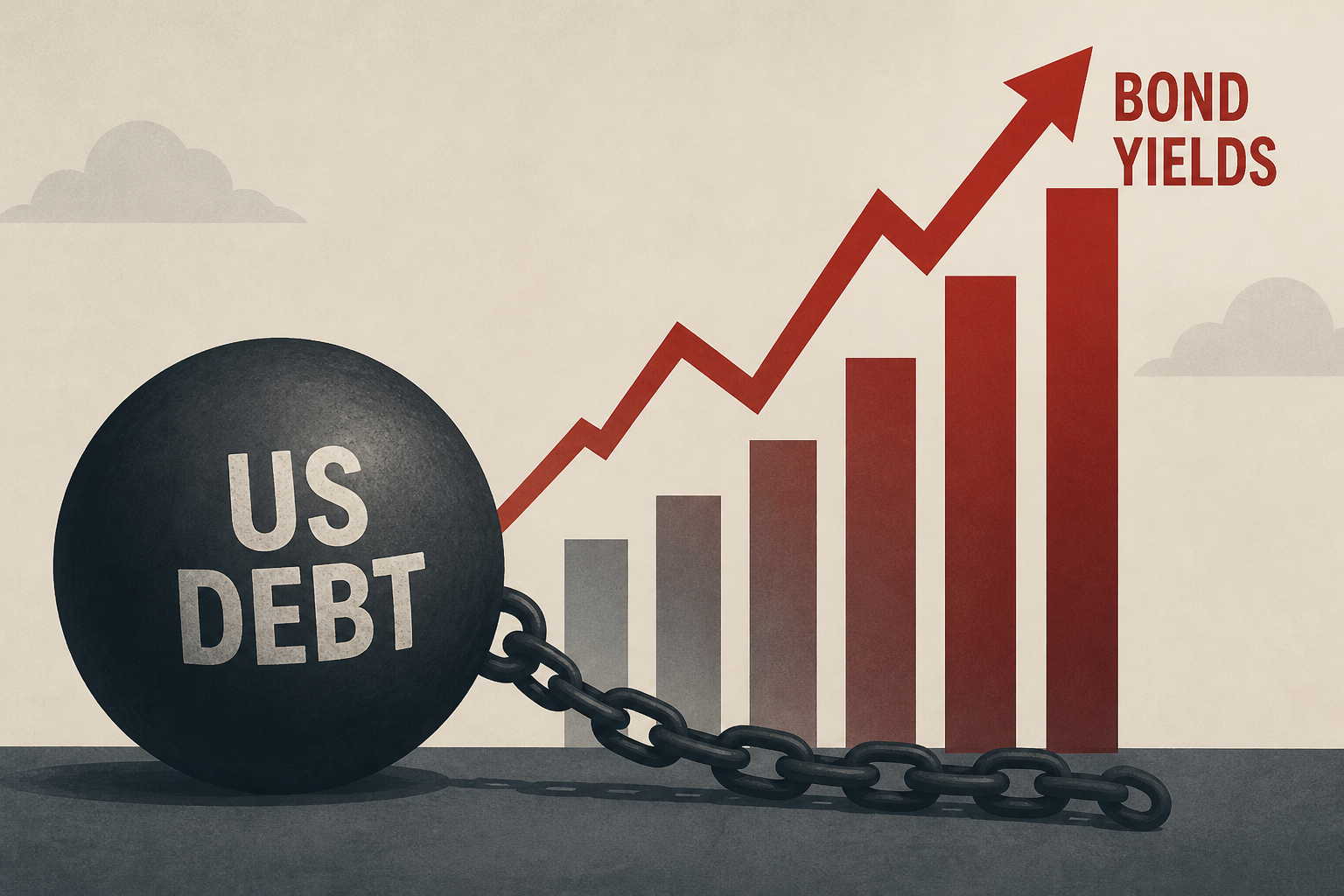
Here's how much worse US debt could get as bond yields surge to the highest levels in two decades
Fortune • • business
Key Points:
- The 10-year U.S. Treasury yield surged to 5.23%, the highest since 2007, and the 30-year yield reached 5.49%, the highest since 2004, driven by factors including rising oil prices, strong economic activity, and $40 trillion in U.S. debt.
- These yields have surpassed the Congressional Budget Office’s (CBO) February forecasts, which had predicted much lower rates, raising concerns about increased interest expenses on U.S. debt, already costing $1 trillion annually.
- The CBO analyzed a scenario where interest rates rise by one percentage point above baseline, projecting the total deficit could grow to 14% of GDP by 2056, with publicly held debt soaring to 222% of GDP, significantly higher than current levels.
- Higher debt and interest costs are expected to slow economic growth, with GDP projected to be 0.1 percentage points below baseline, challenging hopes that growth alone can offset rising debt burdens.
- In contrast, the CBO outlined a hypothetical scenario of fiscal restraint where debt remains flat at 101% of GDP, resulting in smaller deficits and slightly higher GDP growth, highlighting the economic benefits of disciplined fiscal policy.


