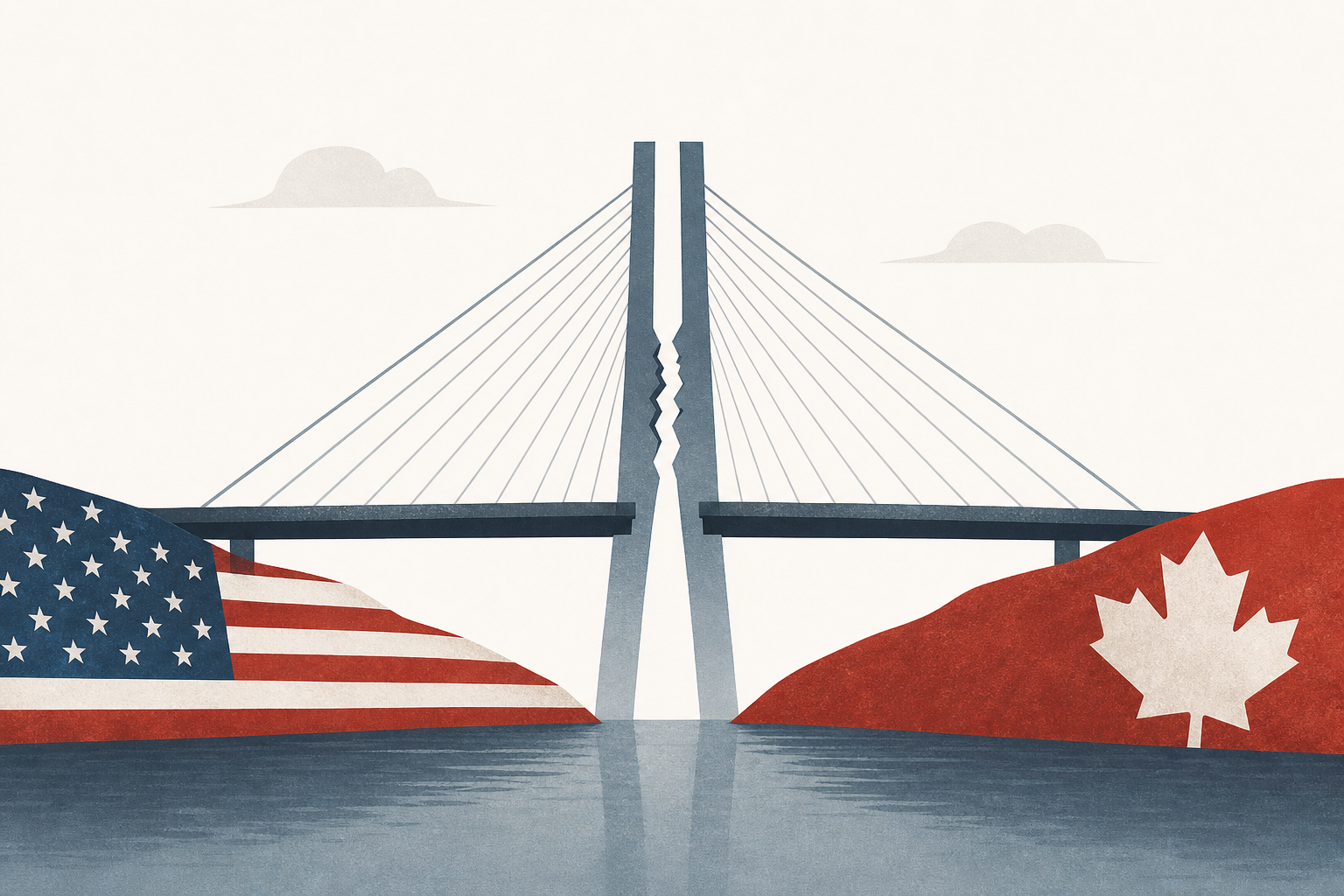
AI Generated Image
How the Gordie Howe bridge became a symbol of a strained US
BBC • • general
Key Points:
- The Gordie Howe International Bridge, a C$6.4bn project connecting Detroit and Windsor, was intended to symbolize US-Canada unity but has instead highlighted tensions due to recent trade disputes and tariff threats from the Trump administration.
- Canada initially funded the bridge entirely to bypass US political resistance, agreeing to share toll revenues with Michigan only after recouping costs, but recent US demands led to Canada agreeing to split revenues for 15 years and delay the bridge opening.
- The project has faced opposition from the Moroun family, owners of the nearby Ambassador Bridge, with ties to Trump, complicating negotiations and fueling political drama around the bridge's inauguration.
- Canadian Prime Minister Mark Carney has faced criticism for conceding to US demands amid a broader challenging trade relationship, with some Canadian politicians accusing his government of negotiating from a position of weakness.
- Despite criticism, experts and some provincial leaders acknowledge the concession was necessary to maintain vital trade links, while calls grow for stronger Canadian leverage in ongoing trade talks with the US.


