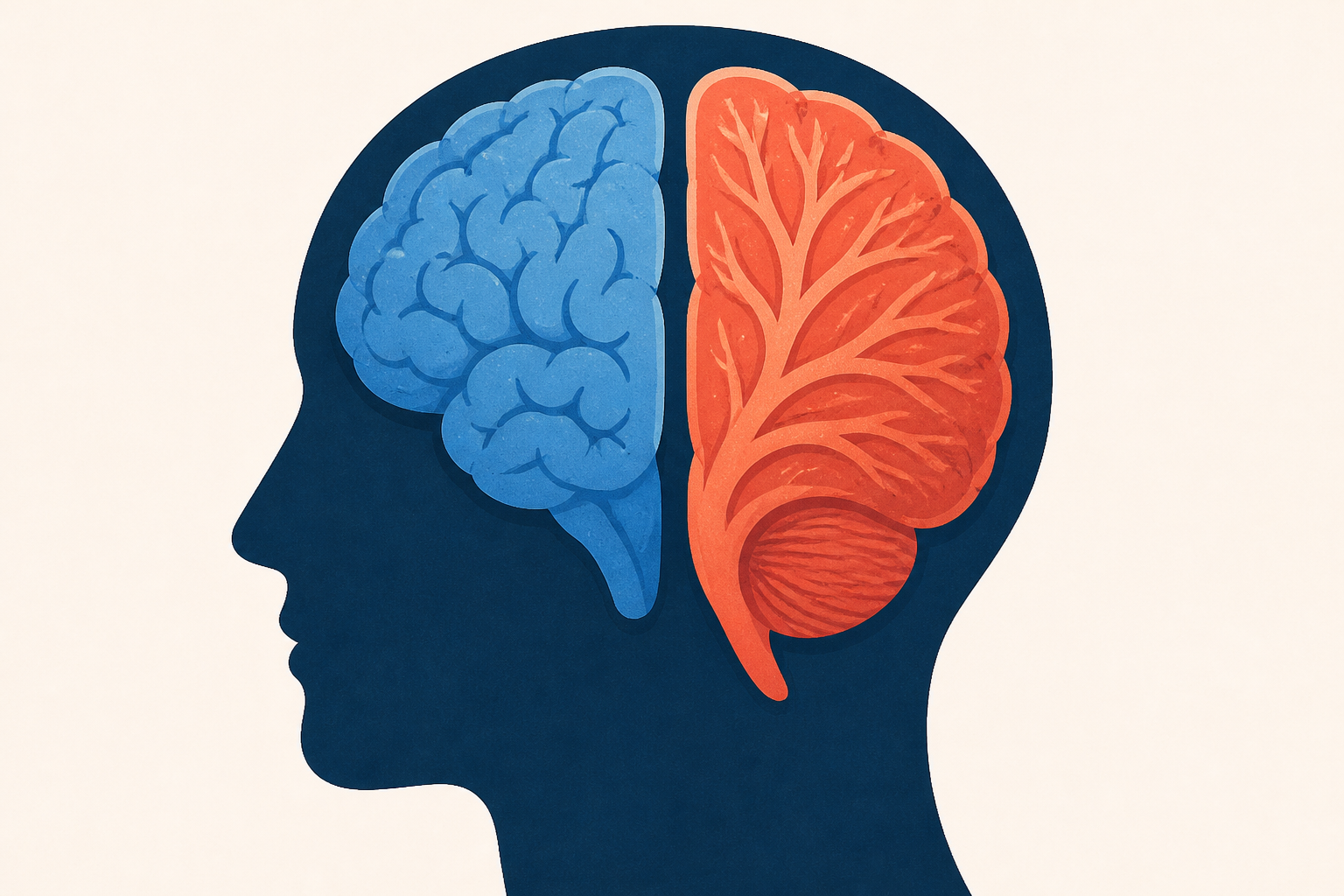
AI Image
Human brain is really 2 organs, Stanford study finds
NewsNation • • health
Key Points:
- A Stanford Medicine-led study reveals that the human brain consists of two separate organs—the front and back parts—that evolved independently from different starting cells over hundreds of millions of years.
- This discovery explains why previous efforts to grow hindbrain nerve cells in the lab failed, as forebrain and midbrain progenitors cannot be converted into hindbrain cells.
- Research on mouse embryos, chickens, zebrafish, and acorn worms showed two distinct groups of starting cells giving rise to different brain regions, supporting the theory of separate evolutionary origins.
- The findings suggest that evolution combined two neural systems into one brain, and this insight could advance the study of neurological diseases like spinal muscular atrophy (SMA) and ALS by focusing on back-brain cells.
- Scientists plan to extend their research to the spinal cord to better understand how these diseases damage hindbrain-related cells.


