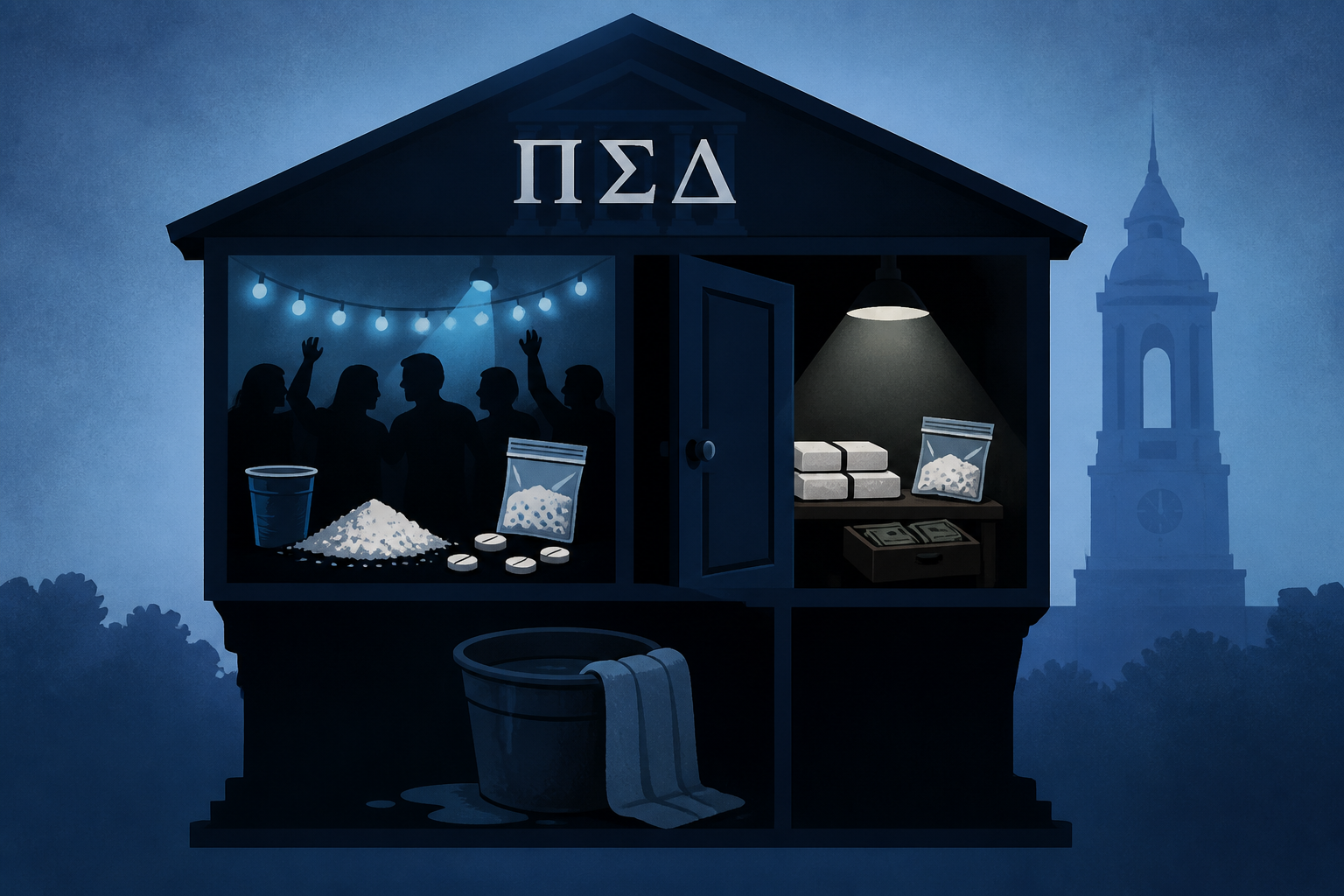
AI Generated Image
Inside the Penn State frat house drug ring - coke and molly parties, secret dealing rooms and hazing
New York Post • • nation
Key Points:
- Thirteen members of Penn State's Sigma Chi and Delta Upsilon fraternities were arrested for wide-scale cocaine dealing and distribution, with allegations of drug-fueled parties and severe hazing practices targeting freshmen.
- Court documents reveal pledges were forced to package drugs for sale and subjected to degrading hazing, including personal servitude and graphic challenges, highlighting a deeply ingrained drug culture at the university.
- Parties involving MDMA, known as Molly, were reportedly organized as large end-of-semester events, with drug transactions conducted discreetly through Venmo and specific "drug rooms" at fraternity houses.
- The scandal has negatively impacted the reputation of fraternities at Penn State, with several chapters banned or suspended amid ongoing investigations into hazing and abuse, prompting calls for stronger reforms and oversight.
- University officials condemned the behavior, urging students to report hazing and avoid unrecognized organizations, while emphasizing that such conduct violates university policies and state and federal laws.


