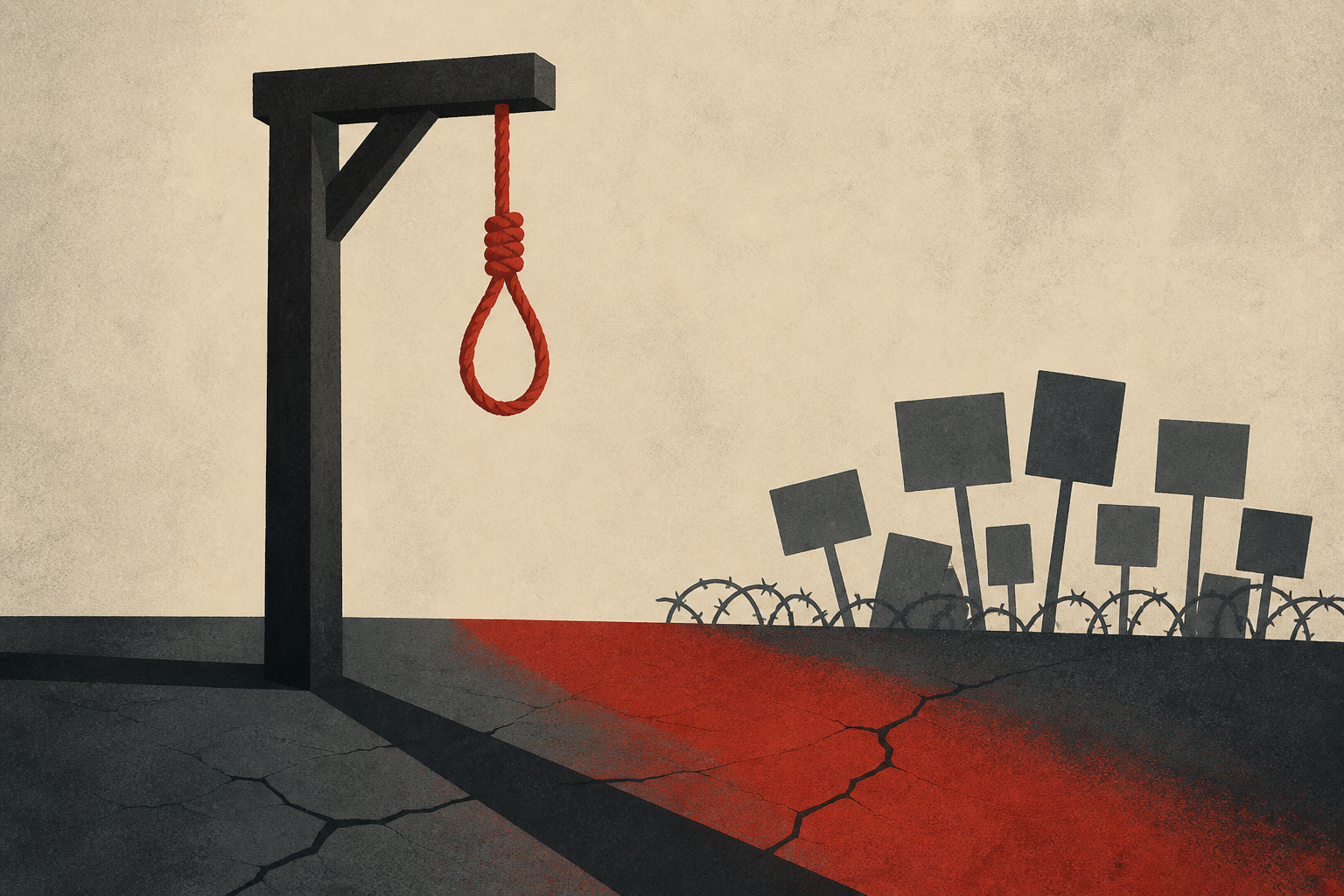
AI Generated Image
Iran executes protesters in public as regime expands postwar repression, human rights groups say
ABC News - Breaking News, Latest News and Videos • • world
Key Points:
- Iran has resumed public executions, hanging three young protesters in Isfahan for alleged involvement in January protests, amid a broader crackdown on dissent following months of conflict with the U.S. and domestic unrest.
- Since March 19, at least 56 people have been executed on national security charges linked to protests, with over 100 others reportedly at risk, according to the UN High Commissioner for Human Rights and Iranian lawyers.
- Families and human rights groups report that the defendants faced torture, forced confessions, lack of proper legal representation, and secretive trials, raising serious concerns about the fairness of the judicial process.
- The executions have sparked public protests and widespread fear among Iranians, with social media reflecting the trauma caused by the regime's use of the morning prayer call as a prelude to executions.
- International organizations like Amnesty International and the UN have condemned the executions and called for coordinated diplomatic pressure on Iran to halt further death sentences, highlighting the risks faced by minors and the broader community under threat from the regime.


