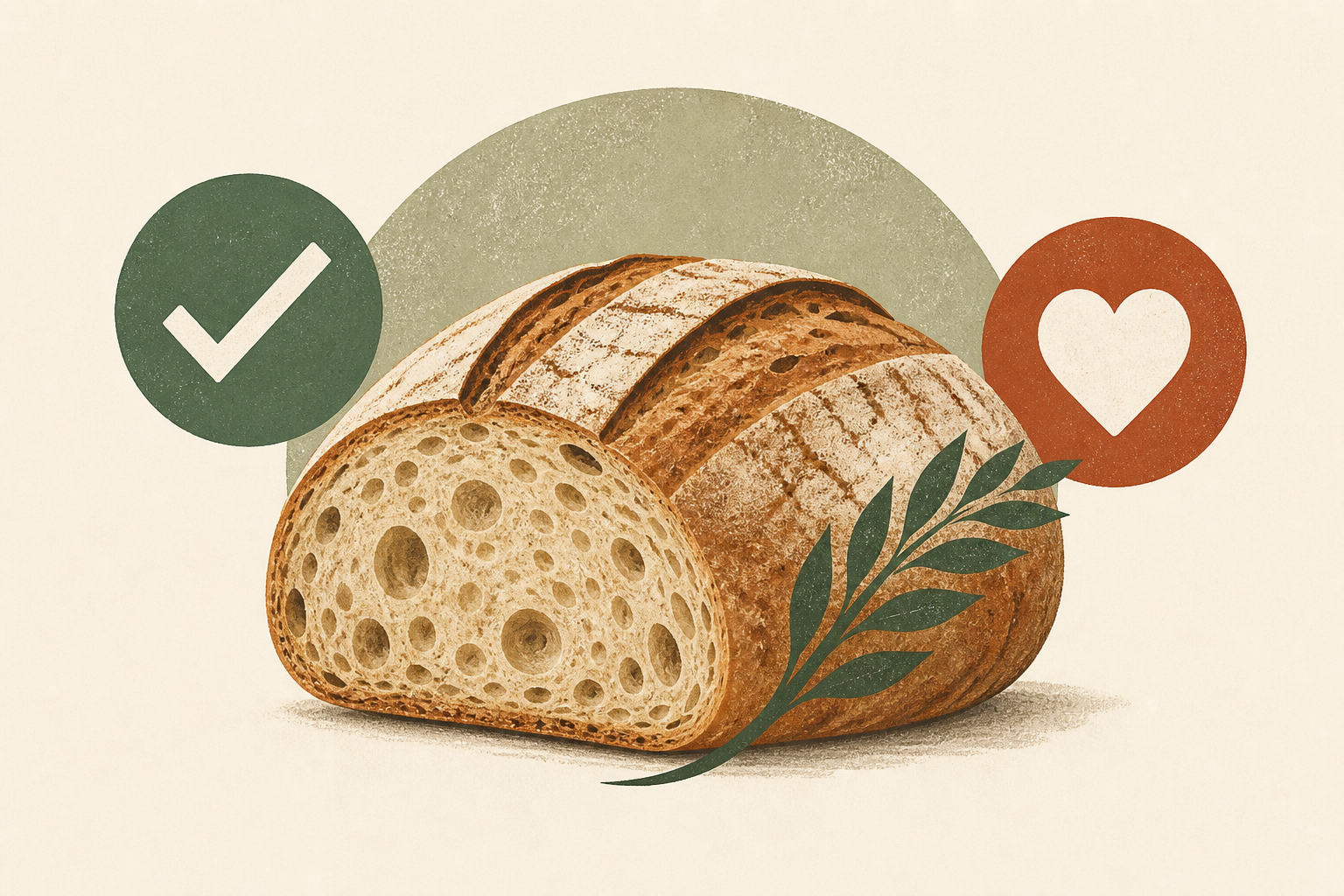
AI Generated Image
Is sourdough bread good for you?
USA Today • • business
Key Points:
- Sourdough bread, made through a natural fermentation process using a starter of flour and water, is prized for its tangy flavor, chewy texture, rustic appearance, and potential nutritional benefits compared to conventional breads made with commercial yeast.
- The slow fermentation process allows beneficial bacteria to break down carbohydrates and proteins, including some gluten, which may improve digestibility and extend shelf life by slowing mold growth.
- Whole-grain sourdough is rich in fiber, B vitamins, and minerals like iron and magnesium, with fermentation enhancing mineral absorption by reducing phytates and potentially lowering FODMAPs, making it easier to tolerate for some with digestive issues.
- Despite its benefits, sourdough still contains carbohydrates, calories, and gluten, so portion control is important, especially for people with celiac disease, gluten sensitivities, or blood sugar concerns; commercial sourdough may also contain additives that reduce its nutritional value.
- When consumed in moderation as part of a balanced diet, particularly whole-grain sourdough from artisan or homemade sources, sourdough bread can be a nutritious and enjoyable staple.


