AI Image
Japan’s ‘Underwater Mount Everest’ Unleashed a 124-Foot Tsunami and It Could Happen Again
Yahoo • • world
Key Points:
- The Japan Trench, located offshore of northeastern Japan, is a deep underwater fault where the Pacific Plate subducts beneath the plate carrying Japan, with depths exceeding 8,000 meters, nearly the height of Mount Everest turned upside down.
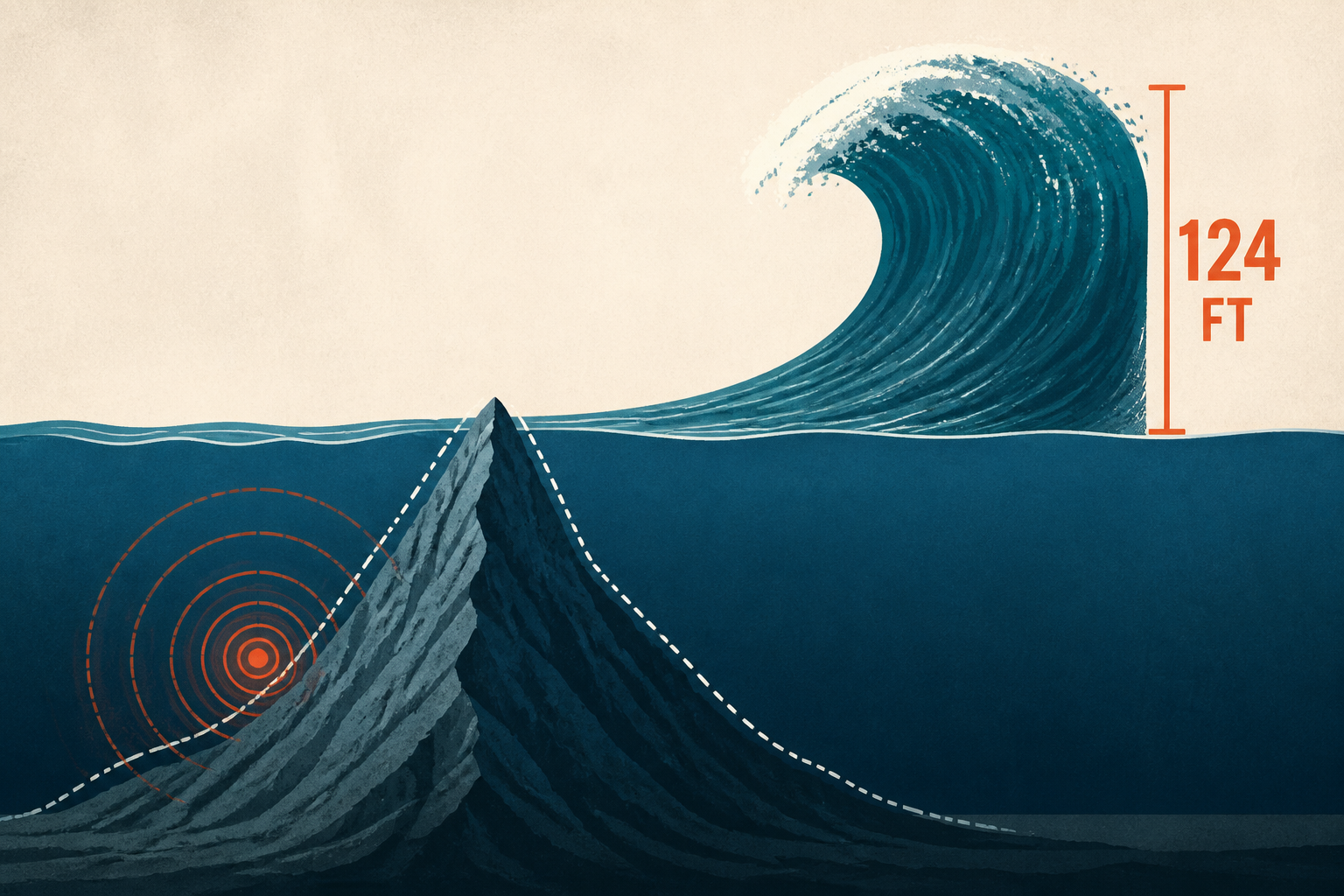
- This trench is the source of the catastrophic magnitude-9.1 Tōhoku earthquake and tsunami on March 11, 2011, which caused massive seafloor displacement and a tsunami run-up of nearly 38 meters along Japan's coast.
- Recent research identified a thin, slippery clay layer along the plate boundary that may facilitate rapid rupture propagation toward the seafloor, increasing the potential for large shallow slip and powerful tsunamis.
- While the probability of another M9-class earthquake in the Japan Trench within 30 years is currently near zero due to the recent 2011 event, there remains a high likelihood of significant smaller earthquakes, such as an M7.4 near Miyagi or an M7.9 near Aomori and northern Iwate.
- Despite being hidden beneath the ocean, the Japan Trench poses a significant seismic and tsunami hazard with ongoing risks of powerful earthquakes and tsunamis affecting the region.


