AI Image
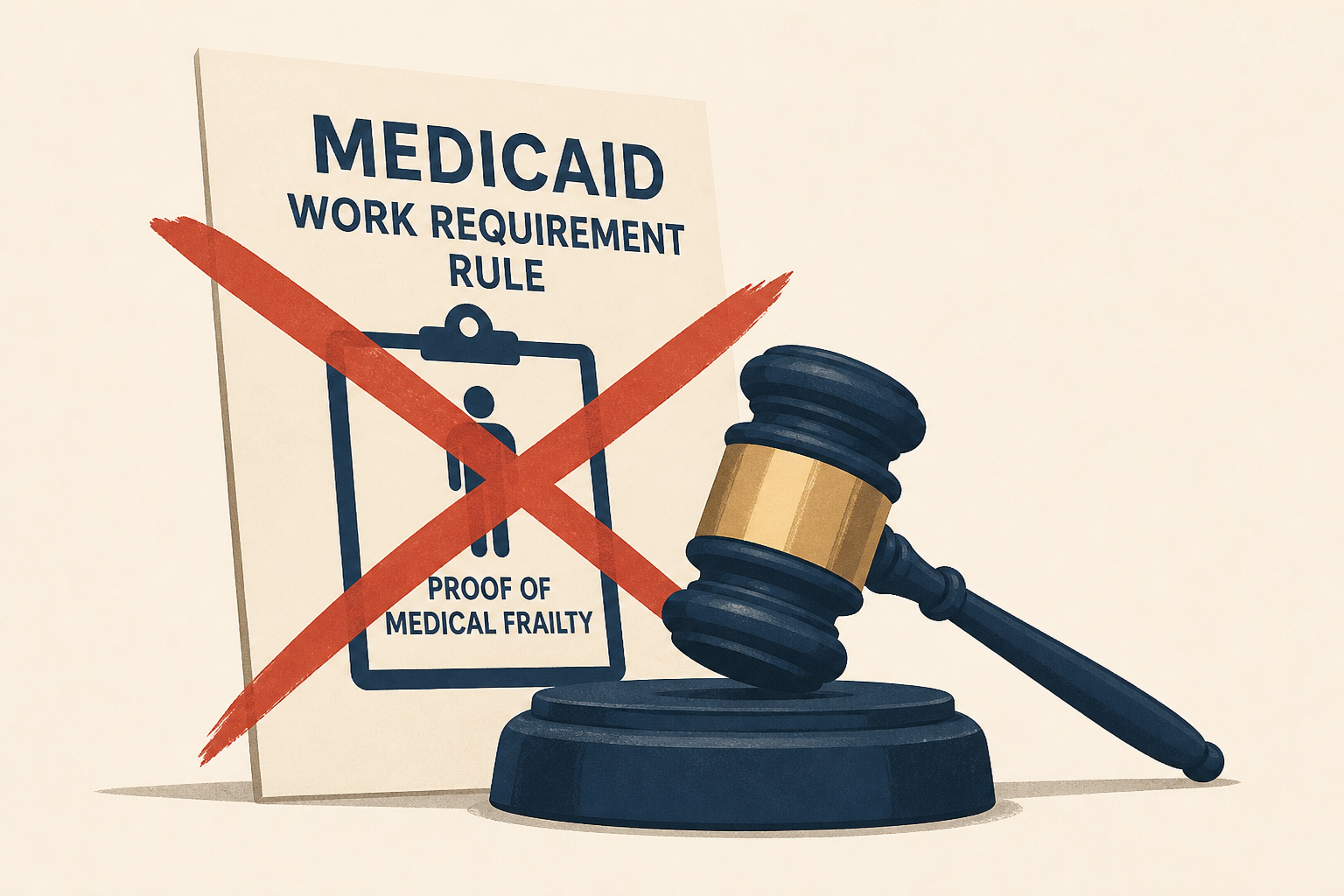
Judge blocks Trump administration's Medicaid work requirement rule forcing proof of medical frailty
PBS • • nation
Key Points:
- A federal judge ruled that chronically ill Medicaid recipients cannot be subjected to new work requirement rules to qualify for medically frail exemptions, providing a partial victory to 25 states and D.C. challenging the Trump administration's guidance.
- The court found that the Centers for Medicare and Medicaid Services (CMS) overstepped by requiring people with qualifying conditions to prove their impairments significantly affect their ability to meet work requirements, which contradicts the 2025 law's definition.
- While the ruling eases access to exemptions for some Medicaid recipients, it did not invalidate the work requirements themselves, which mandate expansion enrollees aged 19-64 to work, volunteer, or attend school for at least 80 hours monthly starting January 1.
- The judge upheld other federal restrictions, including rejecting medical frailty proof older than one year and limiting self-attestation to one per enrollment period, citing valid government rationale despite state concerns about disenrollment.
- These Medicaid changes are part of a broader 2025 tax and policy law affecting low-income individuals covered under Medicaid expansion, with exceptions for medically frail individuals and those in addiction treatment programs.


