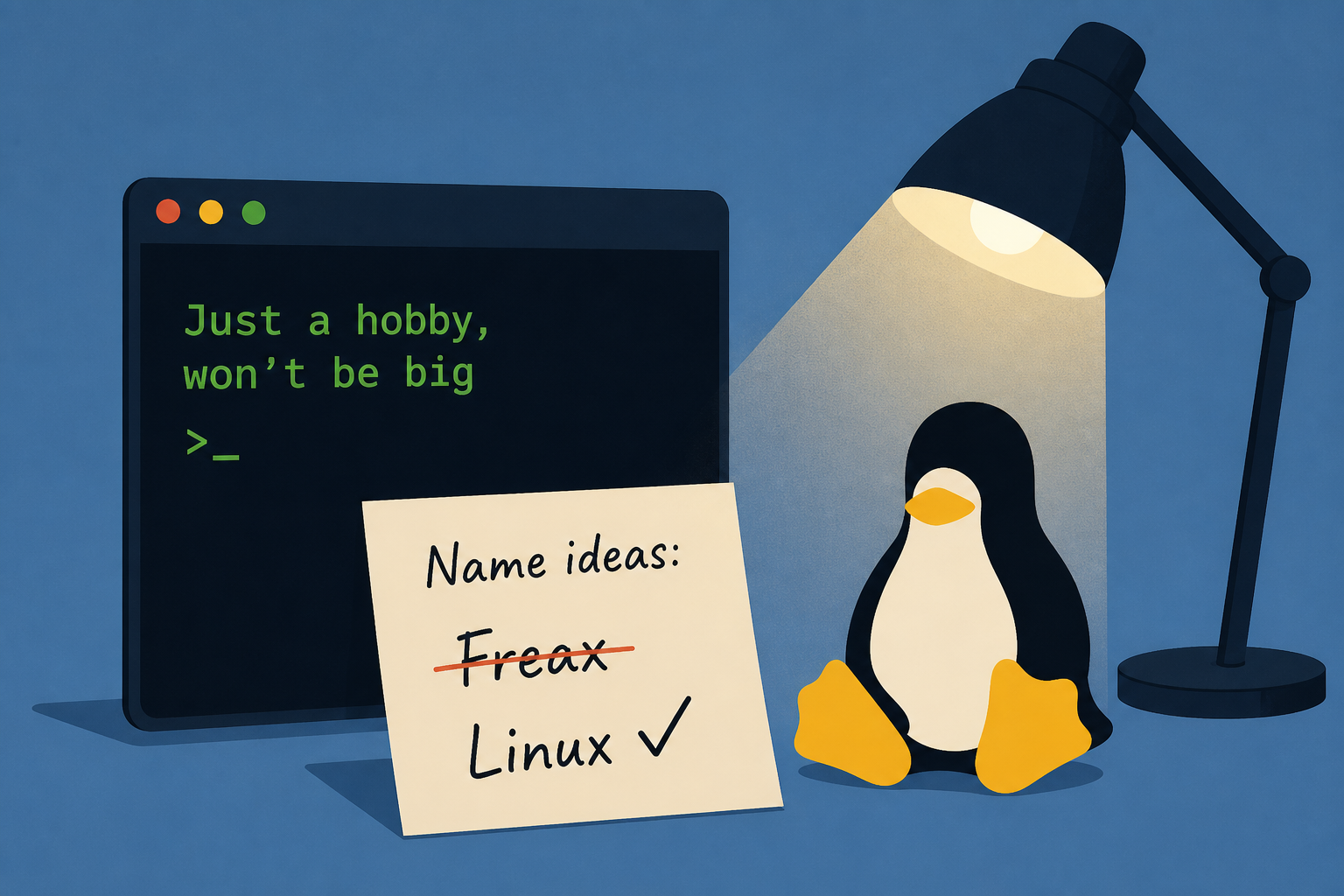
AI Generated Image
'Just a hobby, won't be big': Linus Torvalds introduced Linux 35 years ago - and almost called it Freax
ZDNET • • general
Key Points:
- Linus Torvalds began developing Linux as a hobby in 1991, initially unaware of the massive impact it would have on the technology world, growing from a small project into a dominant operating system powering major websites, cloud services, supercomputers, and Android devices.
- Linux's development was collaborative from the start, with Torvalds actively encouraging contributions from volunteers, which helped the project quickly surpass other free Unix-like systems such as GNU Hurd and Minix.
- Key milestones included Linux becoming self-hosting around version 0.03, switching to the GPLv2 license in early 1992, and gaining commercial support from companies like IBM and Oracle, which were crucial to its widespread adoption.
- Tools like BitKeeper and Git, created by Torvalds, revolutionized source code management for Linux, enabling more efficient development and long-term project sustainability.
- Torvalds remains actively involved in Linux maintenance and embraces new technologies like AI for bug detection, with no plans to retire from the project anytime soon.


