AI Generated Image
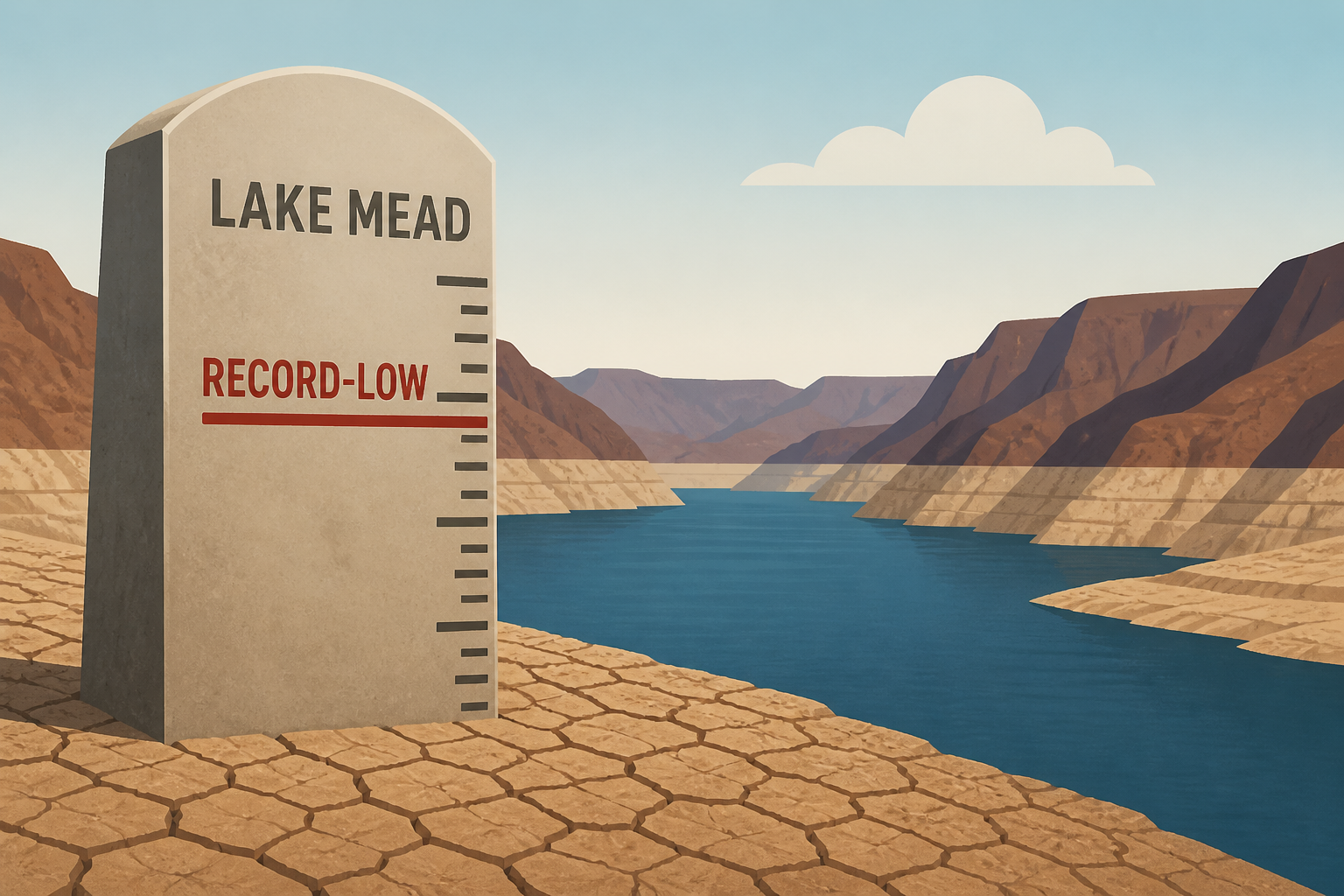
Lake Mead along the Colorado River hits record-low water level
apnews.com • • nation
Key Points:
- Lake Mead, the largest U.S. reservoir, has reached its lowest water level since being filled 90 years ago, hitting 1,040.4 feet above sea level, signaling ongoing crisis in the Colorado River system.
- The decline follows the worst recorded winter snowpack in the Colorado River Basin, which feeds the river relied upon by over 40 million people across seven states, tribal nations, and Mexico.
- Federal officials proposed a short-term plan for California, Nevada, and Arizona to share water cuts after the seven Colorado River states failed to agree on long-term water-sharing solutions.
- Lake Mead and Lake Powell, the two largest reservoirs on the Colorado River, are at their lowest levels in nearly 70 years due to overuse, drought, and rising temperatures.
- To protect hydropower production and a threatened native fish, officials will withhold cool water releases from Lake Powell’s Glen Canyon Dam, while severe drought conditions have forced deeper water pumping and exposed human remains in Lake Mead.


