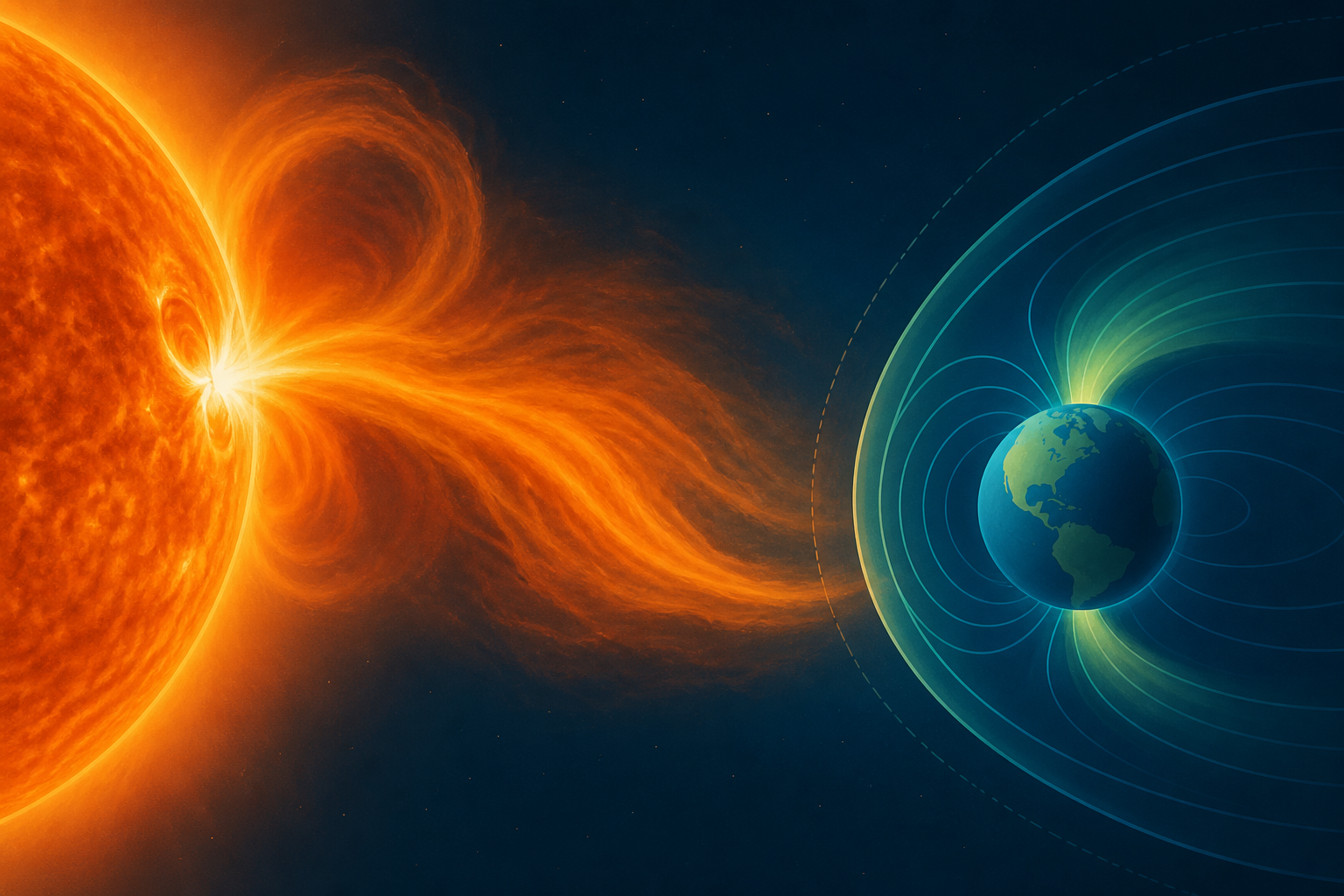
AI Generated Image
Long-duration M1.9 flare produces Earth-directed CME, G1-G2 geomagnetic storm conditions forecast for August 2
The Watchers - Watching the world evolve and transform • • science
Key Points:
- Solar activity increased to moderate levels on July 30 due to an M1.9 flare from Region 4492, accompanied by an eight-degree filament eruption and multiple radio emissions, including Type II and Type IV sweeps.
- Proton flux exceeded the S1 Minor solar radiation storm threshold on July 30, peaking at 18 pfu, with fluctuations continuing into July 31; these enhancements are linked to the M1.9 flare.
- A partial-halo CME was observed on July 30, with models predicting its arrival at Earth early on August 2, potentially causing G1-G2 geomagnetic storm conditions.
- Geomagnetic activity is forecast to be quiet to unsettled through August 1, with possible active periods due to earlier CMEs and coronal hole high-speed streams, escalating to G1-G2 storm levels on August 2.
- The anticipated geomagnetic storm may impact power systems, satellite operations, radio communications, and aurora visibility, while solar activity is expected to remain low with a chance of M-class flares through August 2.


