AI Generated Image
Martian moon Deimos’ quirks may be due to an asteroid strike
CNN • • science
Key Points:
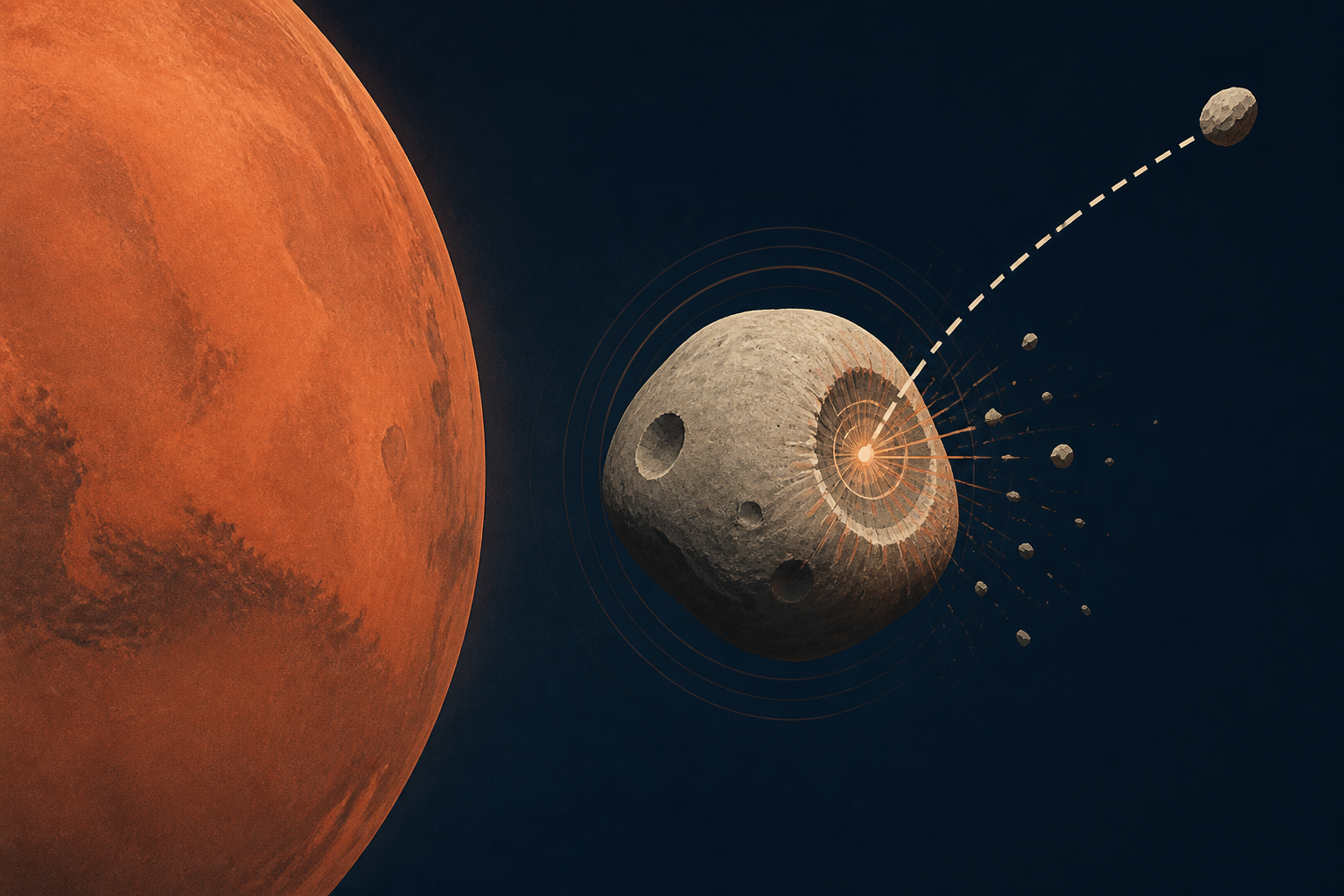
- New research suggests that Deimos, Mars' outer moon, was reshaped by a single large asteroid impact that created its distinctive southern polar crater and a global dust layer, explaining its smoother surface compared to its sibling moon Phobos.
- Using advanced computer simulations of asteroid impacts, scientists identified a likely scenario where a 320-meter-wide asteroid struck Deimos at a 45-degree angle, redistributing debris and smoothing the moon's surface without destroying it.
- The study highlights Deimos' porous, rubble-pile internal structure, which absorbed the impact's shock waves and preserved ancient surface features beneath the dust, but does not definitively resolve whether Deimos originated from Mars or was a captured asteroid.
- The upcoming Japan Aerospace Exploration Agency’s Martian Moons eXploration (MMX) mission, launching by the end of 2024, aims to collect detailed observations and samples from Phobos and Deimos to clarify their origins and the early history of the solar system.
- Experts emphasize that MMX's data will be crucial to testing the new impact model and advancing understanding of Mars' moons, with the mission expected to return Phobos samples to Earth by 2031.


![Google Pixel screen savers add new styles, swipe gesture [Gallery]](https://media-cdn.cashwalklabs.io/https%3A%2F%2Fs3.us-west-2.amazonaws.com%2Fimages.cashwalklabs.io%2F0_admin%2Fnews-ai-images%2F01a020c8-02ff-7739-94ec-8cdc8c008429.webp?format=webp&w=120&h=80)


