AI Image
Miles Below the Pacific, Rocks Litter the Abyss. Something Is Alive Inside Them-Thousands of Somethings.
Yahoo • • science
Key Points:
- Polymetallic nodules, found 4,000 to 6,000 meters deep in the Pacific Ocean's Clarion–Clipperton Zone, contain valuable metals like manganese, cobalt, copper, zinc, and iron, driving interest in deep-sea mining.
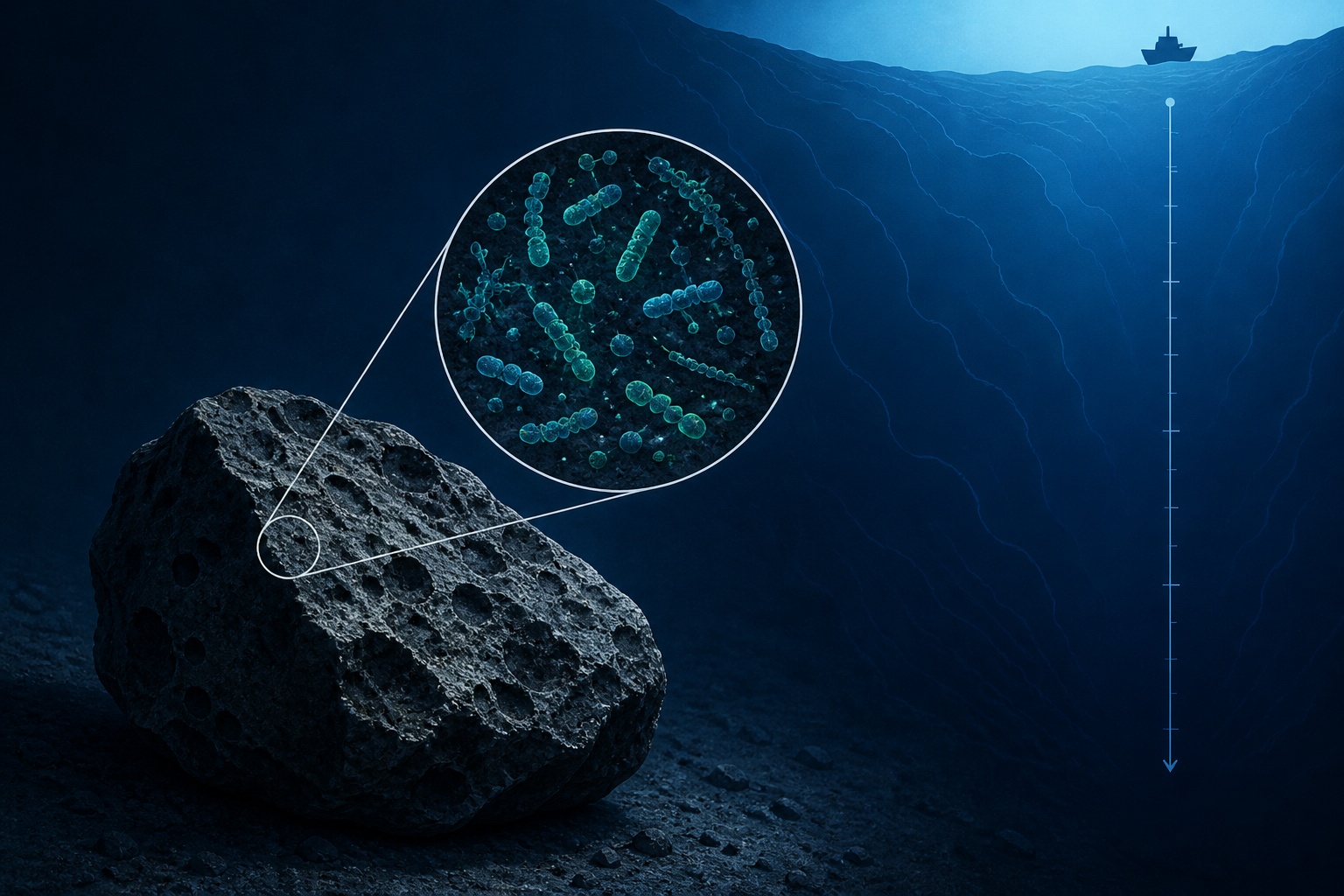
- A new study reveals these nodules serve as ecosystems themselves, hosting dozens to hundreds of tiny animals, including unique species not found in surrounding sediments, highlighting their ecological importance.
- Mining these nodules could lead to irreversible loss of unique biodiversity, as the nodules provide critical habitats developed over millions of years, raising concerns about environmental impacts.
- Additional research suggests the nodules may produce "dark oxygen," a rare form of oxygen generation independent of sunlight, though this finding remains contested and under further investigation.
- The controversy underscores the tension between technological progress reliant on deep-sea metals and the need to preserve fragile, ancient ecosystems in the deep ocean.


