AI Generated Image
Milky Way spiral arms may be larger than previously thought, study finds
Fox News • • science
Key Points:
- Astronomers have discovered that the Milky Way's spiral arms may extend further into space than previously thought, based on precise distance measurements of dust clouds using data from NASA's Chandra and ESA's XMM-Newton telescopes.
- The team utilized rare gamma-ray bursts from distant galaxies, whose X-rays scattered off dust clouds in the Milky Way, creating measurable rings that allowed for accurate geometric distance calculations.
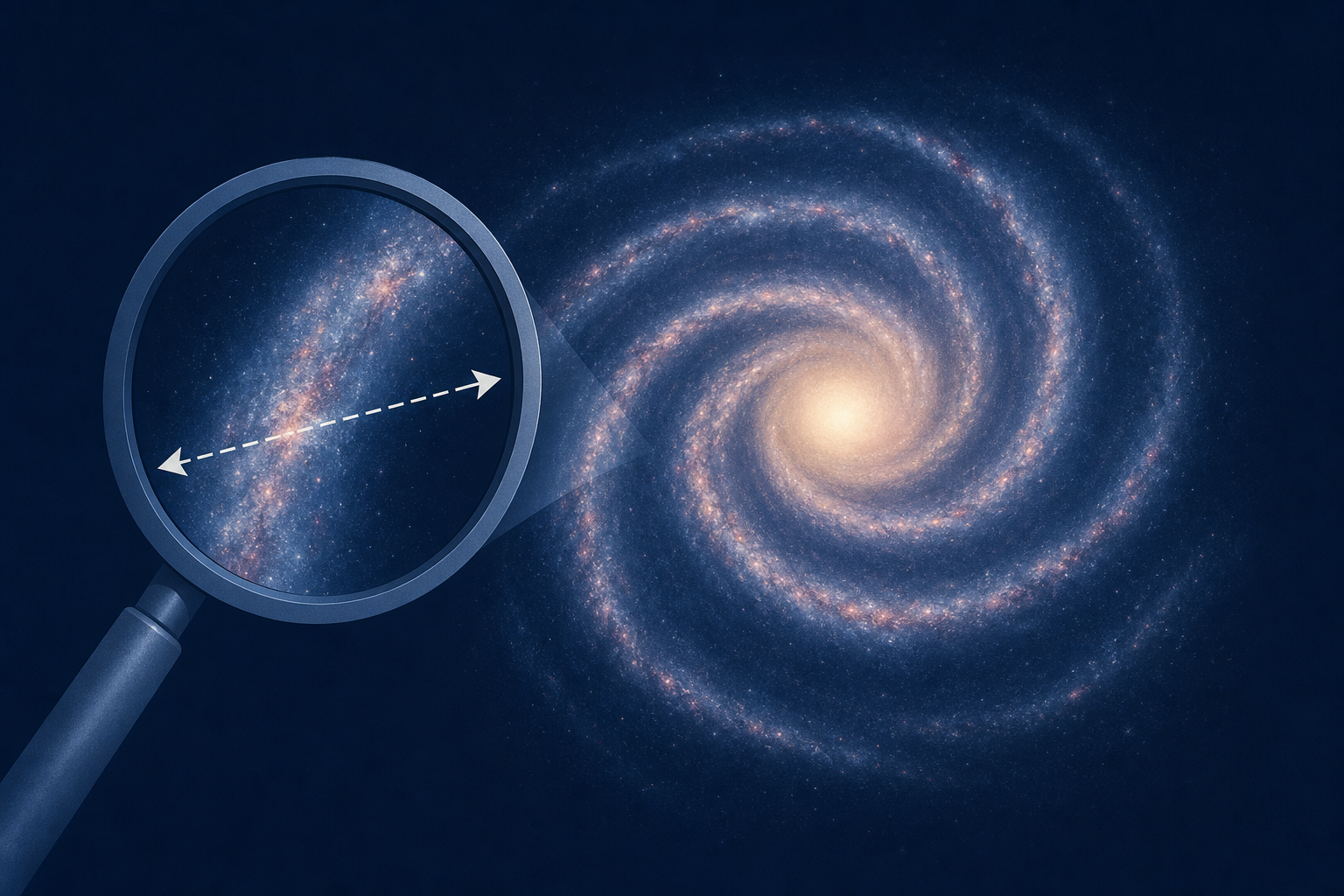
- This new method avoids assumptions about the galaxy's rotation, which become less reliable in outer regions, providing more direct and precise mapping of the spiral arms, including a dust cloud in the most distant arm estimated to be about 3,500 light-years wide.
- The findings could lead to revisions in fundamental galactic parameters, such as the Milky Way's mass and the extent of its spiral arms, impacting our understanding of the galaxy's structure.
- However, the technique relies on rare gamma-ray bursts, with only a few suitable events detected in the past 25 years, prompting researchers to continue searching for more opportunities to apply this method.


