AI Generated Image
More people than thought may be at risk for red meat allergy caused by ticks
NBC News • • health
Key Points:
- New CDC research estimates that nearly 24% of adults in five states where lone star ticks are common show antibodies indicating exposure to alpha-gal, the sugar molecule linked to alpha-gal syndrome, an allergy to red meat.
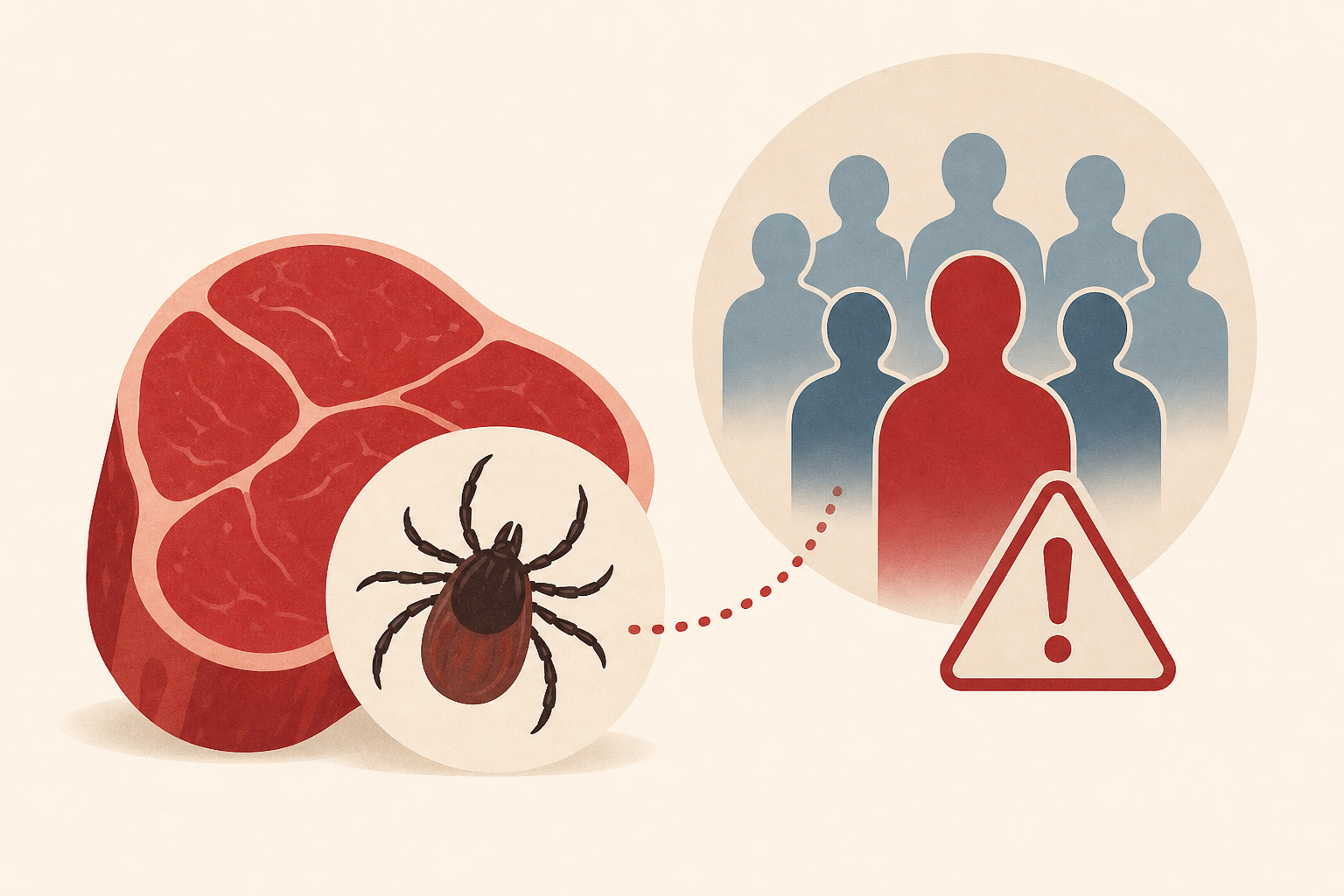
- Alpha-gal syndrome is caused by tick bites, primarily from lone star ticks that have fed on mammals carrying alpha-gal, and can trigger allergic reactions to red meat and related products.
- The presence of alpha-gal antibodies does not confirm alpha-gal syndrome, but may indicate a higher risk of developing the condition; further studies are needed to clarify this risk.
- Despite the growing prevalence and potential spread of alpha-gal syndrome, especially as ticks expand their range due to climate change, the condition is not yet nationally tracked or widely reported by health departments.
- Symptoms of alpha-gal syndrome can be delayed and include hives, gastrointestinal issues, respiratory problems, and in severe cases, anaphylaxis; once developed, the allergy is lifelong.


