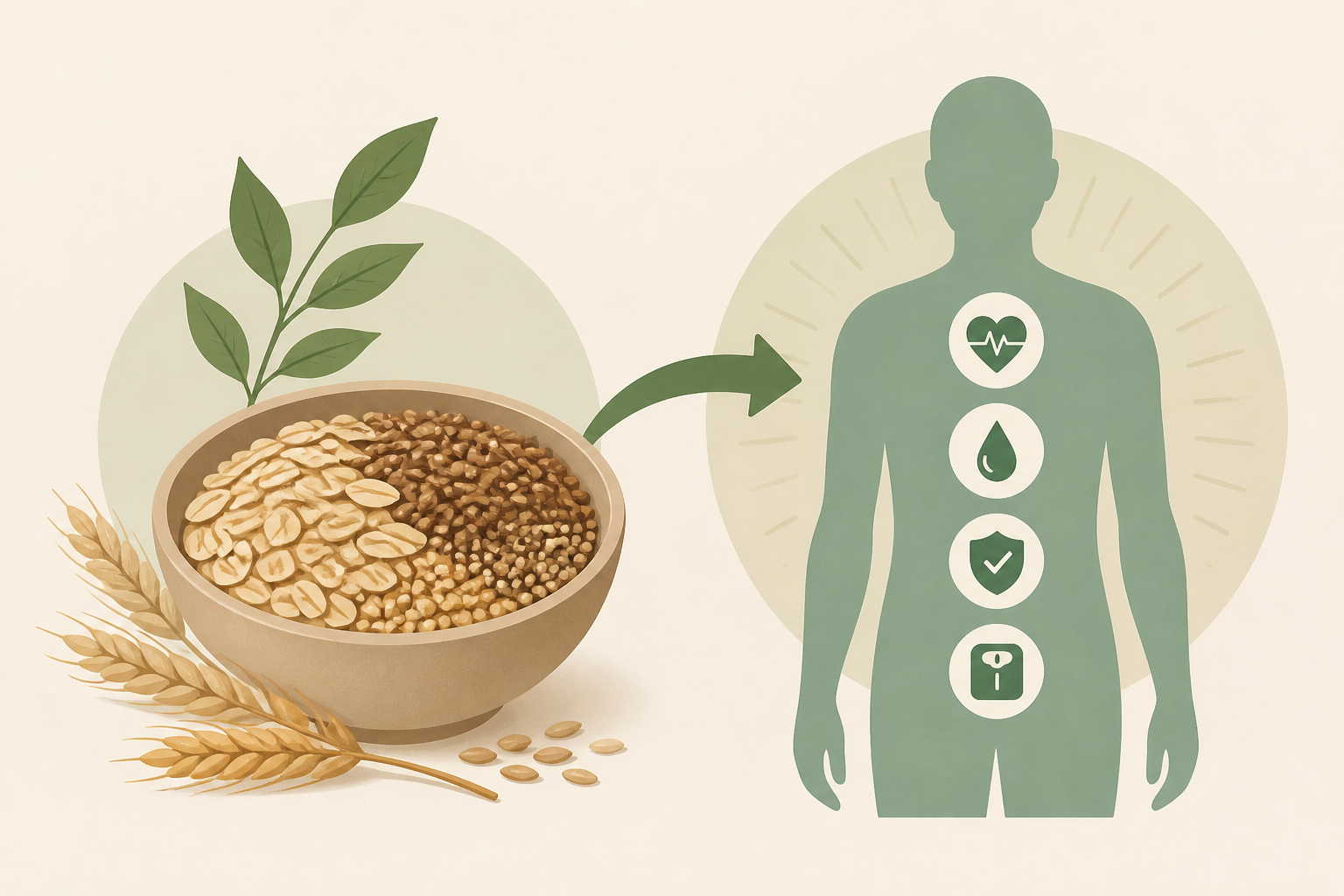
AI Generated Image
More whole grains can improve multiple health factors, study finds
USA Today • • health
Key Points:
- A new study published in the European Heart Journal found that consuming whole grains is linked to improvements in cardiometabolic risk factors such as obesity, high blood pressure, and cholesterol levels.
- The study, a systematic review and meta-analysis of 101 publications, suggests that eating around 60 to 100 grams (four to six servings) of whole grains daily yields the greatest health benefits, including reductions in total cholesterol.
- Whole grains retain the bran and germ, which contain essential nutrients, unlike refined grains that lose these components; common whole grains include oatmeal, whole wheat, quinoa, barley, and brown rice.
- The study supports previous research indicating that higher whole grain intake is associated with lower risks of cardiovascular disease, Type 2 diabetes, hypertension, and all-cause mortality.
- To increase whole grain consumption, experts recommend substituting refined grain products with whole grain alternatives, ensuring "whole grain" is listed first in ingredient lists, and aiming for the recommended daily servings.


