AI Generated Image
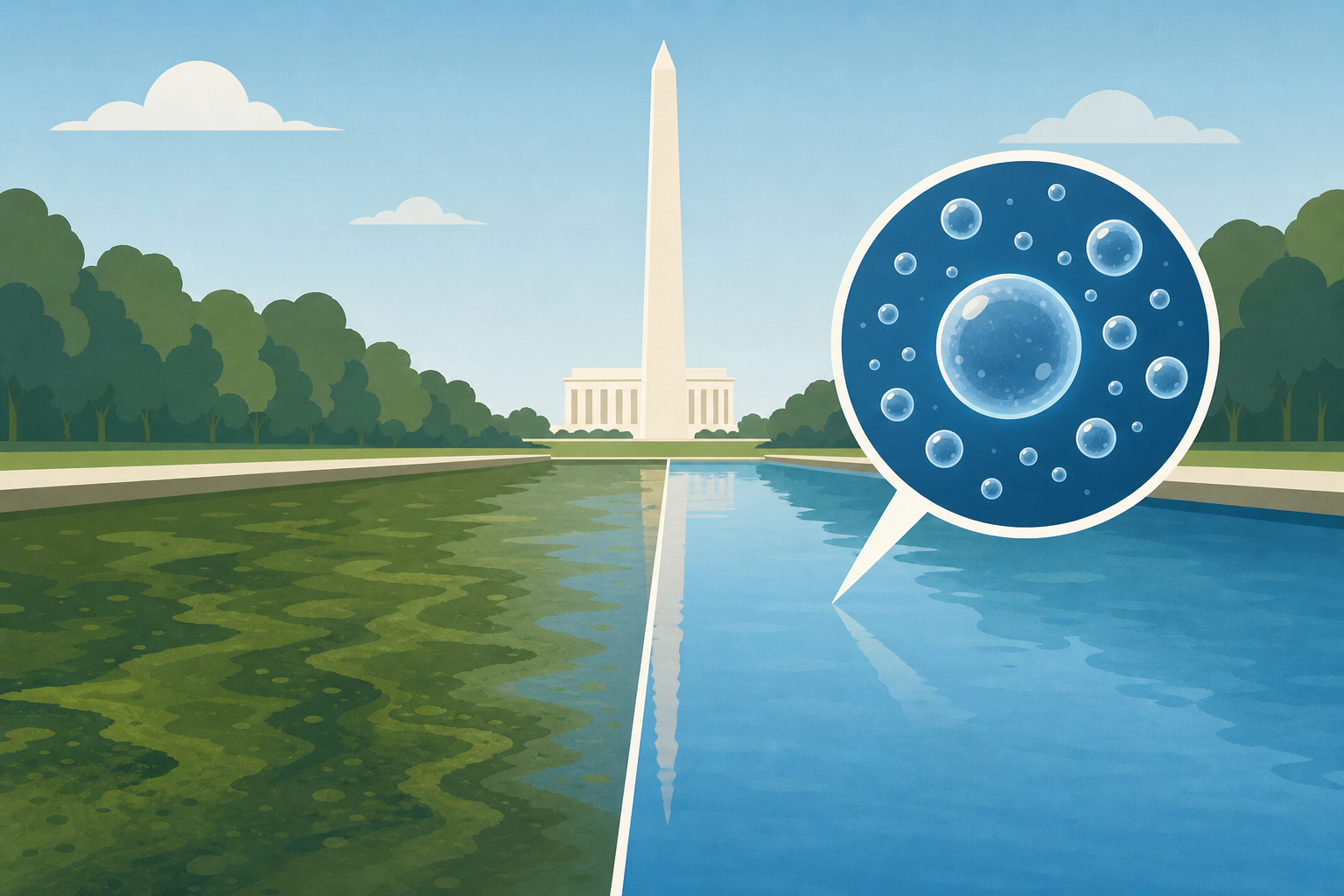
Nanobubbles cleaned up the Lincoln reflecting pool: here’s how they could be used on dying seas and lakes
The Conversation • • nation
Key Points:
- An ozone nanobubble system costing US$1.7 million has been used to clear algae from the Lincoln Memorial Reflecting Pool ahead of the US Declaration of Independence 250th anniversary celebrations, injecting microscopic ozone bubbles to oxidize algae and organic matter.
- Nanobubbles, which can remain in water longer than ordinary bubbles, offer potential for aquatic restoration by delivering oxygen to oxygen-poor sediment layers in lakes and seas suffering from eutrophication and dead zones caused by nutrient overloads.
- Two main nanobubble approaches exist: bulk nanobubbles dispersed by machines suitable for small, circulated water bodies, and interfacial oxygen nanobubbles attached to sinking porous particles that deliver oxygen directly to sediment surfaces, potentially reducing energy use and ecosystem disturbance.
- The Baltic Sea oxygenation project, involving wind-powered pumps to move oxygen-rich water to deep oxygen-depleted layers, highlights challenges of large-scale oxygen delivery, including infrastructure costs, ecological impacts, and energy demands; nanobubble-clay materials may offer a less invasive alternative.
- While nanobubbles show promise in improving oxygen levels at sediment-water interfaces, their effectiveness depends on controlling nutrient inputs like sewage and fertilizer runoff, and their application in natural water bodies remains complex and potentially costly.


