AI Image
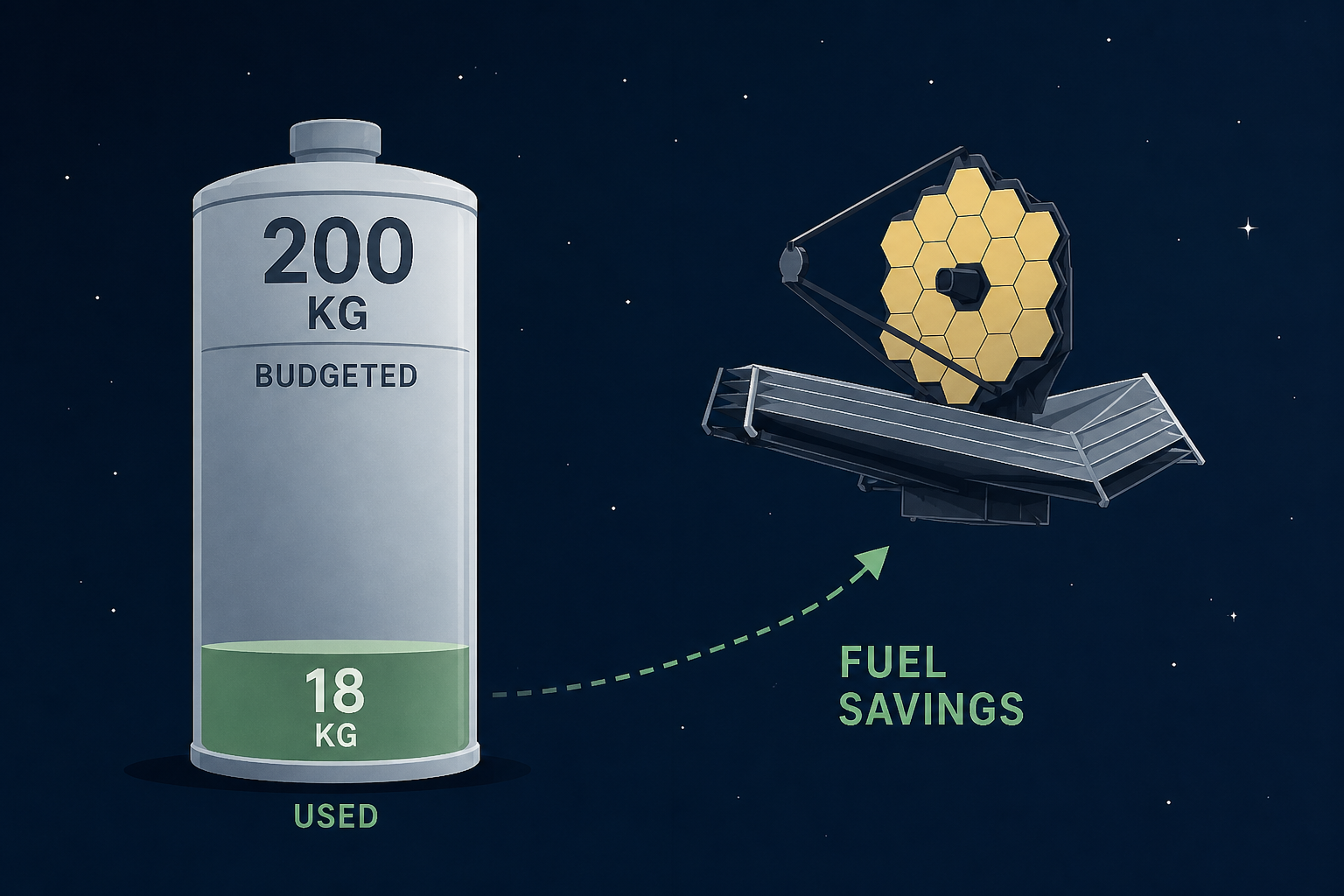
NASA budgeted 200 kilograms of fuel for Roman’s first course correction, but the telescope used only 18. Combined with extra fuel loaded before launch and further expected savings, that could stretch
Space Daily • • general
Key Points:
- NASA’s Nancy Grace Roman Space Telescope used only 18 kilograms of fuel for its first mid-course correction, far less than the 200 kilograms originally budgeted, achieving over 99% accuracy in the maneuver.
- This fuel efficiency, combined with the spacecraft’s lighter-than-expected launch mass and anticipated savings in future maneuvers, could extend the telescope’s potential operational life from 10 to at least 22 years.
- The telescope is en route to the Sun-Earth L2 orbit, where it will perform regular station-keeping burns and use reaction wheels for orientation, relying on hydrazine fuel as a finite resource critical for long-term operations.
- Despite the extended fuel supply, the actual mission duration depends on factors such as spacecraft health, scientific value, funding, and hardware longevity; the current five-year primary mission remains the approved baseline.
- A longer operational timeline could enhance Roman’s scientific capabilities by enabling deeper cosmological studies, repeated observations over years, and the detection of rare transient events, though extended missions will be planned based on future assessments.


